Monies Jewellry

Photograph: Kim Müller

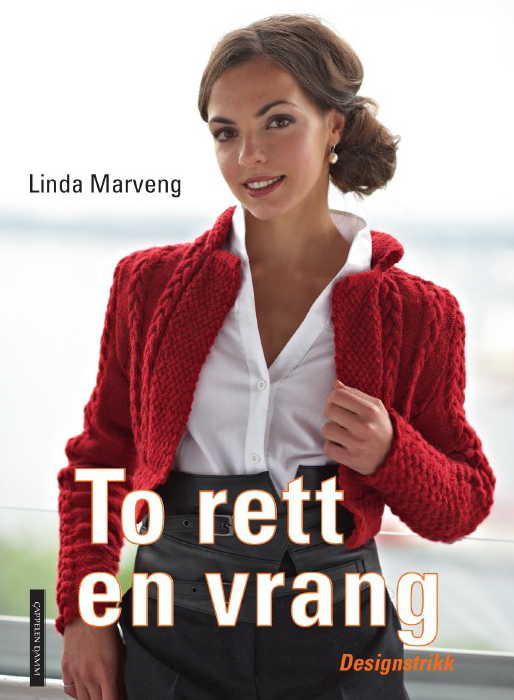
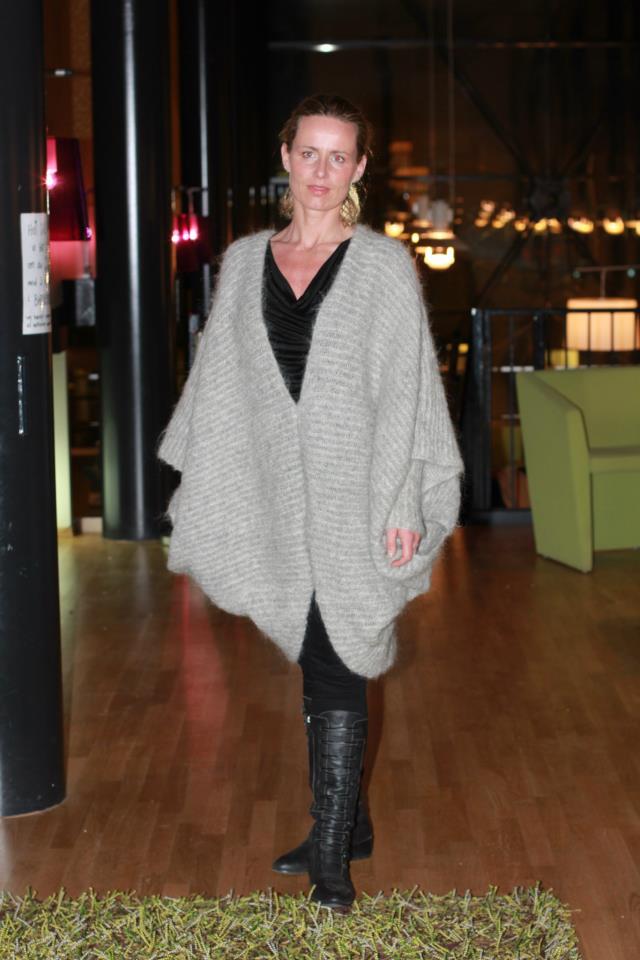
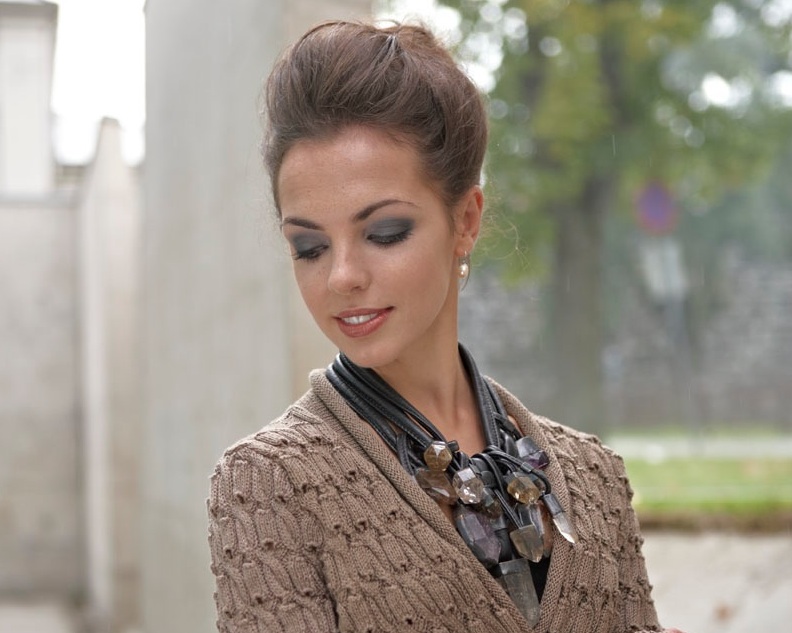
Monies Jewellry is founded by Danes Gerda and Nikolai Monies, both trained goldsmiths with international experience, and acknowledged for its elegance and avant-gardism as well as its use of exciting natural materials from all over the world. I absolutely love the chic boldness the statement jewellery gives and chose to use it when styling my first knitting book ‘To rett en vrang. Designstrikk’ to give my garments an edge.

Photograph: Monies

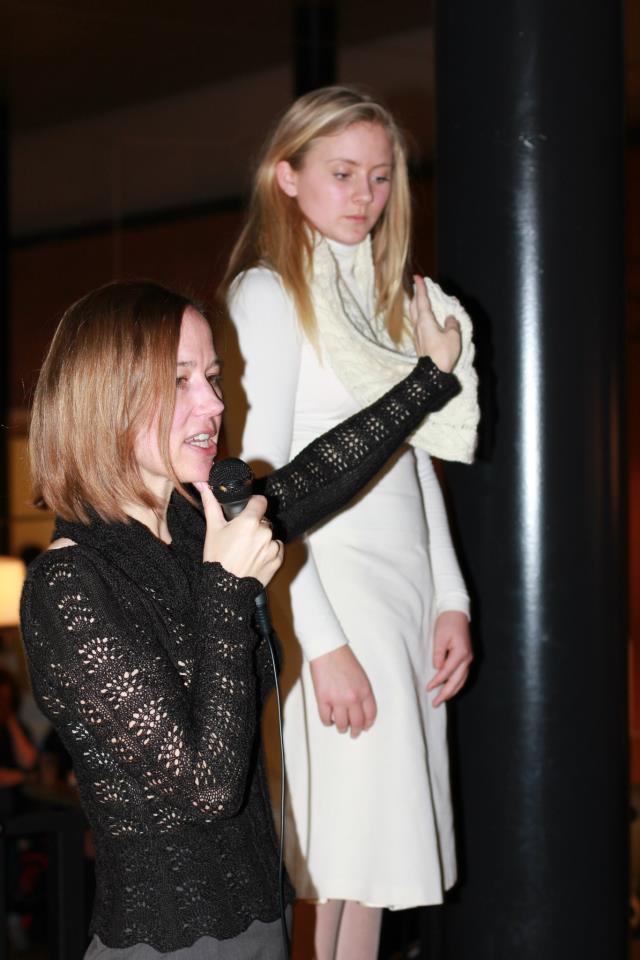
Luckily enough, I was able to loan a number of pieces from Zenit in Oslo. Afterwards, as you can imagine, there where a couple of pieces I could not release from my care and simply had to buy. Not that my styling budget really allowed it and the necklace with a price tag of nearly £ 2 000 was definitely out of my reach, see above. The pure weight of the natural stones used in it, amethyst and crystals, explains it. If you are wondering what the ballerina Francesca Golfetto is wearing, it is the Jacket in Cross knitted in Tencel held double.

Photograph: Monies

“We produce two handcrafted jewellery collections. A seasonal collection of multiples called Production and a collection of one of a kinds called Unique. We mainly work in materials such as petrified wood, fossils, precious stones, mammoth, shells, coconut, amber, coral, cowbone, cowhorn, copper, all kinds of wood, seeds, stones from Danish beaches and 24 karat gold from Greenland.”

Monies jewellery is  designed and produced in Copenhagen. Over the years they used to produce unique collections for the large fashion houses, such as Donna Karan and Chanel,  but are now focusing on the Monies brand. I can report that wearing one makes one feel like an art installation, a live sculpture which makes a natural sound. For more info see www.monies.dk

Share

Check Your Tension/Guage

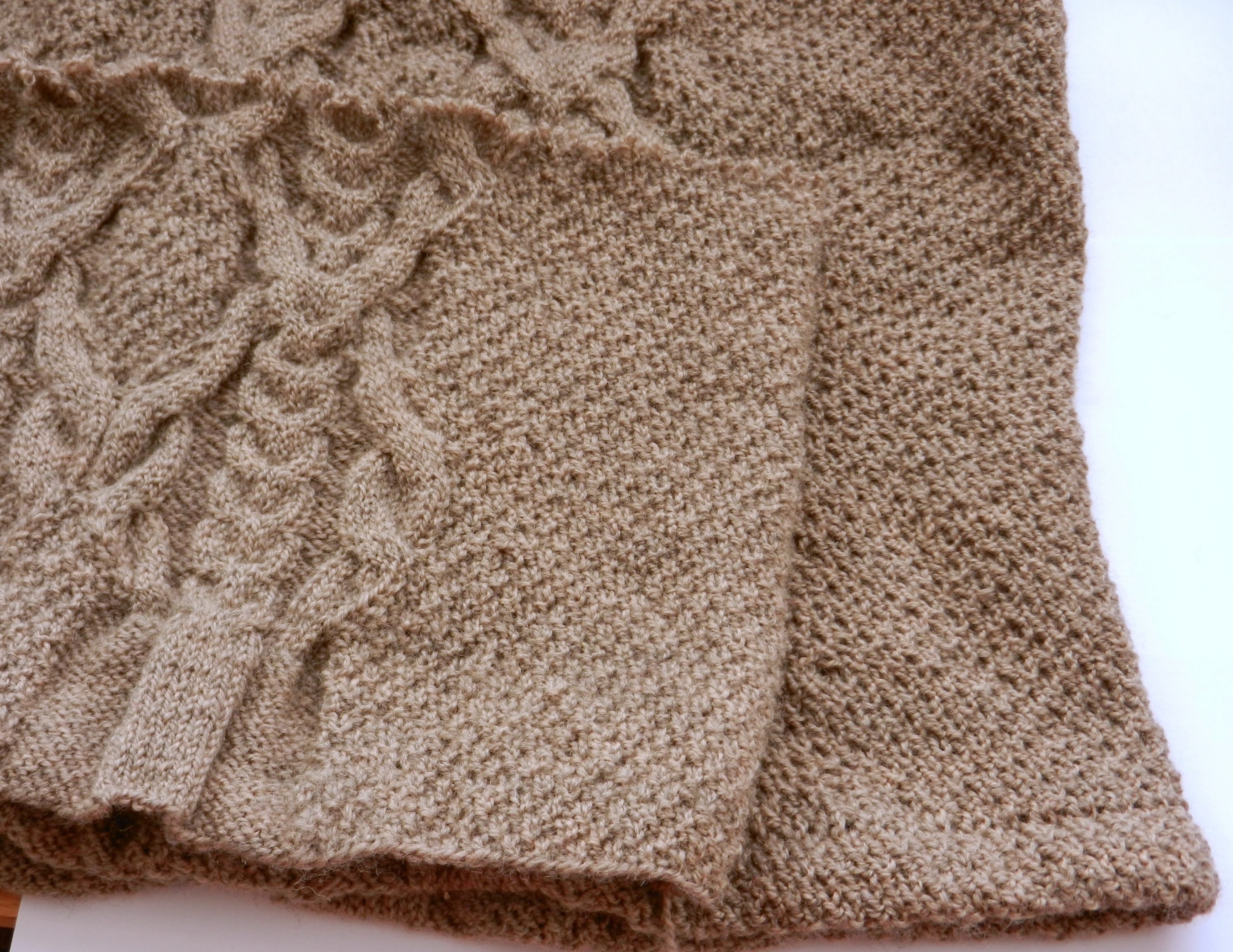
I wanted to show you what a huge difference a wrong tension/guage can make to a garment. Here is a good example: a body of a sweater knitted in BC Garn’s Semilla Fino, 100% ecological wool, (50g/1.7 oz, 240 m/262 yds) tension according to the pattern, double moss/seed, is 20 sts to 10cm/4” knitted on a 3mm/ US 2-3. The body on the bottom is knitted to the right tension while the one on top is knitted with a tension of 24 sts to 10cm/4”, both are worked using the same needle size but made by two different knitters. You will find the yarn for sale online at www.garn.dk or list of dealers at www.bcgarn.dk

The body is at the widest 90cm/35.5″ circumstance: 90 x 2.4 (tension per cm) =  216 while the intention was 90 x 2.0 = 180 sts. 216 – 180 sts = 36 sts : 2.0 = 18 cm/7″ too small. The easiest option is to change your needle size to a larger one, probably a size 4mm/US 6 to loosen the tension, or change the yarn but you can also add 36 sts to the pattern and adjust it, a time consuming choice recommended only for the experienced knitter.

The sweater is approximately 4 clothes sizes smaller than intended and it makes a huge difference to the fit of the garment. Make sure you check the tension before you start knitting and adjust the needle size accordingly. You can also try, not only knitting using a larger needle, as in this case, but working with a needle made of a different material. My tension is loser using a bamboo needle rather than a metal one. If you do not want to keep all the swatches you make, unravel them, use them in a blanket or as a pocket on a child’s garment, or file them neatly in a shoe box for later reference. But do take the time to knit a swatch and check your tension. You do want that garment to fit you.


Share

Easter All Year Around

‘Easter All Year Around’ is the title of Arne & Carlos’ new book, out in Norwegian, published by Cappelen Damm in March, in good time for Easter. Who are they, you will ask if you are not Norwegian. A designer duo and trend setters, living in closed down railway station building in a stunning mountain setting in Valdres, whose collections of dolls and traditional knitting patterns among other items have served as a magic background in their 3 knitting books.

Are they for real? A viewer of a Christmas entertainment program on the national broadcasting channel, NRK, tweeted last year after watching them knitting Christmas Decorations. Indeed they are with their feet solidly on the ground – they love gardening – Arne & Carlos design clothes, and now also knitting patterns, with a traditional retro yet contemporary look. They chose the Marius pattern and added space invaders instead of the usual borders taken from traditional Setesdal’s patterns. It is not all branding though, since Arne & Carlos have designed clothes for Comme des Garcons and sell well in Japan.

Egg cosies, table runners, Easter decorations (Christmas decorations re-invented), Easter bunnies and hares are all found in their latest book. It is still on the Bestseller list and the number of Easter bunnies knitted on the Norwegian knitting pages & blogs are overwhelming and tell their own story. A fitting story on Easter Sunday – Happy Easter everyone!

Their books have been sold to numerous countries and I am impatiently hoping for the same to happen to mine even though I know my market is smaller. So far it has been sold to Finland, where it will be published in January 2013. But I will say to all of you that have bought it, I hope you enjoy it and thank you! Happy Knitting!

Share

Brentford Dock

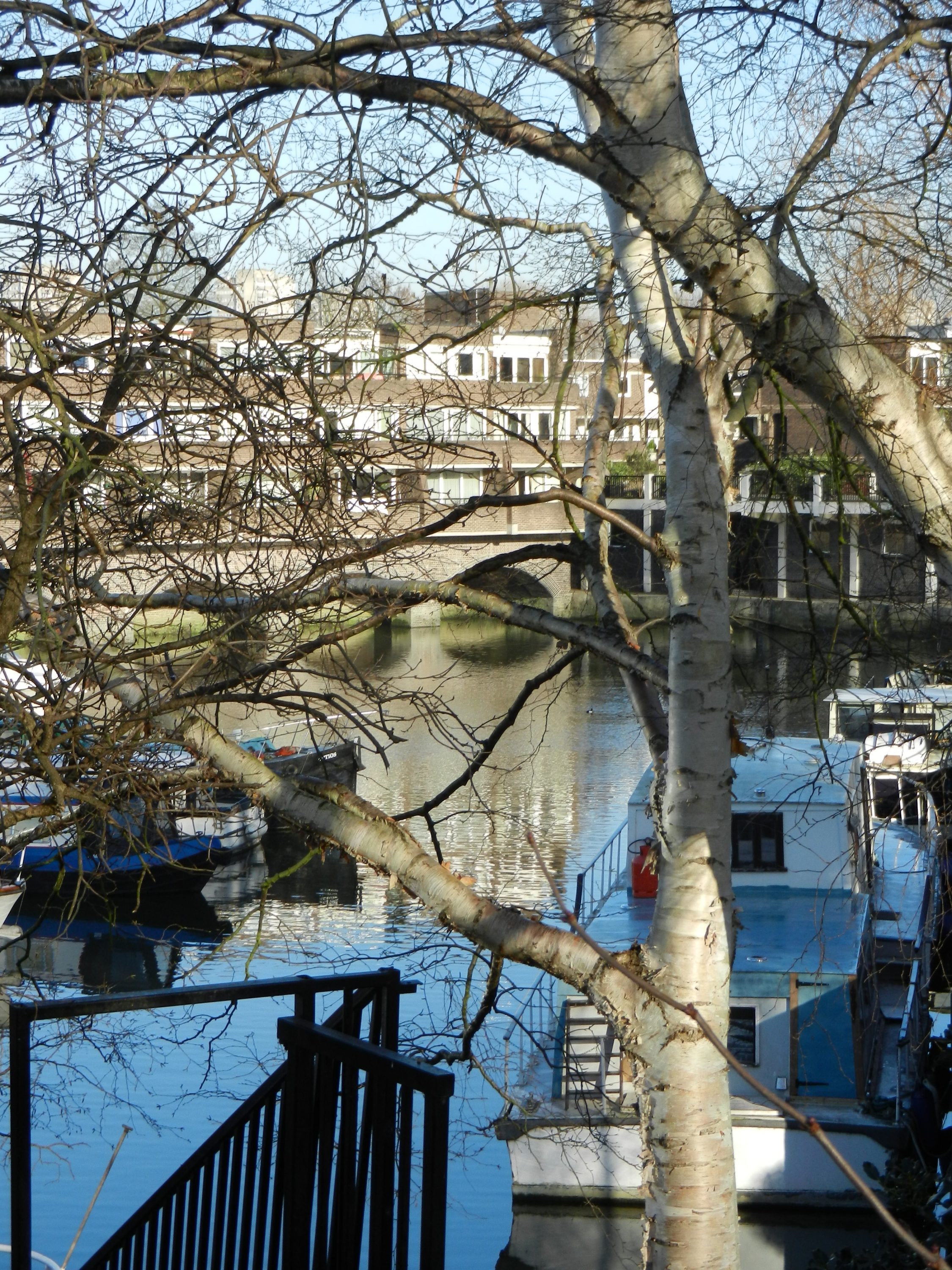
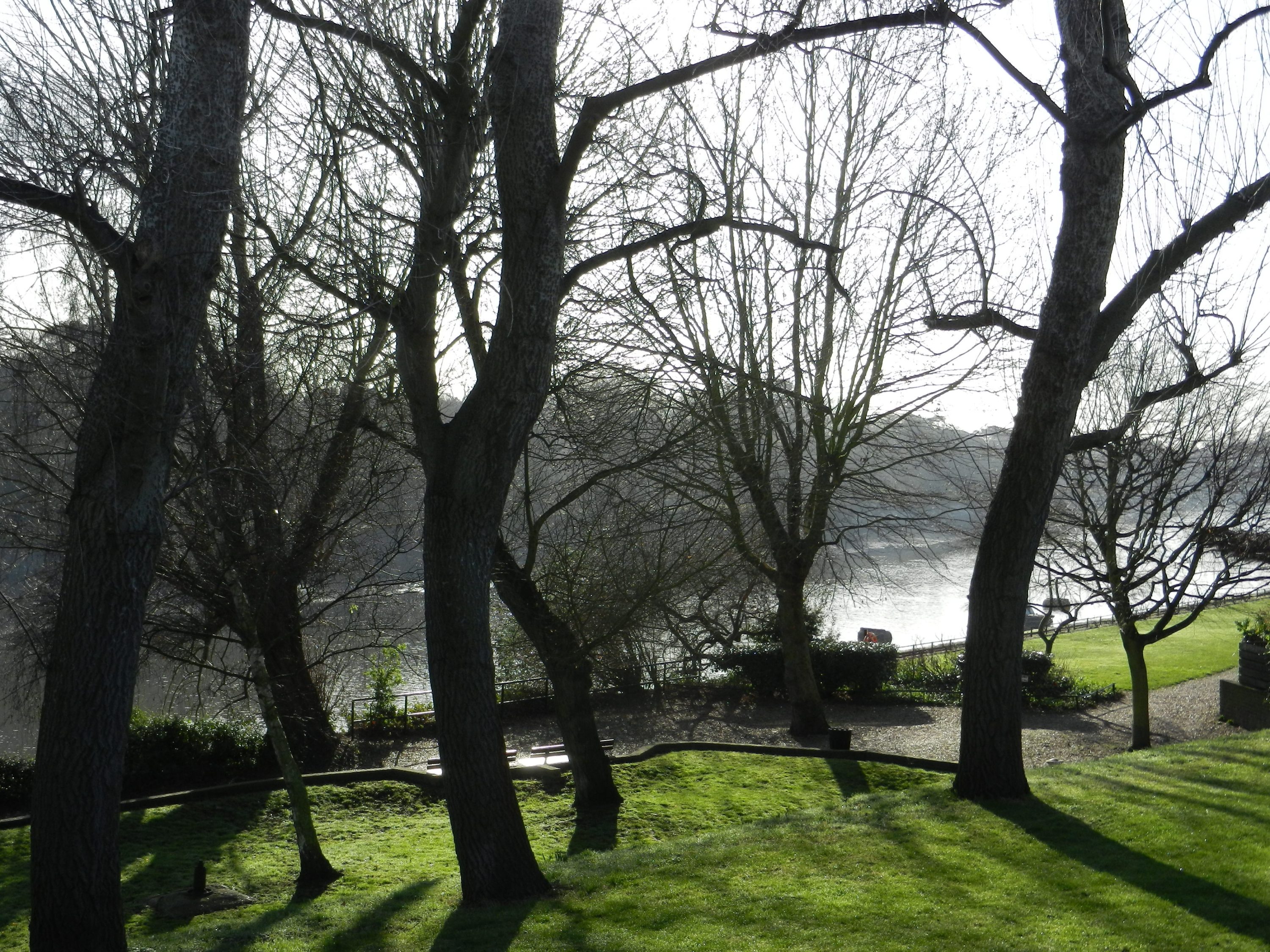
This is were I live together with my British husband Michael in Brentford Dock, Middlesex. We have lived here since 2002 but have recently started planning our move to Oslo, Norway. The dock is opposite Kew Gardens, London’s botanical Gardens, and next to Syon Park into which we have our own gate.

Brentford Dock Marina is situated on the tidal River Thames at the mouth of the Grand Union Canal, between Kew Bridge and Isleworth, in the southern part of Brentford, Middlesex.

It is said that it is where the Brent joined the Thames that the armies of Julius Caesar and other invaders crossed the Thames in 54 BC. In 1016 there was the Battle of Brentford between the invading Canute and Edmund Ironside.

“Brentford Dock began construction in 1855 to a plan by Brunel as a freight link between river-borne traffic and the Great Western Railway’s (GWR) rail network to the West Country and other parts of the United Kingdom. It was opened in 1859. It is interesting to note also that whilst under construction, stone, bronze and iron weapons along with roman coins were discovered in the dock basin, giving an indication as to how long there had been settlements in the area.” Continues on www.brentforddockresidents.co.uk/history.php

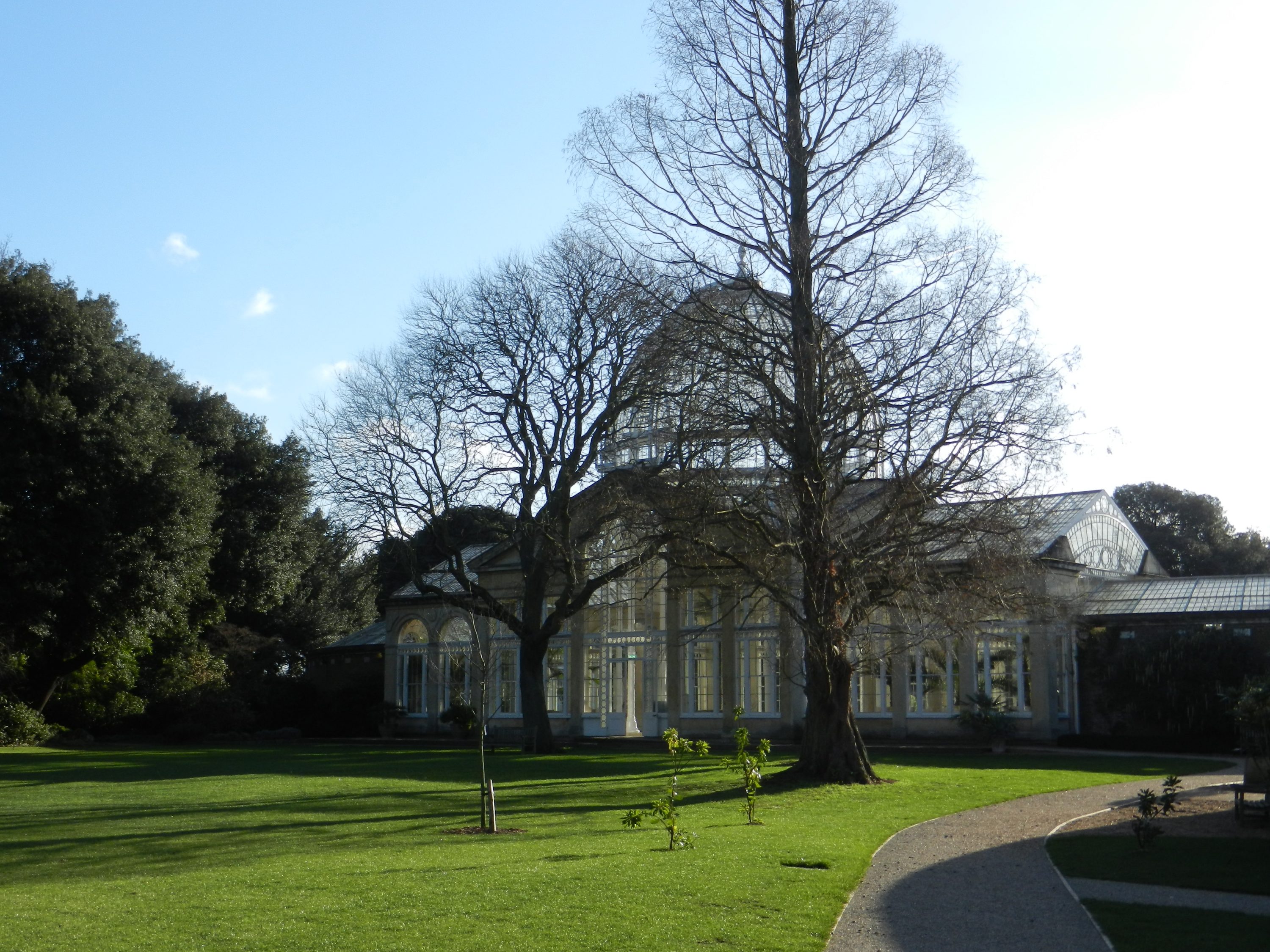
Syon House and its surrounding Park (200 acre), including the Great Conservatory (pictured above), is owned by the 12th Duke of Northumberland and is his family’s London residence as well as being a major visiting attraction often used for lavish entertainment.

The Great Conservatory in the gardens, designed by Charles Fowler in 1828 and completed in 1830, was the first conservatory to be built from metal and glass on a large scale. It is a landmark that is easily visible from air when flying into Heathrow, which fly path cross the area.

Syon House derives it name from Syon Abbey a medieval monastery founded in 1415.  In 1539, the abbey was closed by royal agents. After the closure of the abbey, Syon become property of the Crown for a short time before coming into the possession of the 1st Duke of Somerset. He then had Syon built in the Italian Renaissance style before his death in 1552. In 1557 was meant to return to it’s original purpose of an abbey but this idea was short lived. Syon then was acquired by Henry Percy, 9th Earl of Northumberland, in 1594 and has remained in his family ever since. It opened to the public in 1951  for the first time under the 10th Duke and Duchess. For more details and how to find it, see www.syonpark.co.uk

Share

Japanese Knitting Magazines

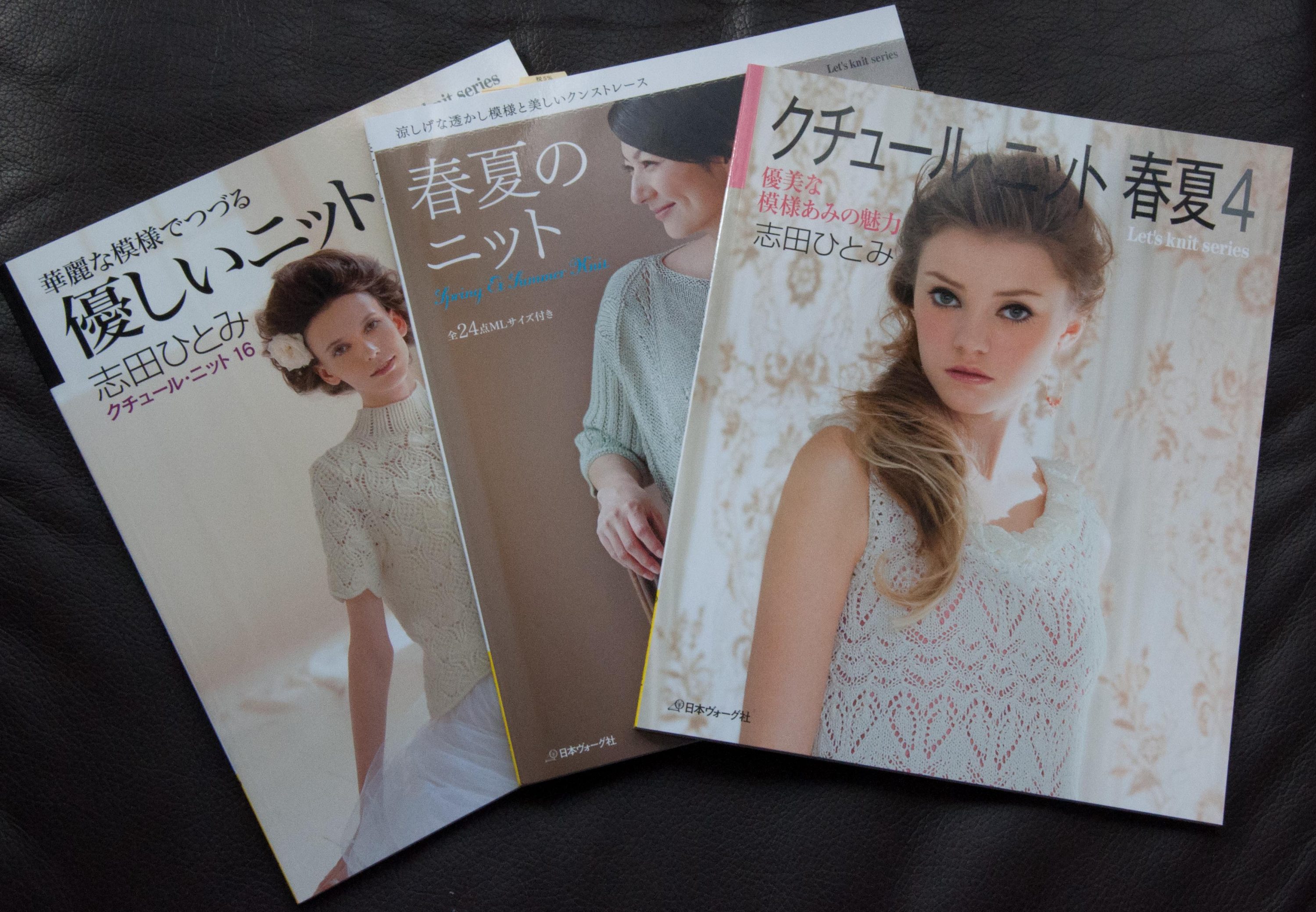
I love Japanese knitting magazines and books. The stitch patterns are intricate, delicate, elegant and a challenge to knit. Luckily for me, Japanese designers use charts with international symbols to explain the stitches and schematics, read garment outline, with sets of numbers to indicate the stitch numbers to cast on, to increase and decrease as well as to cast off so no Japanese language classes are needed. I order my magazines and books from Yes Asia who offers free shipping to a large selection of countries as long as you spend more than 39 USD and that is extremely easy, believe me!

When you order, chose Japanese books and write knitting or Let’s Knit in the search window on www.yesasia.com. My favourite is the Let’s Knit series and the knitting patterns books so-called stitch bibles, both tend to include a few crochet patterns, equally stunning, as well. Estimated delivery time is usually 4 weeks but I have never waited more than 2 weeks, ever…

Another good online shop is the Canadian Needle Arts Bookshop where you can have a look at the latest magazines, both the cover and some of the designs inside. Incredibly useful is the free pdf on interpreting Japanese Knitting Patterns by Marsha White, see www.needleartsbookshop.com.

‘How to Read Japanese Graphical Knitting Charts’ is an useful article you will find among other helpful tips such as knitting graph paper on www.tata-tatao.to/knit/e-index.html. In addition you will also find numerous tips and Japanese translations as a member of the Japanese Knitting and Crochet group on Ravelry, see www.ravelry.com. Learn & Enjoy!

Share

The Danish Yarn Purchasing Association

I have become a member of The Danish Yarn Purchasing Association, established 1998 by a group of Danish Textile designers, and have received a folder of their shade cards of yarns available for sale to all their members, including a price list, and information about their latest exhibition. “The Yarn Purchasing Association is aimed at textile designers, craftspersons, textile artists, and institutions offering textile courses. It buys quality yarns which is impossible to get hold of in the Danish retail trade and distributes these to the members of the Association.”

“It is the purpose of the Association to give members an influence on the selection of textile materials available for unique works and for industrial product development. The aim is thus to improve the foundation on which textile art and design may be created. Members are therefore most welcome to suggest which yarns should be available for sale through the Association.”

I am delighted to admire yarns made by a mixture of horsehair and cotton, wool and paper, dissolvable yarn, ‘rubbery’ yarns made of polyurethane – ideal for jewellery making, silks and wools! Some of which are sold at Handweavers in London, a long time member, see www.handweavers.co.uk.

There is no need to apply for membership any more even though their website requires a ‘adgangskode’ access code read password – chose your own. The one time fee is 1 000 DKK (around 100 GBP) if you live outside of Denmark while the annual fee is 125 DKK.  For more information see www.yarn.dk. I love my shade cards so the membership is a source of inspiration for me.

Share

New design: Dewdrop Shawl Jacket

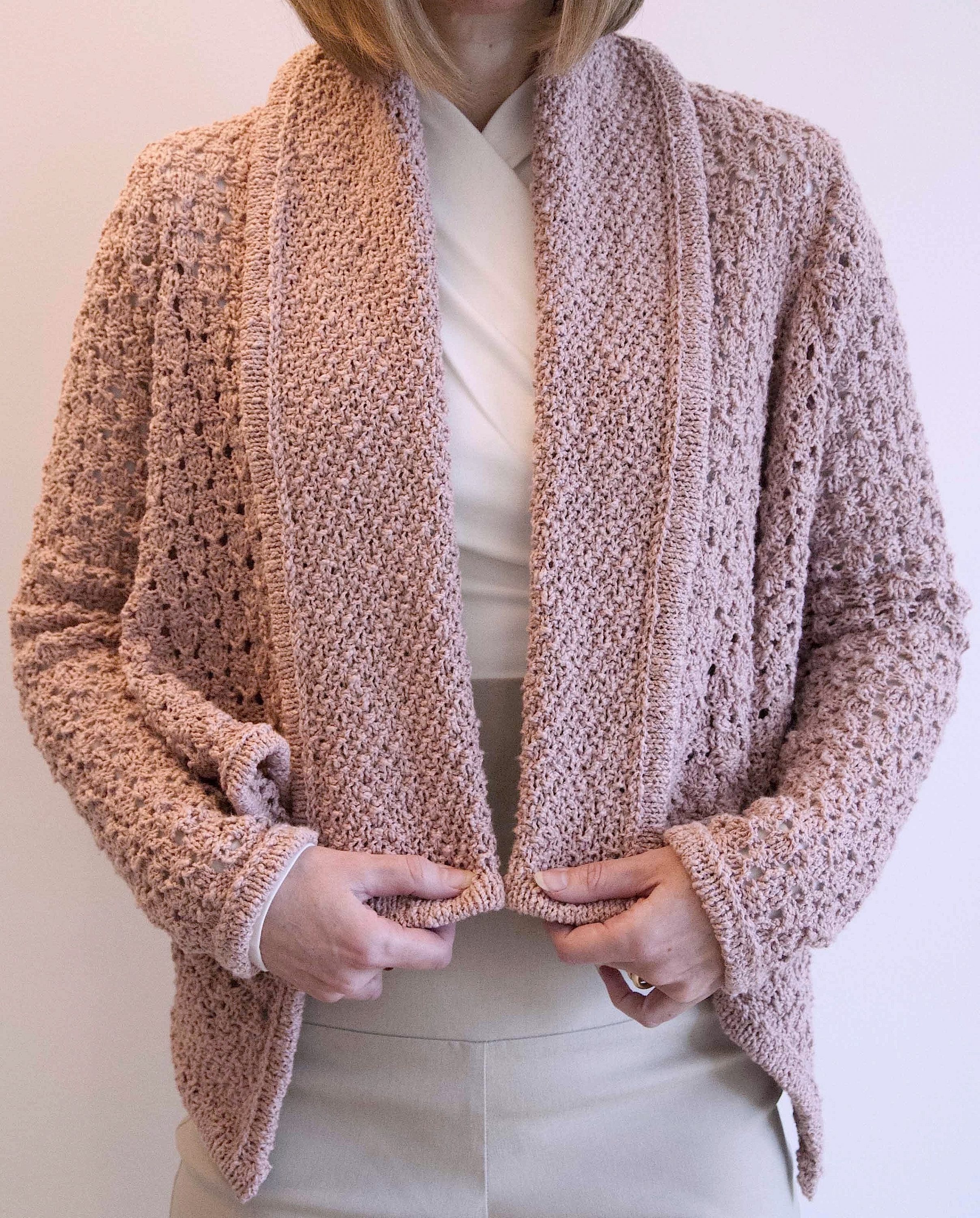
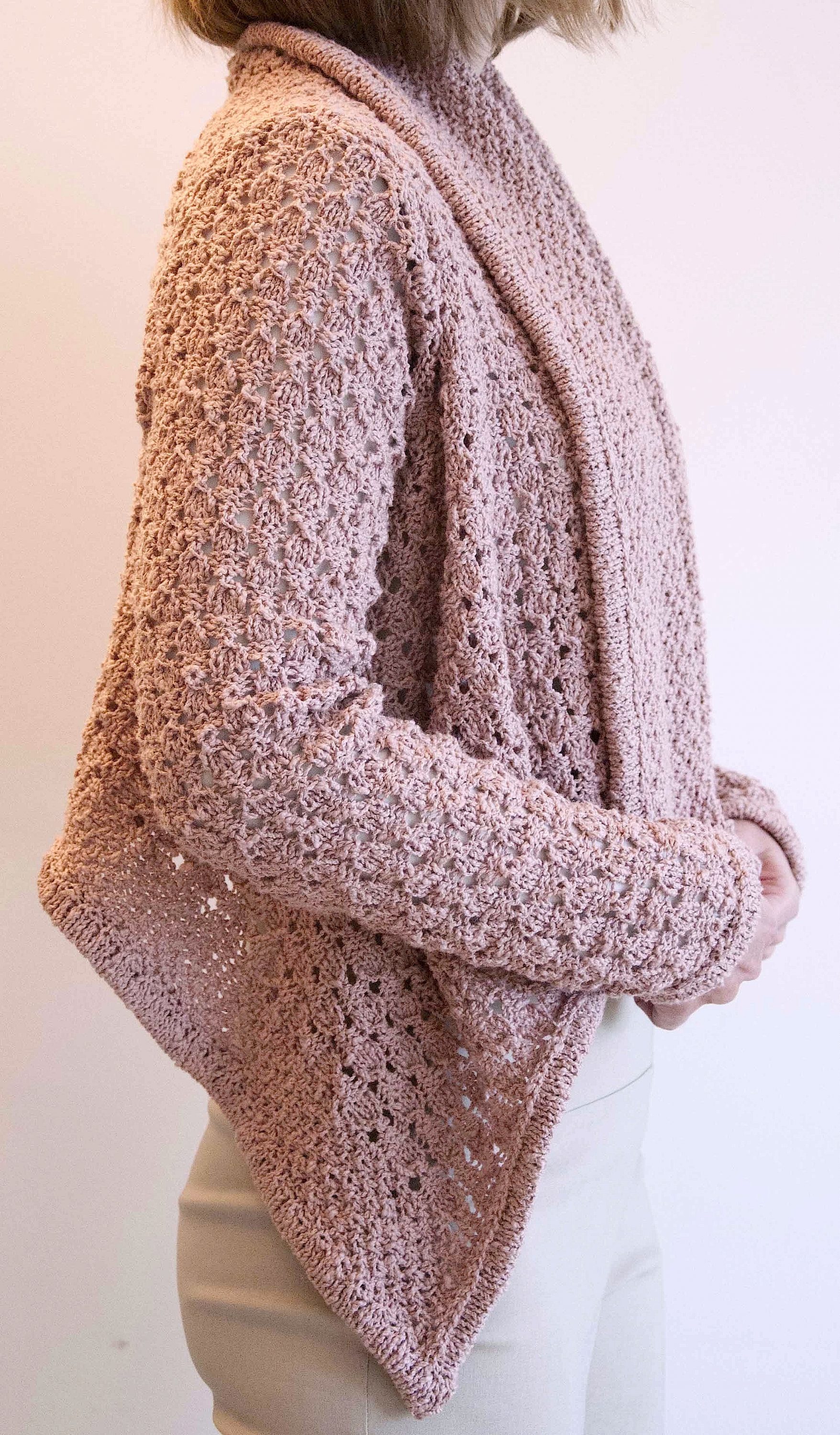
Dusty pink yarn, one of spring’s trend colours, tempted me. A summerly shawl jacket knitted sideways in a dewdrop pattern where both sides are equally stunning, one is elegant, the other more relaxed. Drape it with a shawl pin or use it upside down giving it a longer back and a smaller collar. Designed for Thomas Kvist Yarns.

Knitted in Colina, a mixture of cotton and linen giving the jacket substance. The yarn is soft and comfortable to wear in addition it is of a slubby nature giving it an exciting uneven finish.

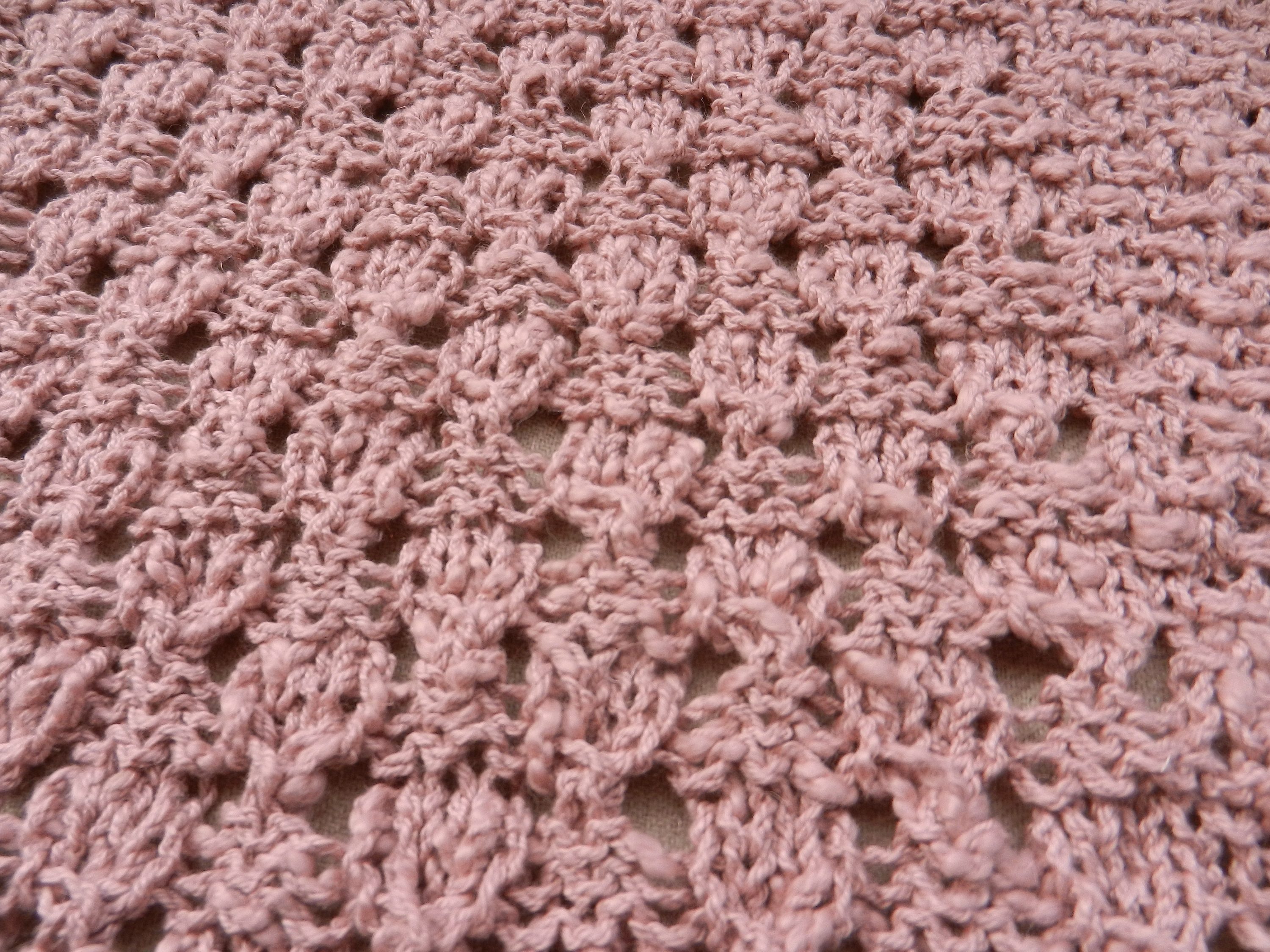
It requires 9 hanks of 100g Colina, by Thomas Kvist Yarns, shade 12 (70% cotton, 30% linen, 160m/175 yds). The tension is 17sts and 24 rows in patt = 10cm/4’’ square using 3mm/US 2-3. See selection of shades and retailers on www.thomaskvist.se. Below is a close-up of the swatch, unfortunately photographed upside down.

I look forward to seeing the professional photos and will show you those when they are done.

Share

My Knitted Raincoat

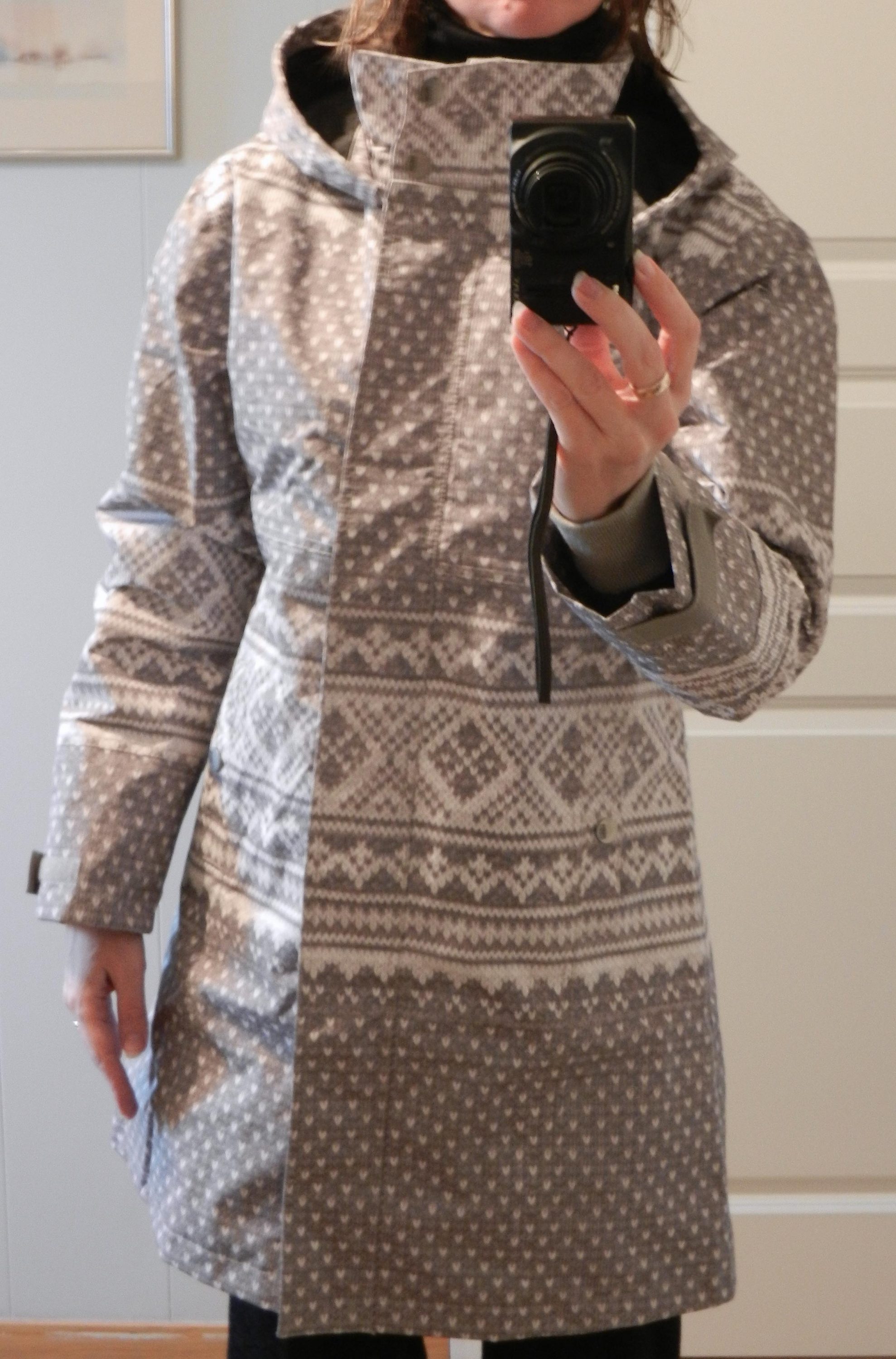
My new knitted, actually a knit print, raincoat given to me by the yarn shop Nøstet Mitt after a successful knit café fashion show & presentation. It makes my rainy day! Yes, it is photographed in the mirror – due to lack of assistants. The pattern chosen is a variation of the traditional Fana pattern from Fana outside of Bergen, Western Norway, from the 1850’s. Annemor Sundbø claims, correctly, the pattern is a Setesdal pattern and not Fana.

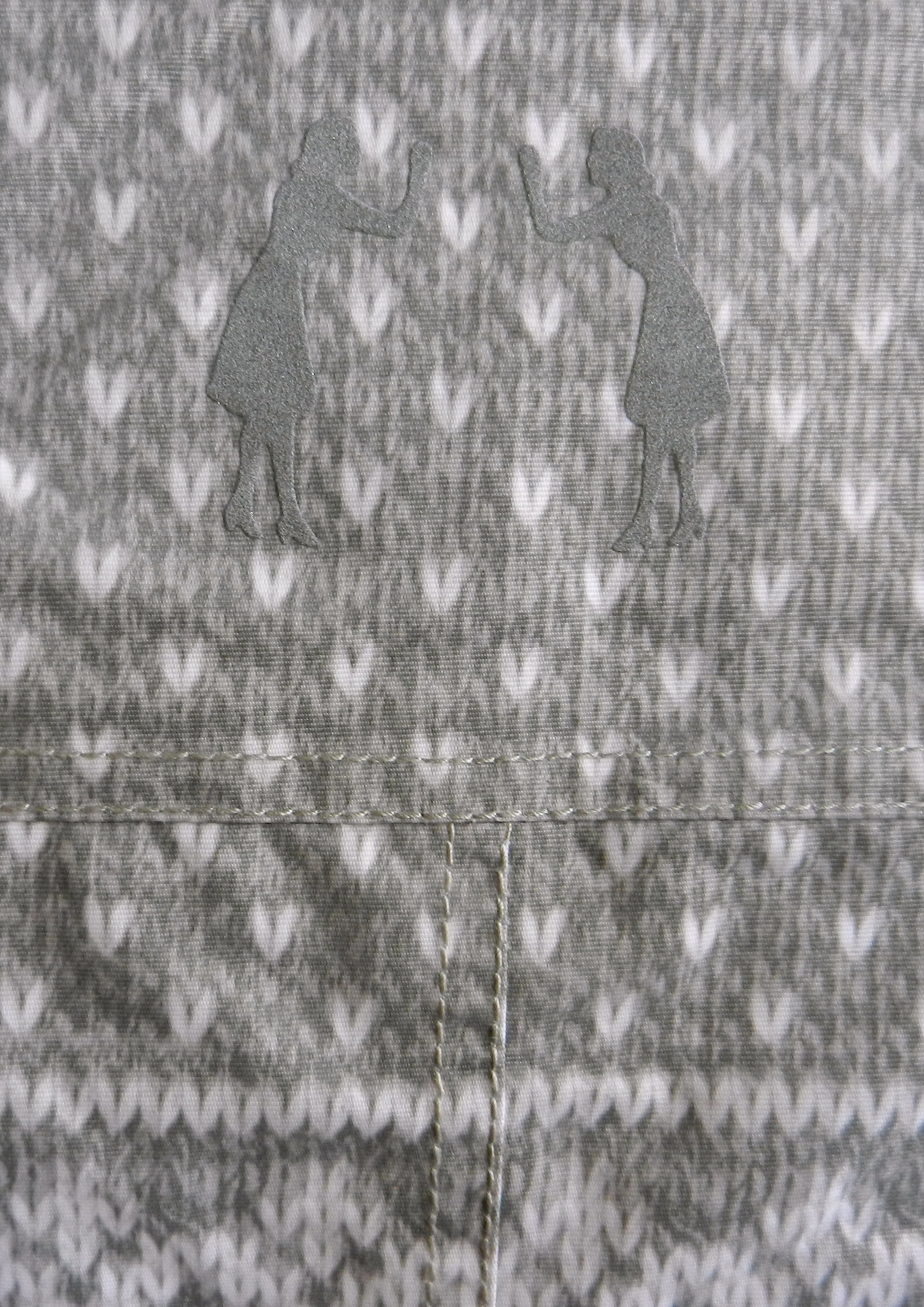
It is designed by Grete Marchmann-Jensen, manager of Søs Jensen, søs is an abbreviation of ‘søstrene’ Norwegian for sisters, see the reflector image on fabric swatch at the back in the middle of the shoulders.

“The idea to make raincoats for women came from one of the sisters, who looked around and said, “What about cool outdoor clothing for women in the city, “it doesn’t exist in the market.” The idea and research started autumn 2006. 3. July 2007 SØS Jensen was established.” See www.sosjensen.no.

Freddy, co-owner of Nøstet Mitt, discovered the collection and knew that most knitters would be intrigued. So it is available to buy from them. See www.nostetmitt.no.

“Our PU Raincoats have welded seams and supersoft qualities that fits you great with a high waterproof and breathability rating.

The raincoats are feminine and contain raffined details. Our technical raincoats/parkas have taped 3M seams for great comfort. The parkas looks like a regular parkas, but has all the qualities of a raincoat. Our clothes also have reflective elements for your safety.”

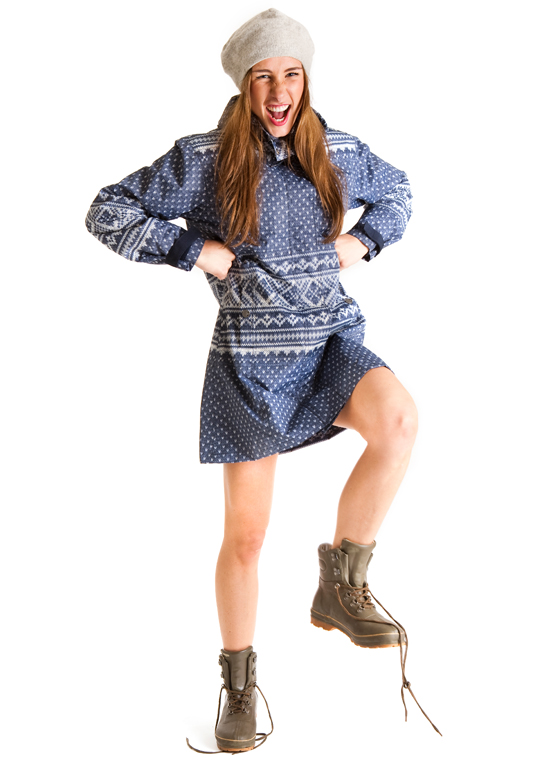
My new raincoat and this photo, a different colour way, makes me happy!

Copyright: Søs Jensen

Share

Report from Knit Café

For all of you that could not make it to the Knit Café on last Wednesday at Lille Persille at Lambertseter Centre, organised by Nøstet Mitt, here is a report.

61 knitters (including my mum) + my brother, designated driver for the evening, made it to the knit café where I was to present my newly released book ‘To rett en vrang. Designstrikk’. I was chuffed that Thomas Kvist, owner of Thomas Kvist Yarns, came from Sweden to see the complete collection, shown for the very first time. 3 of the garments in the book are made using his yarn. Below you can see Thomas studying the snood & Blackberry sweater.

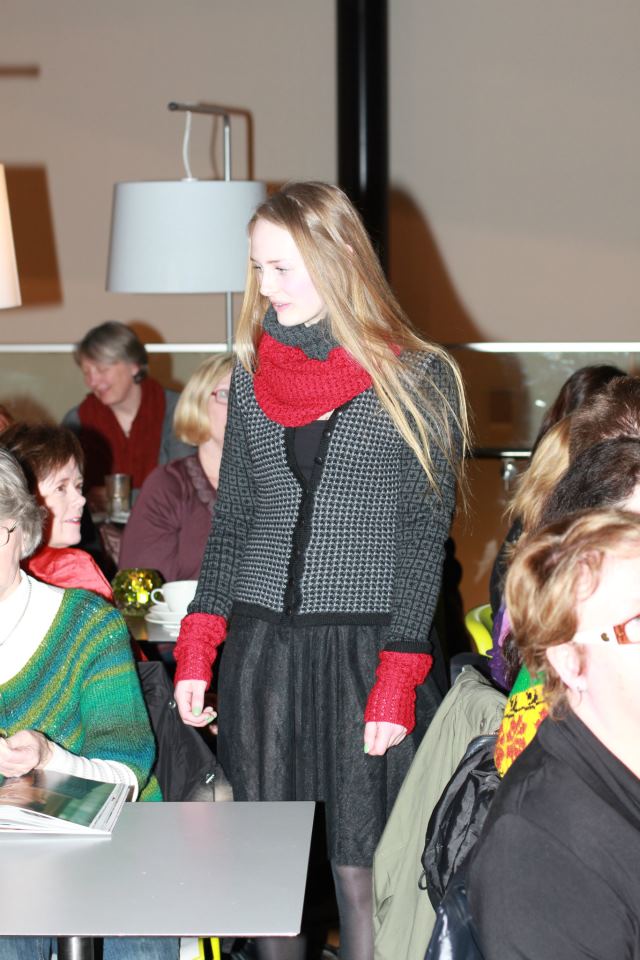
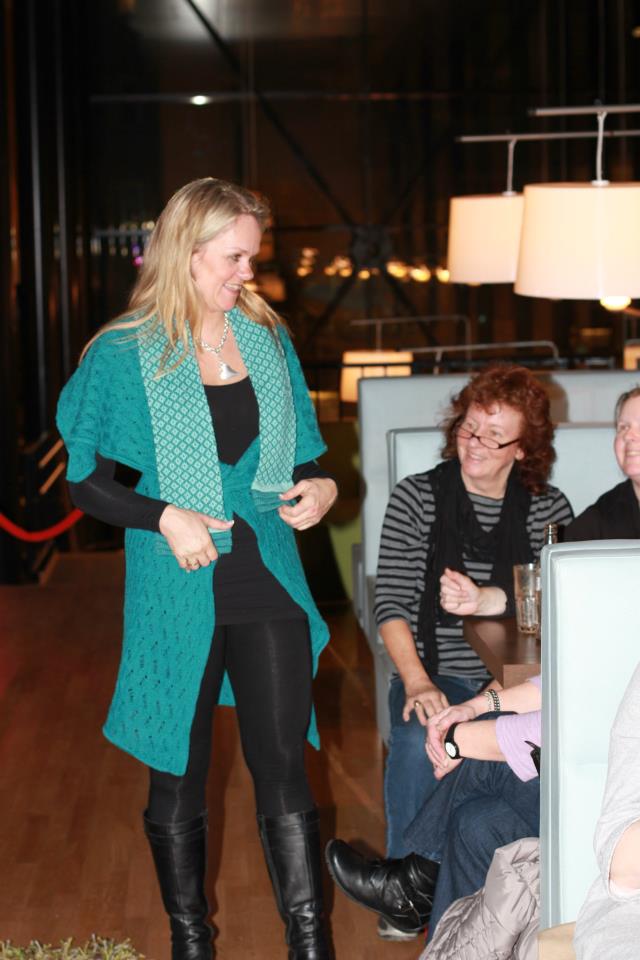
I had requested 5 models (since I had 2 on the book launch) which meant that one of the owners of Nøstet Mitt, one of their managers, one of their employees, their daughter and a friend, all had to take part. They were all pleased that I had not brought the Camilla Skovgaard shoes with the 11cm heels and had decided that since Katrine is a dancer she had to wear the highest heels.

As I presented the garments and talked about my knitting experiences, I am pleased to tell you that nearly everyone was multi-tasking by knitting or pattern checking the book simultaneously.

All the models posed on a stand like a live sculpture while I talked about each garment before they walked a round so everyone could feel the texture and study details close up.

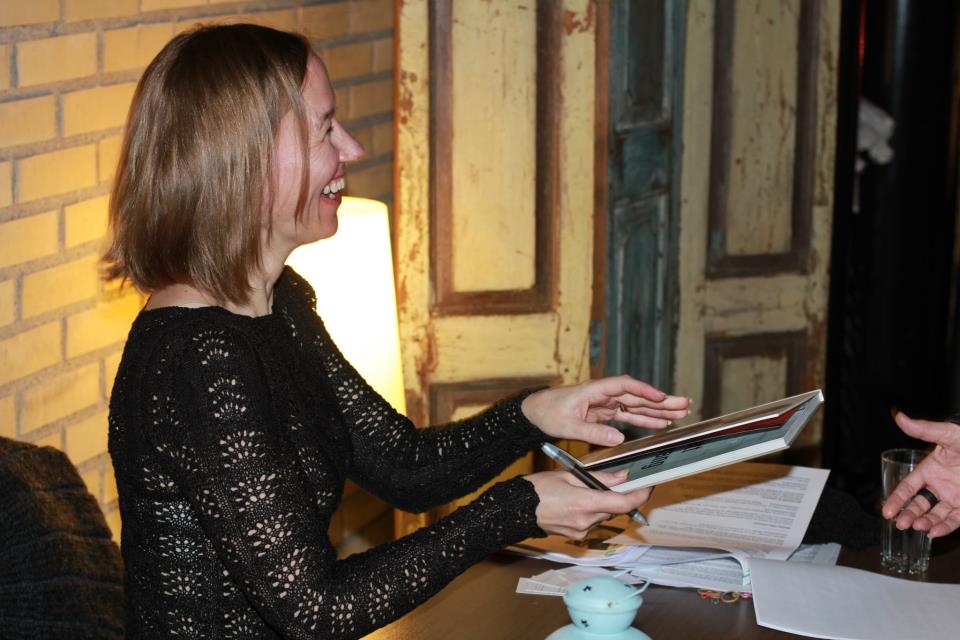
After the presentation of all garments, Nøstet Mitt offered 25% discount on everything in the shop which was ever so tempting and most of the knitters present took the opportunity to increase their stash. I was ready and where happy to sign books, as you can see below.

In addition there was a draw for a gift voucher worth 500 NOK, valid in all 3 shops, which everyone, excluding my brother would like to win. Glenn was actually happy he did not win.

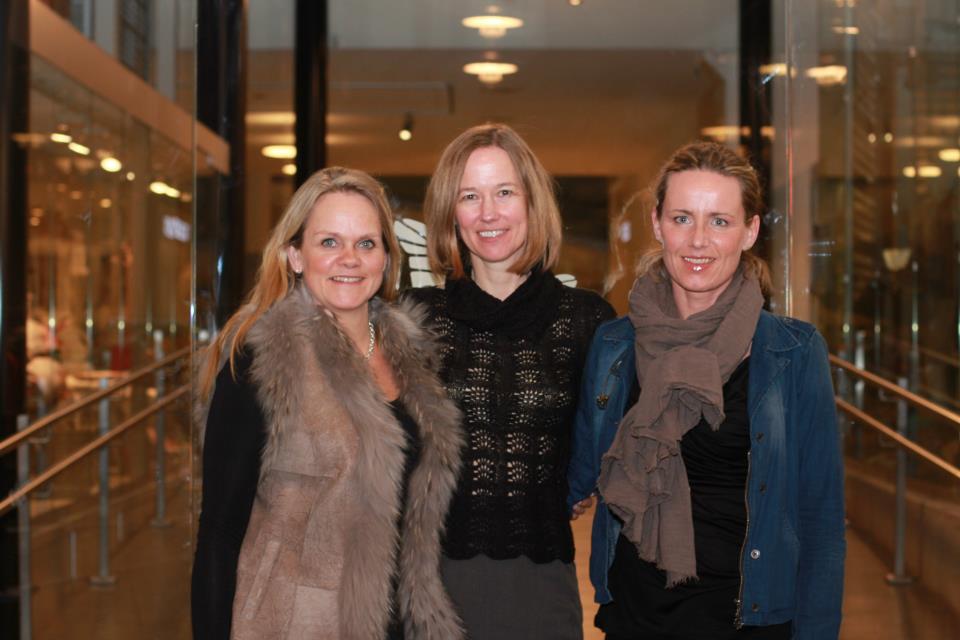
Just before leaving, more than 3 hours later – the knit café was from 18.00 to 21.00 – I was photographed together with Anne Grethe (owner) and Vibeke (manager.)

I was given a stunning rain coat with a knitting print by Anne Grethe and Freddy (co-owner and photographer for the evening – more photos on Nøstet Mitt’s Facebook page)! It is unbelivable and you have to see a photograph of it – try imaging a knitted raincoat in a traditional Norwegian knitting pattern. To be continued…

Please find errata on the book page, me on Ravelry (I am lindamarveng) and on Facebook.

Share

New Design: Oversized Seed Sweater and Snood

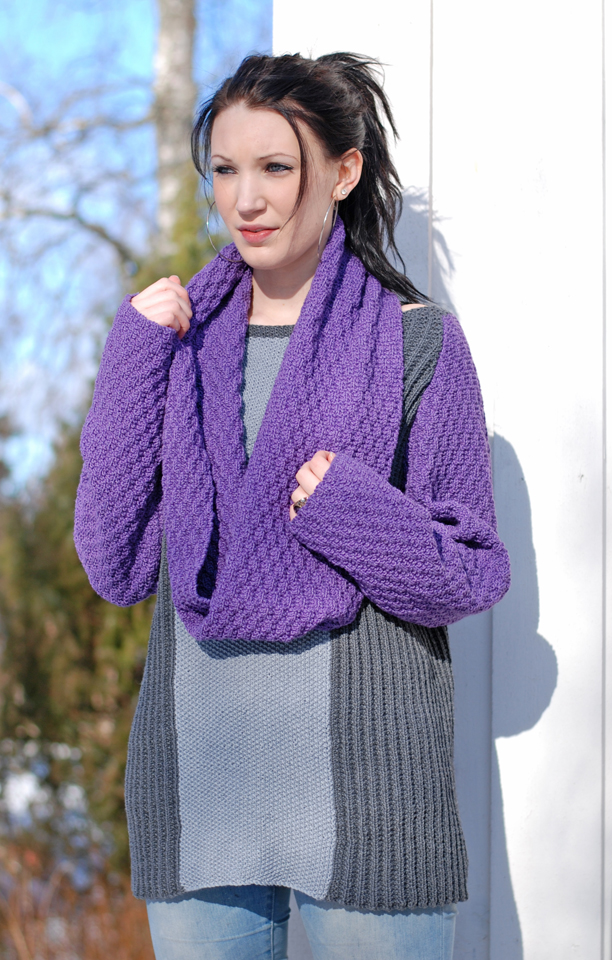
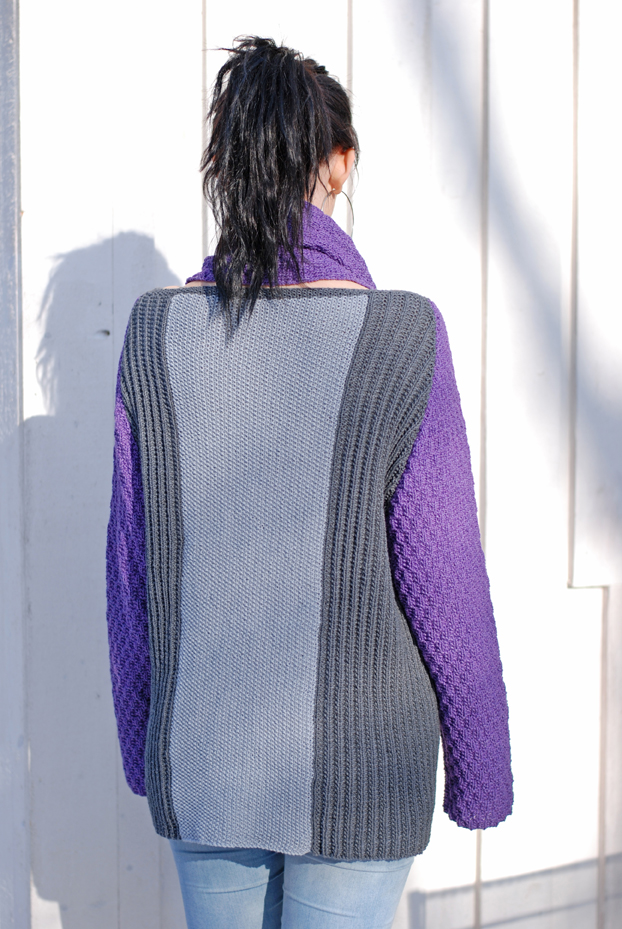
Inspired by Balenciaga’s asymmetrical colour blocking tunics I have designed an oversized sweater with a snood in shades of grey with a beautiful lilac as contrast. Three different stitch patterns from the same family complete the look. The seed sweater and snood is knitted in Amoretto, a lovely soft and warm mixture of alpaca and cotton, with a stunning stitch definition. Here is the professionally photographed Oversized Seed Sweater and Snood.

Copyright: Thomas Kvist Yarns

Amoretto is a mixture of 45 % alpaca and 50% cotton with a small percentage of polyamide 5%, 100 g/3.5 oz hank, 250 m/273 yds. Tension/guage is 27 sts in pattern equals 10cm/4″ square using 3 mm/ US 2-3.

Copyright: Thomas Kvist Yarns

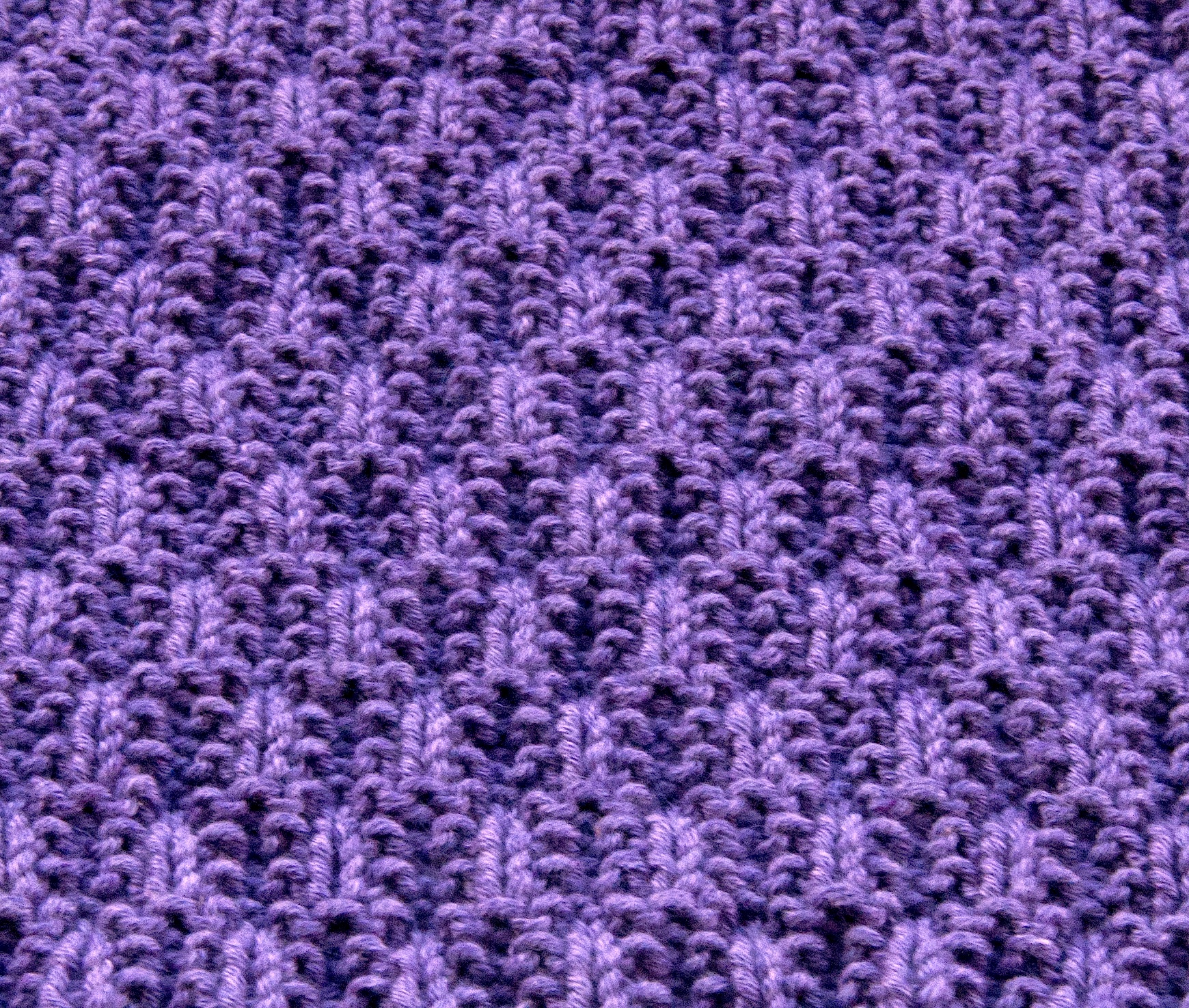
The sleeves and the snood is knitted in Seeded Rib Check, see swatch below, using col A, Lilac, while the body of the sweater is knitted in 2 identical middle sections in Moss/Seed Stitch using col C, Pale Grey, and 2 identical side sections in Seeded Rib Pattern using col B, Dark Grey. The collar band is knitted in the round.

The pattern will shortly be available as a downloadable PDF in English and Norwegian, due to be translated into German soon, through selected yarn shops see www.thomaskvist.se

Share