Det Kvite Gullet/The White Gold Exhibition

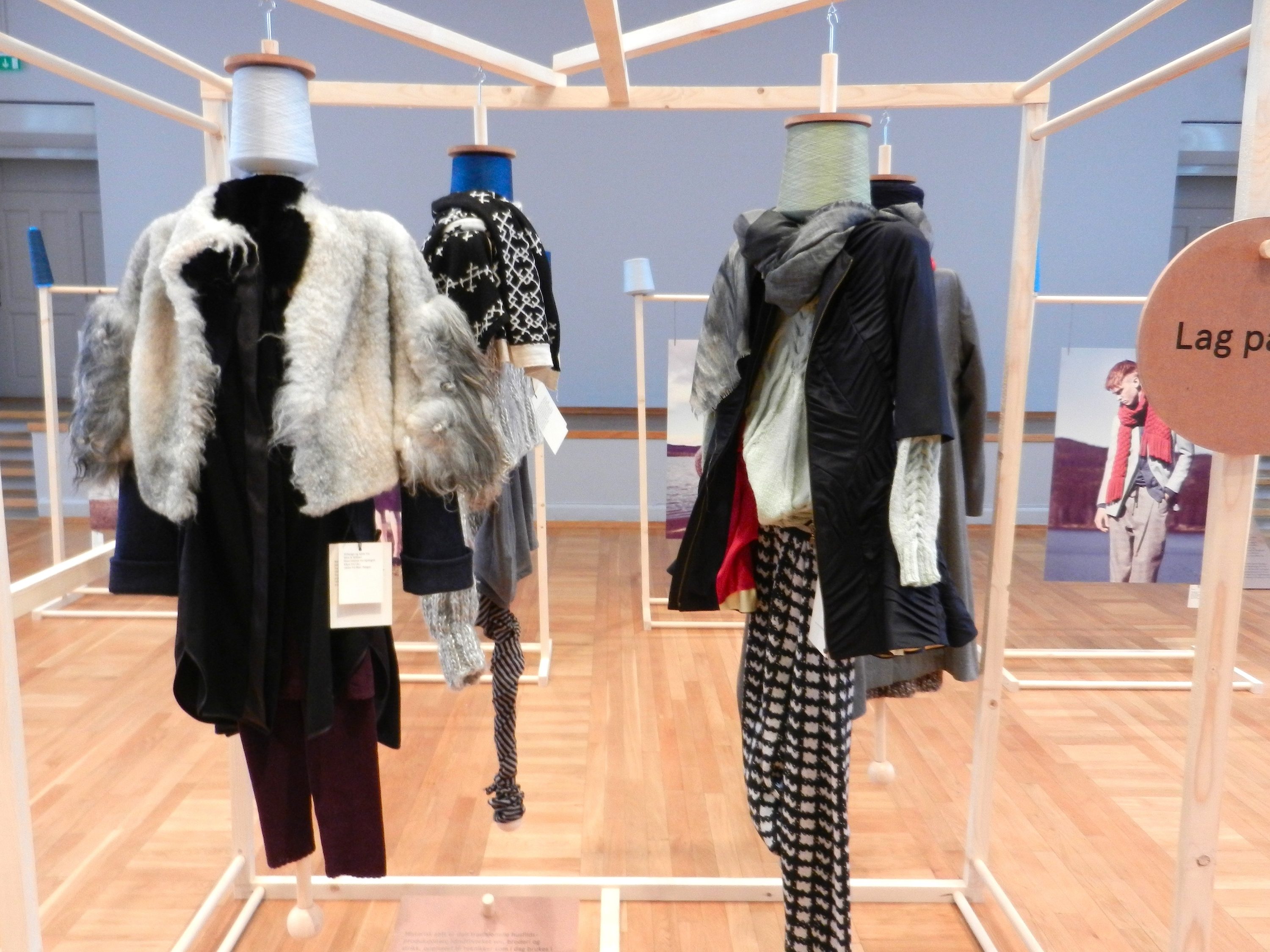
Even the second time around, trying to enter the exhibition at the Kunstindustri Museet/The Museum of Decorative Arts and Design, felt like a mission because the security staff at the reception desk was not aware of its recent opening. Not unlike the pop up shop it was well worth seeing and if you were there when I was there you would have seen me awestruck by several creations and garment stories told by prominent designers. One of the new upcoming designers whose name I have just learnt is Mari Vaagen, a 2012 graduate from KHiO/Oslo National Academy of the Arts, already presented in Vogue Italia and at the “Fashion – a development industry in Norway” seminar which I attended on Thursday. Take a look at the jacket to the left in the photo above and even more fascinating is the back of it, see below. Here are more stunning photos: vogue.it/designavgang-2012-oslo.

Vaagan’s lambskin jacket “Salt” is inspired by the Norwegian wild sheep bred and the rough coast climate where these sheep live according to the designer. It is made by a fur technical seam, while details and texture are created by felting, tying and shaving of the fibres. You will find more of her creations on marimagi.
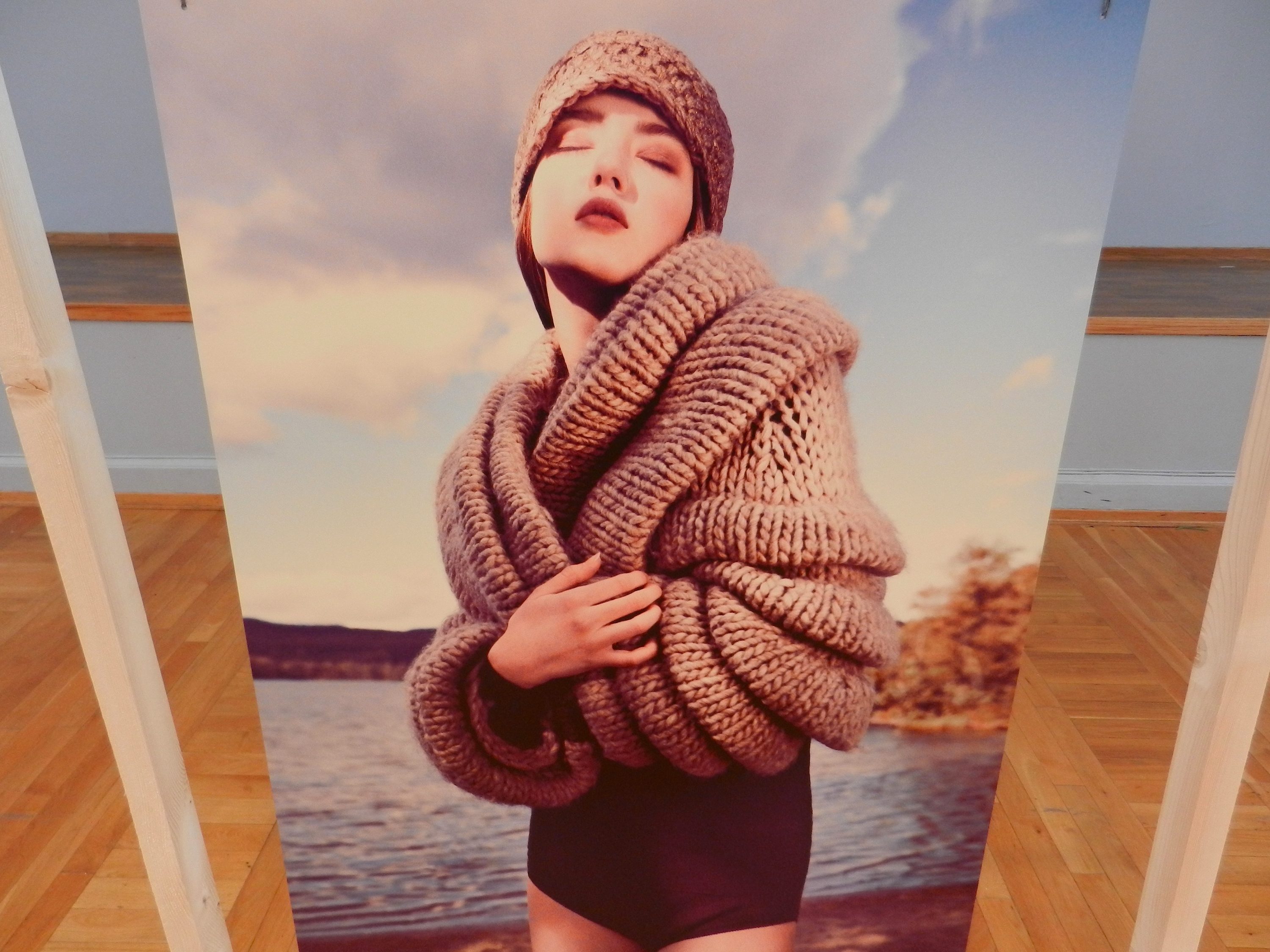
A jaw dropping jacket by Nina Skarra – another international sensation do look at: ninaskarra, hat by Cathrine Hammell – known for her contemporary basics well stocked in my wardrobe, see cathrinehammel, shorts by Vera & William – luxurious underwear, see verawilliam. Not all designers, established and upcoming ones, were presented by their garments but told a story of their favourite knitted garment.  Norway’s most acknowledged designer, Per Spook – the only one who used to have his own fashion house in Paris – presented his old traditional jacket he inherited and still carry in his back pack when he is trekking.
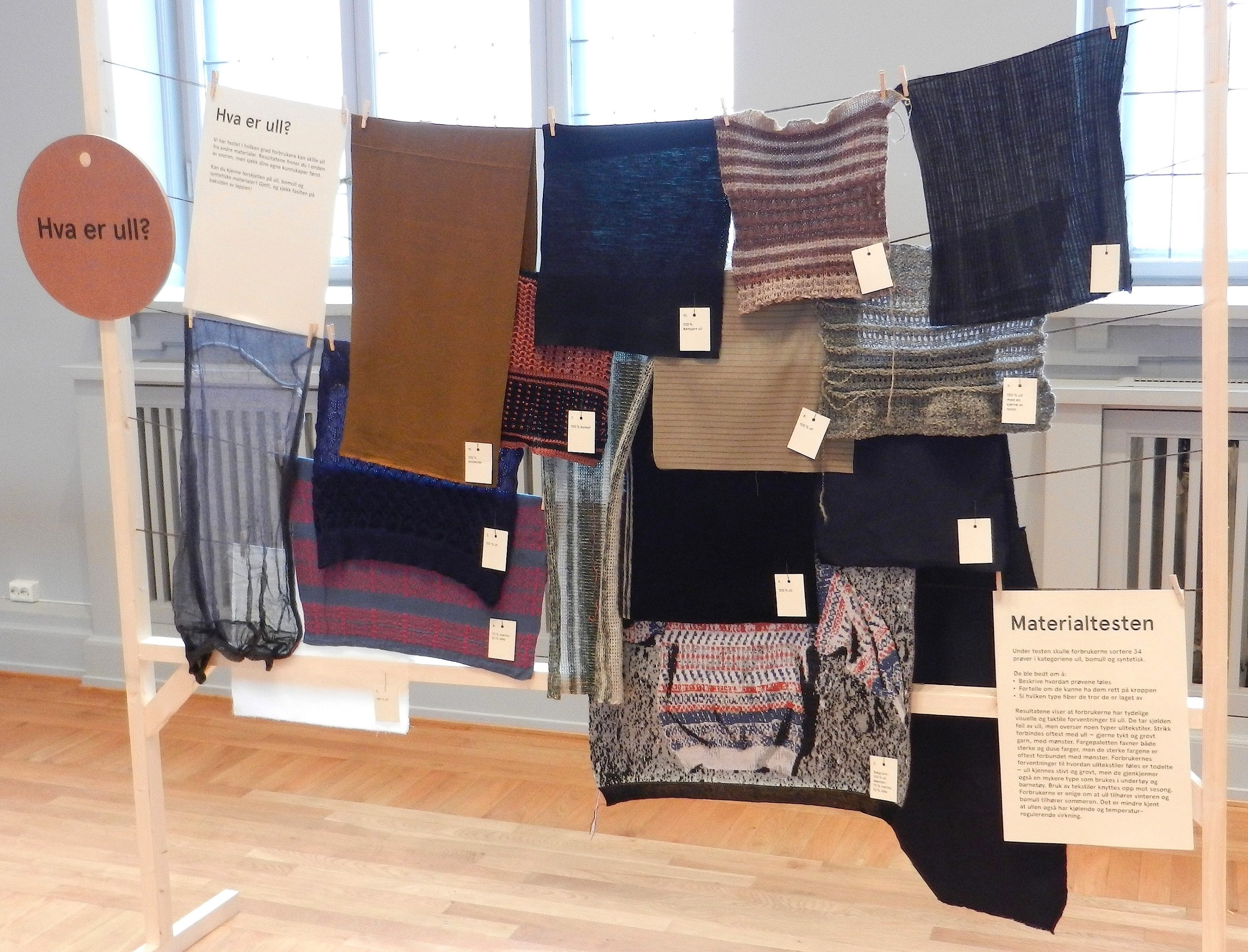
Test yourself, “what is wool?” the sign says and encourage you to feel each sample and guess the fabric. A good lesson because I could not distinguish between all the different types of wool or blends. Several yarn producers were presented as well including my Norwegian favourite Hillesvåg Ullvarefabrikk who has just introduced a new yarn called Norwegian Furwool yarn – yes, there is actually a sheep breed called Norwegian Fur who mainly supply fur skin producers – until now, that is! I have received samples and I am ever so happy to test it out and will let you know my progress…

Share

Yarn Pro a new APP

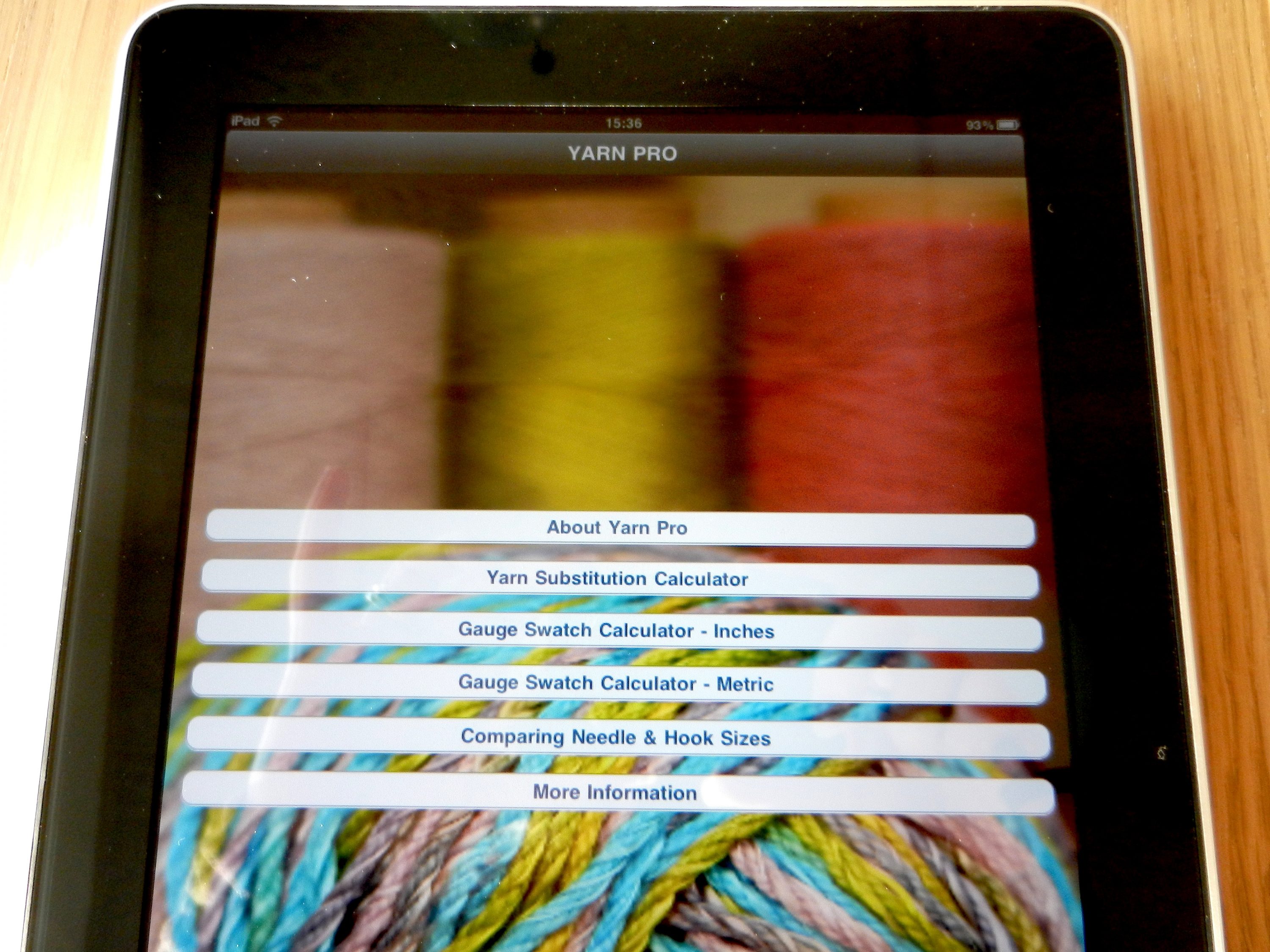
I have always considered my husband to be the gadget obsessed of the two of us, but I must admit that I relished inheriting his first iPad (read: 1. version, outdated – but still!) – and finally I have my own iPhone. But my next step is even more shocking, I have been discovering apps – nearly with the same passion as new yarn discoveries – and like any heirloom they should be passed on.  Yarn Pro is just what it says; a pro assistant always on hands when you need it when you have questions about substituting yarns in a pattern. Will this yarn work? You wonder and your Yarn Pro offers a yarn substitution calculator as well as an gauge/tension calculator in both inches if you are using an American pattern, or in cm if you are using a European pattern. All you have to do is simply key in weight and length the pattern calls for and then the yarn substitute numbers or the numbers of stitches and rows in the pattern and the ones on the ball band or the ones from your own knitted swatch.

A list of recommendation appears after you have filled in the yarn substitution calculator, here is an example: “How does the substitution yarn compare with the yarn called for in the pattern? With great reservation. The substitute yarn is significantly thinner than the original yarn. Should the substitute yarn be used? Probably not. How many hanks, balls, skeins or cones are needed of the substitute yarn? 10. Suggestion for gauge swatch: As the substitute yarn is not an ideal replacement for the yarn called for in the pattern, above average skill in pattern design and adjustment will be needed.” In other words time to rethink. The Sweaty Knitter who has created this masterpiece claims “[As] guage is critical to garment fit…” and I could not agree more!

I find Yarn Pro not only extremely useful, but also addictive because it also has a lot of essential info and advice about swatching, ease (read: do check how close fitting your project is), substituting yarn (read: should be close in weight), yarn weight & fibre content, the different fibres; protein, cellulose, artificial and synthetic in addition to list of comparable needle and hook sizes. You can read more about it here: sweatyknitter and you can buy your own Yarn Pro for your iPhone, iPad and iPod Touch through Apple’s App Store at itunes. It is a cheap way of obtaining your own yarn PA.

Share

ULLUKA/Wool Week – Campaign for Wool

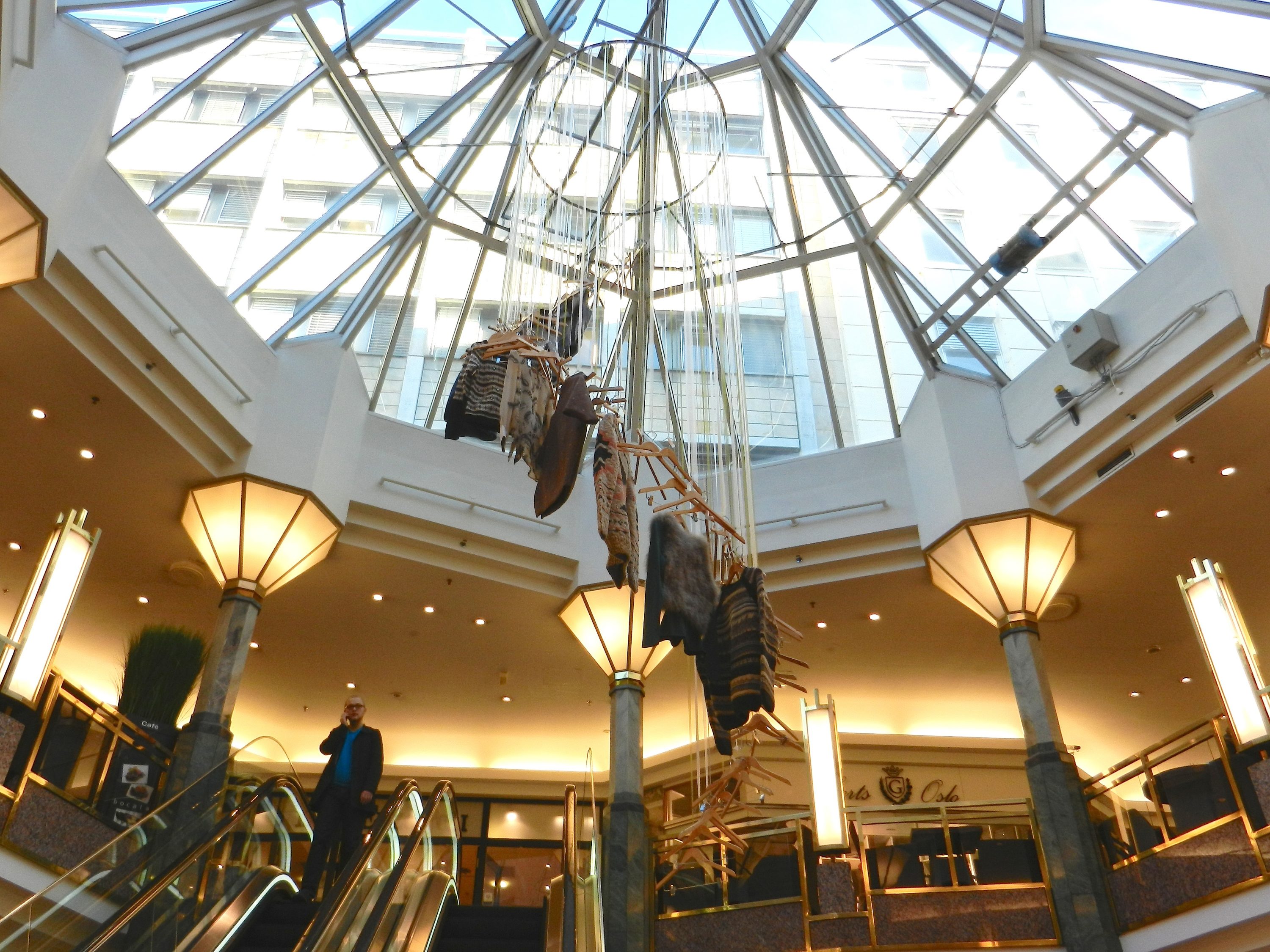
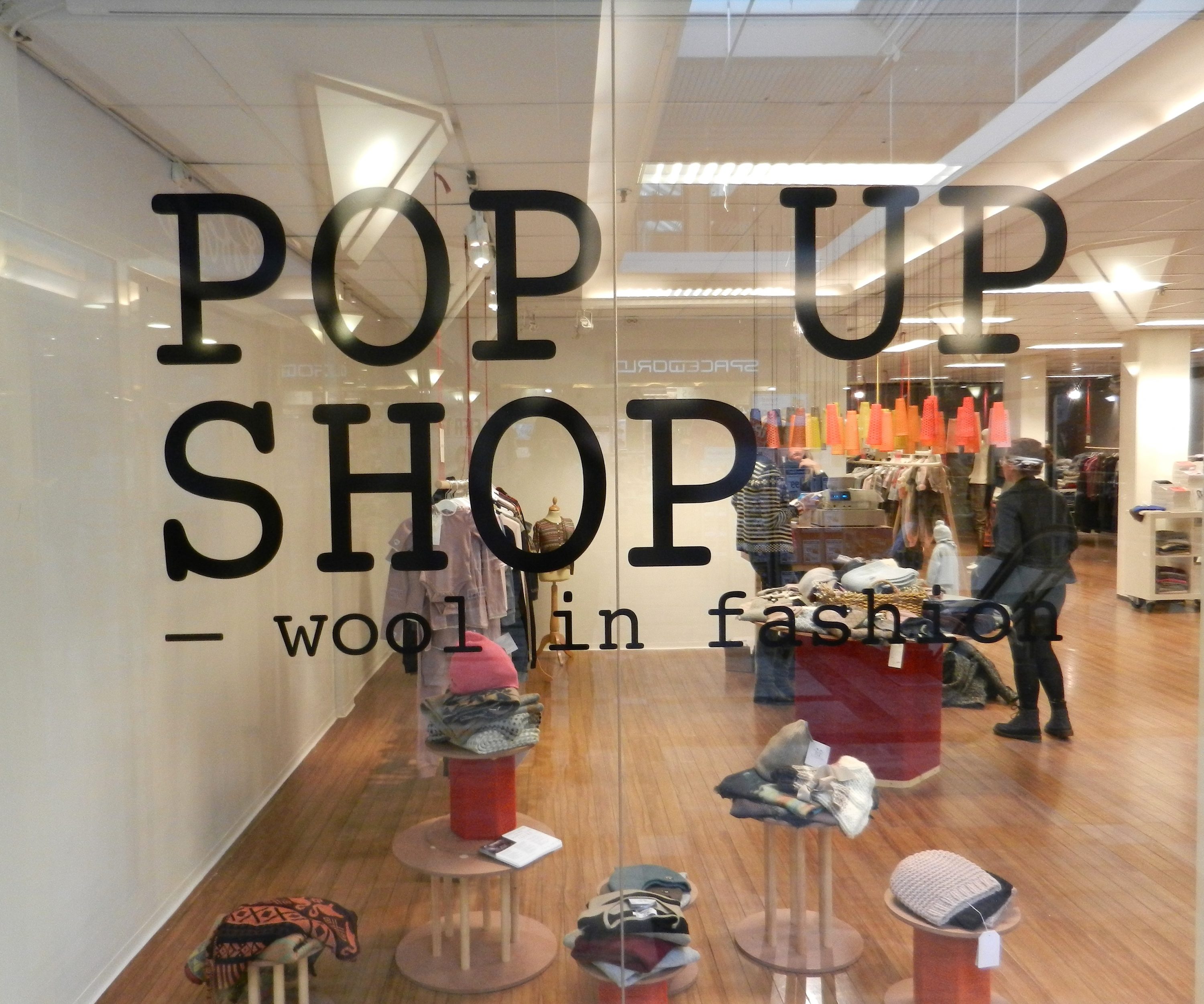
Monday was the start of the Woolweek – campaign for wool 2012 – organised by the Norwegian Fashion Institute, Nortura, NICE Fashion and the Institute for Consumer Research along with spinners and wool brands to highlight the unique potential in local use of wool. I have been looking forward to seeing the pop up shop “Wool in Fashion” at Paleet (a posh shopping arcade at the main street Karl Johan in Oslo – see above), the exhibition “Det Kvite Gullet”/The White Gold at The National Museum and last but certainly not least the seminar “Fashion – a developing industry in Norway” on Thursday at the Norwegian Parliament. I have signed up for the seminar and I am waiting very impatiently for Thursday 1100 hours to arrive…

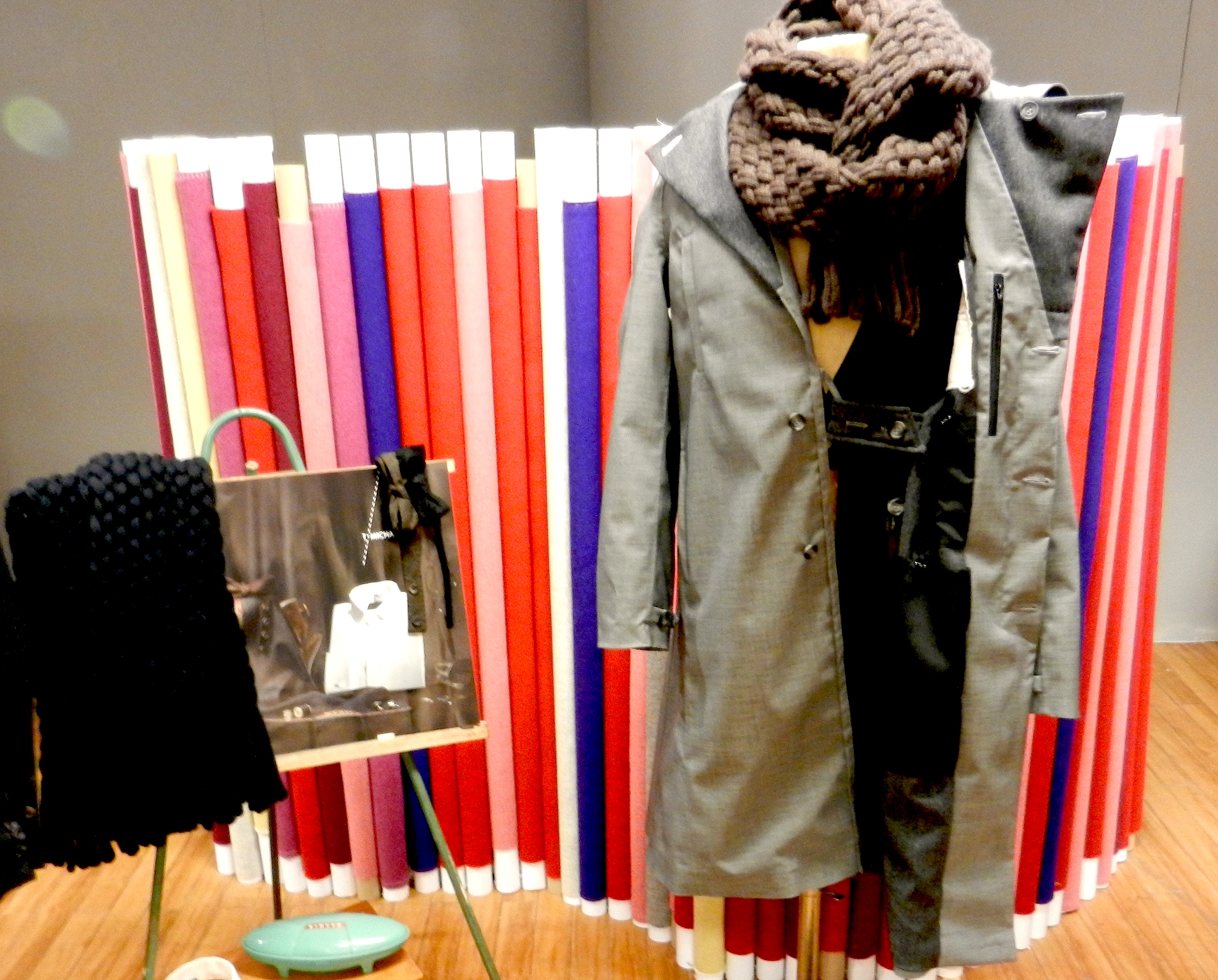
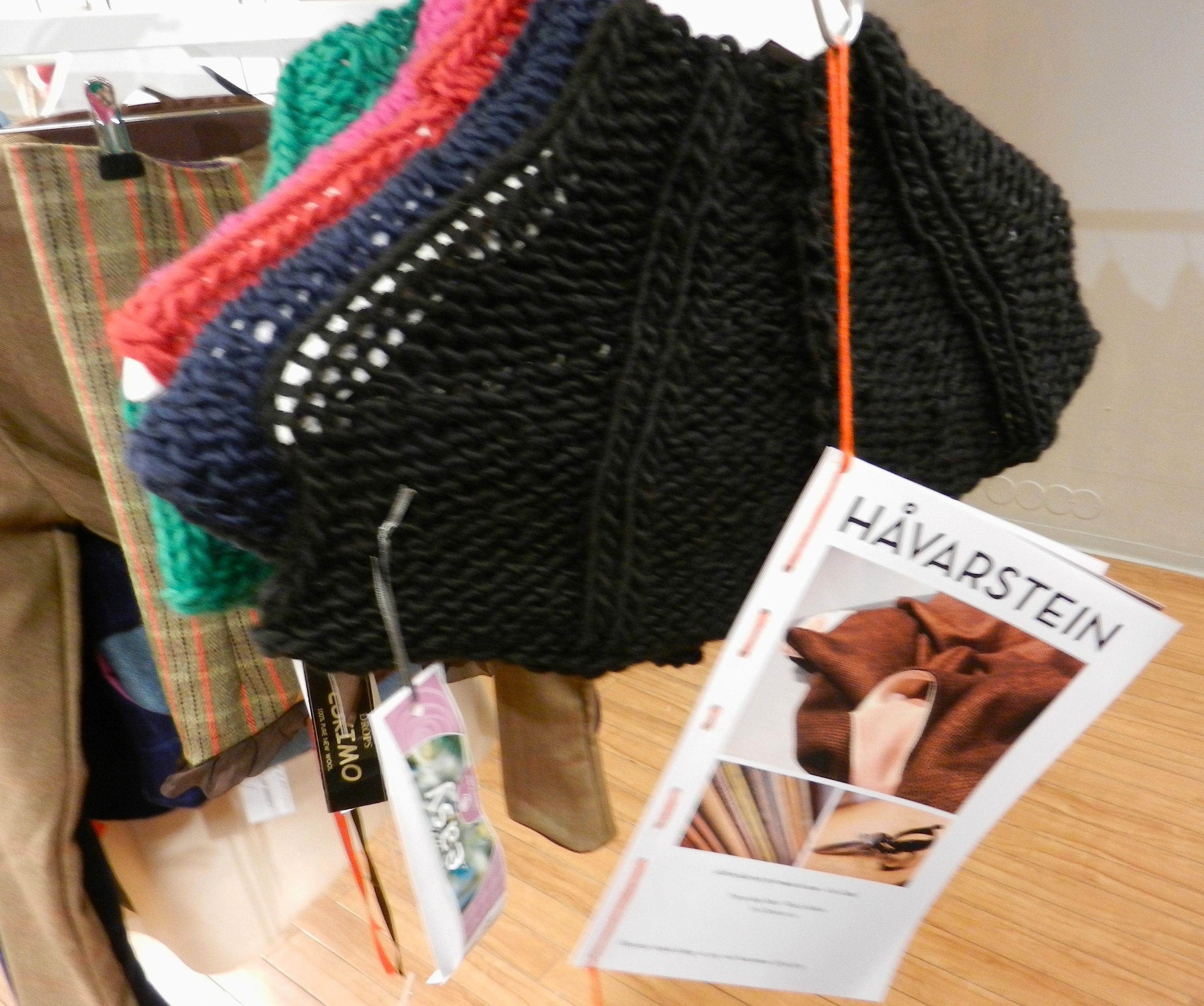
The Pop up shop is a co-operation between 14 Norwegian designers and established brands and NFI. The theme is the manufacture, experiment and designs with different types of wool as a natural resource. As you can see from my photos there were lots of garments and labels to study. The coat, below, is part of a tailor-made range for men by Norwegian Rain, here is norwegianrain. Do also look at the stunning dresses made by Malin Håvarstein Nilsen, here: havarstein, and the knitted cowls photographed below. One of several new Norwegian designers I have discovered. The rolls of fabric and the colourful cones hanging from the ceiling gave the shop space a feeling of  wannabe exhibition!

The concept for the “White Gold” exhibition is the result of the research report “Valuing Norwegian Wool”. It has a focus on Norwegian wool and the exhibition refers to a time when the wool industry in Norway was still a profitable business. The exhibition wants to encourage a dialog between the value chain within the Norwegian wool industry, and to create a debate. I have already made one attempt to view the exhibition but was a day early, eager to see it…

I like the fact that this week is the designated Wool Week even though my brother would probably object and say that I seem to consider all the weeks of the year just that! With the possible exception of a few Silk and Linen Weeks during the summer months when I change the fibre I am knitting with to something cooler on the hands. Do visit the Wool Week in Oslo if you can or make your own if you cannot – then there is no need for such an extensive program, obviously. But the program for the Oslo Wool Week is at the bottom of this informative page: norwegianfashioninstitute.

Share

Larvik Husflidslag/Handicraft Association Team Presentation

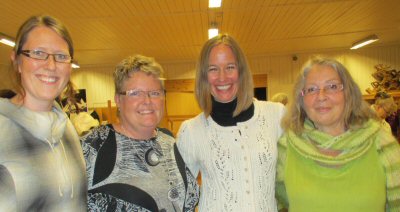
I had a fabulous time in Larvik, 2.5 hours train ride south from Oslo, last Tuesday where I held a presentation of my book. Nina Hove Myhre, the Study Leader standing left in the photo above, who invited me not only met me at the train station but also acted as driver the rest of the evening, as a great cook (read: I am more than happy to return), as a photographer and let me into her hobby rooms with space for yarn dying, spinning and sewing (read: I do want more than 1 room too!). You will find her yarn here: fiberandart and her neatly sewed articles here: epla. Next to Nina is Torunn Moe, then me – wearing the Japanese Lace Jacket – and Ingunn Hemm Tomter who came all the way from Sandvika. We had a great chat and knit on the train back home, even though Nina had hoped to organise a much busier knitting train!

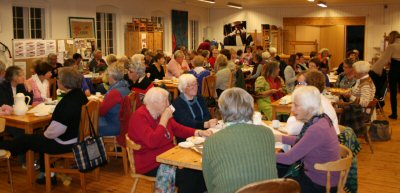
Nina and I arrived early at their meeting rooms, former art studios with lots of atmosphere and several looms, just to find that it was filling up quickly. 78 persons turned up to hear my presentation, a new high for them and for me! But then Nina had done more than her share of promotional work: it was in the local paper two days in a row, on the local radio, on several knitting groups on Facebook, on her blog as well as on the team’s web page. More tables and chairs were added as people continued to arrive to the free event which included a light meal. As you can imagine the kitchen team worked really hard and were running out of grapes to decorate their sandwiches with!

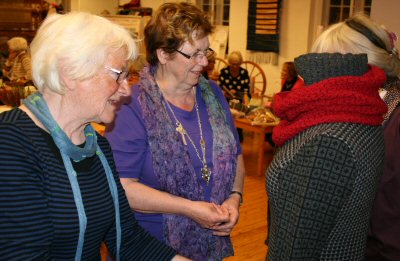
To my delight a woman had knitted a jacket from my book and was wearing it. I asked her to stand up when I too was wearing the same jacket and she obliged! Sorry, we were too busy to take photographs at that point in time! While I was walking around showing off my garments I had quick chats with lots of lovely people and time flew away. Afterwards I sold and signed books at a great speed, I was so chuffed with the reception I got that I do want to come back to Larvik Husflidslag, see larvikhusflidslag!

Share

Astrup Fearnley Museum at Tjuvholmen

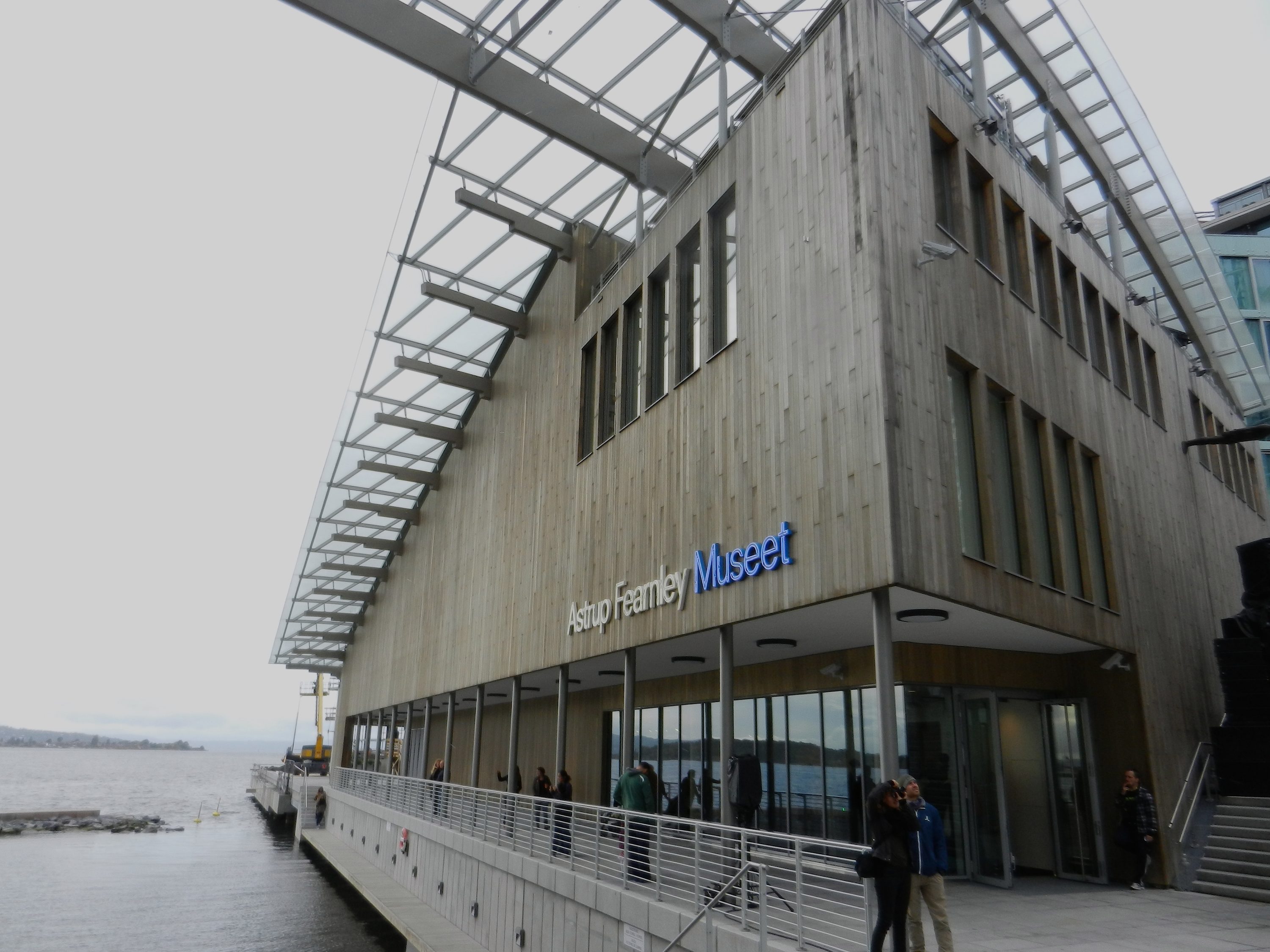
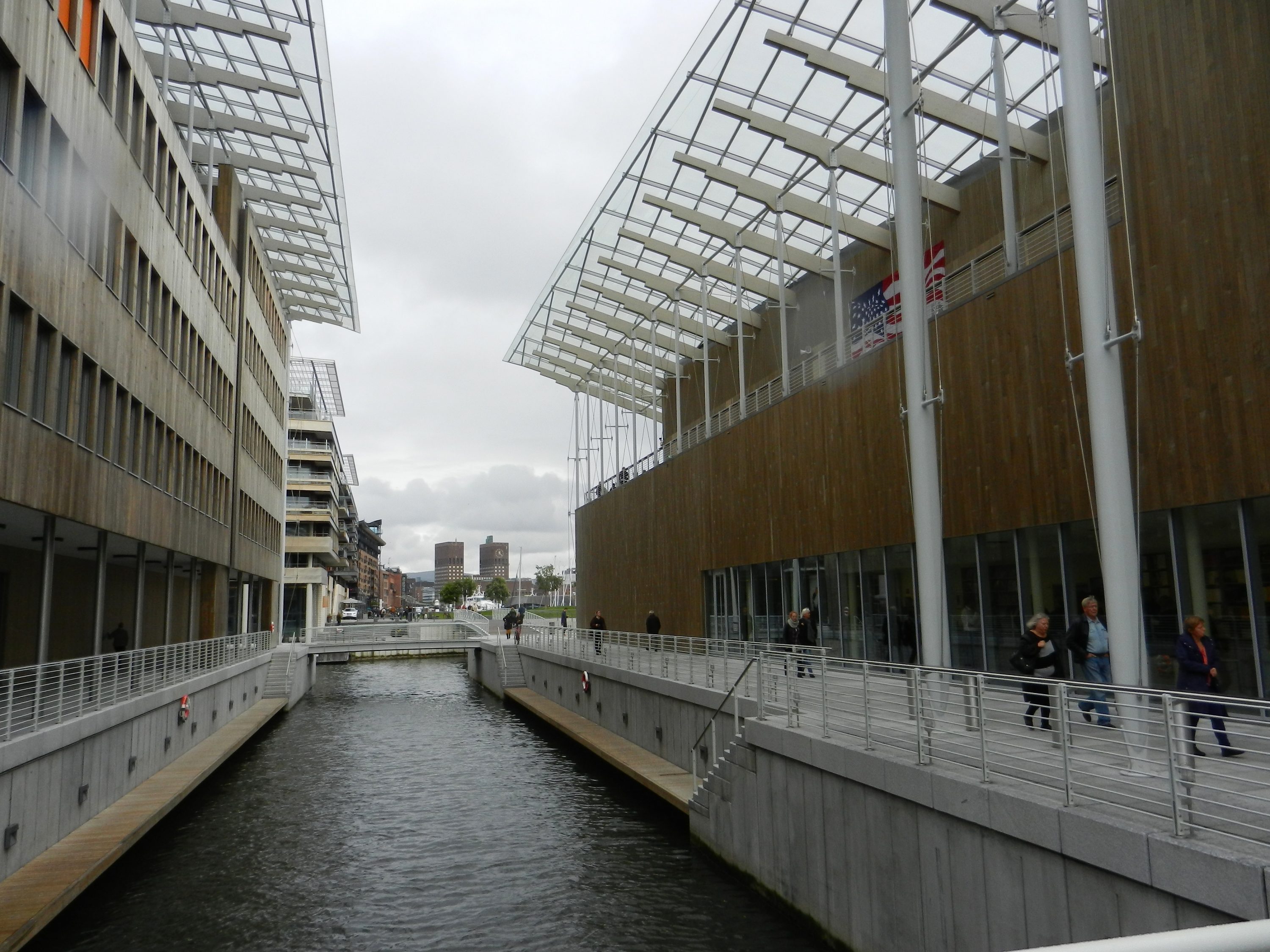
Oslo has a gained a new canal, a new beach and a new sculpture park with the relocation of  the Astrup Fearnley Museum to Tjuvholmen in a magnifiscent new building, an architectural masterpiece, designed by Renzo Piano in co-operation with Narud-Stokke-Wiig. It is his first building in Scandinavia and it is quite a signature he has left in Oslo. Located by the fjord the building, all 3 actually, has the shape of a boat and is made of wood with glass roofs that looks like sails. We are fortunate enough to see the distinctive roofs from our kitchen window and hence excited to visit at the earliest opportunity – the opening for the public on last Saturday.

My husband did a smart move and became a art club member the evening before, to secure our quick entry and we were surprised to find the queue so short just before the opening hours. But then we are used to queuing for popular London exhibitions and timed tickets. So we were probably one of the few that thought it was a lot less busy than we had imagined. Apparently Renzo Piano was eagerly awaiting people’s reaction and hiding out of sight to observe. I am sorry to say that I did not spot him only the museum’s talented Islandic director Gunnar B. Kvaran showing our newly appointed minister of culture, Hadia Tajik, around.

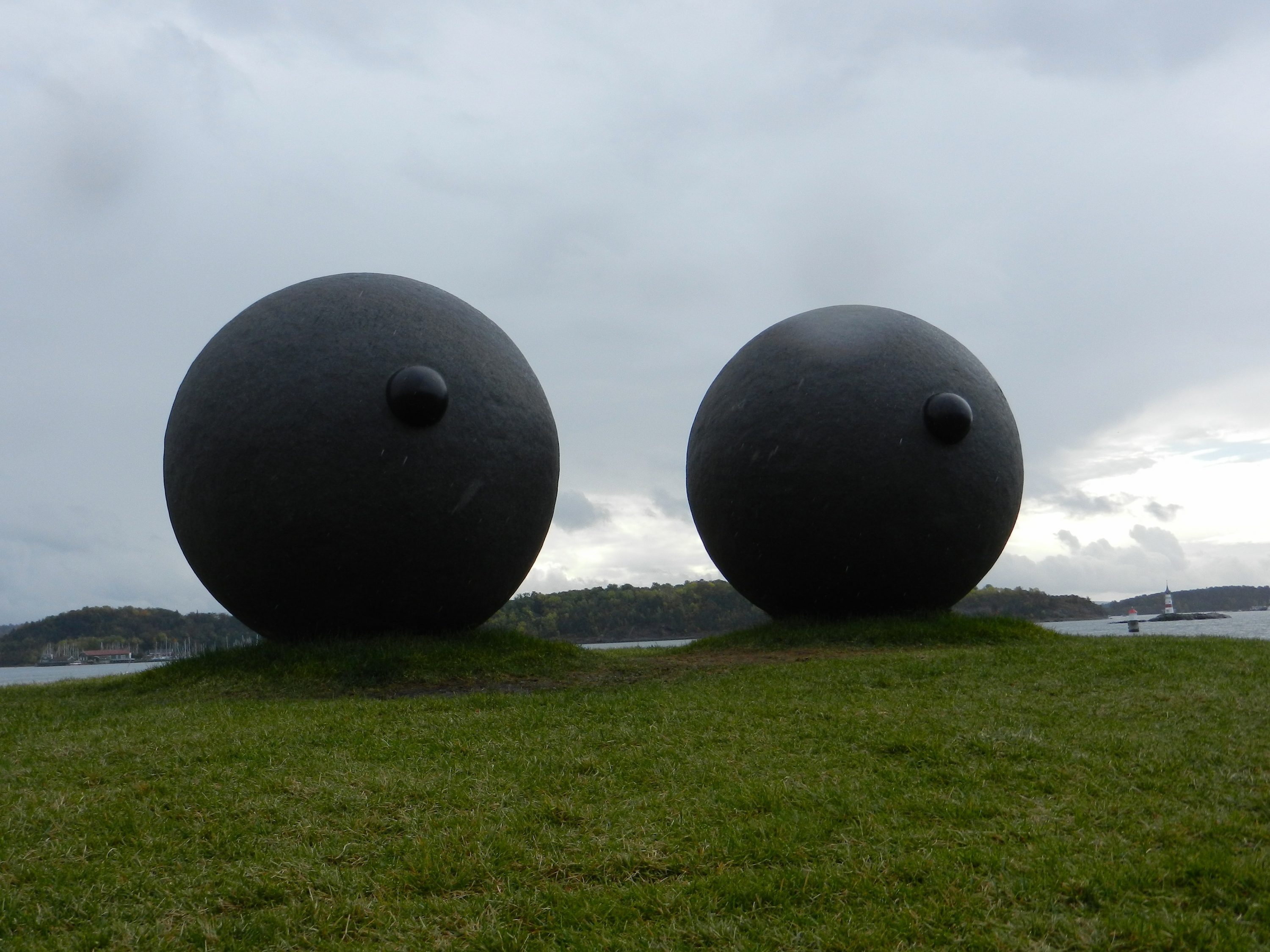
The museum is privately owned and is one of the most important collection of contemporary art in Oslo. It has impressive masterpieces by Damien Hirst, Jeff Koon, Cindy Sherman, Bjarne Melgaard and Tracy Emin among others. The current exhibition “To Be With Art Is All We Ask” a title that sums up the museum’s passion and purpose, according to the director. I recommend you visit to study the captivating art, the building that seems to move with its surroundings giving you numerous new vistas through the building parts and windows, and last but not least; the location. For more info and stunning photos see their website afmuseet.

Share

Tussah Silk – One of My Favourite Yarns

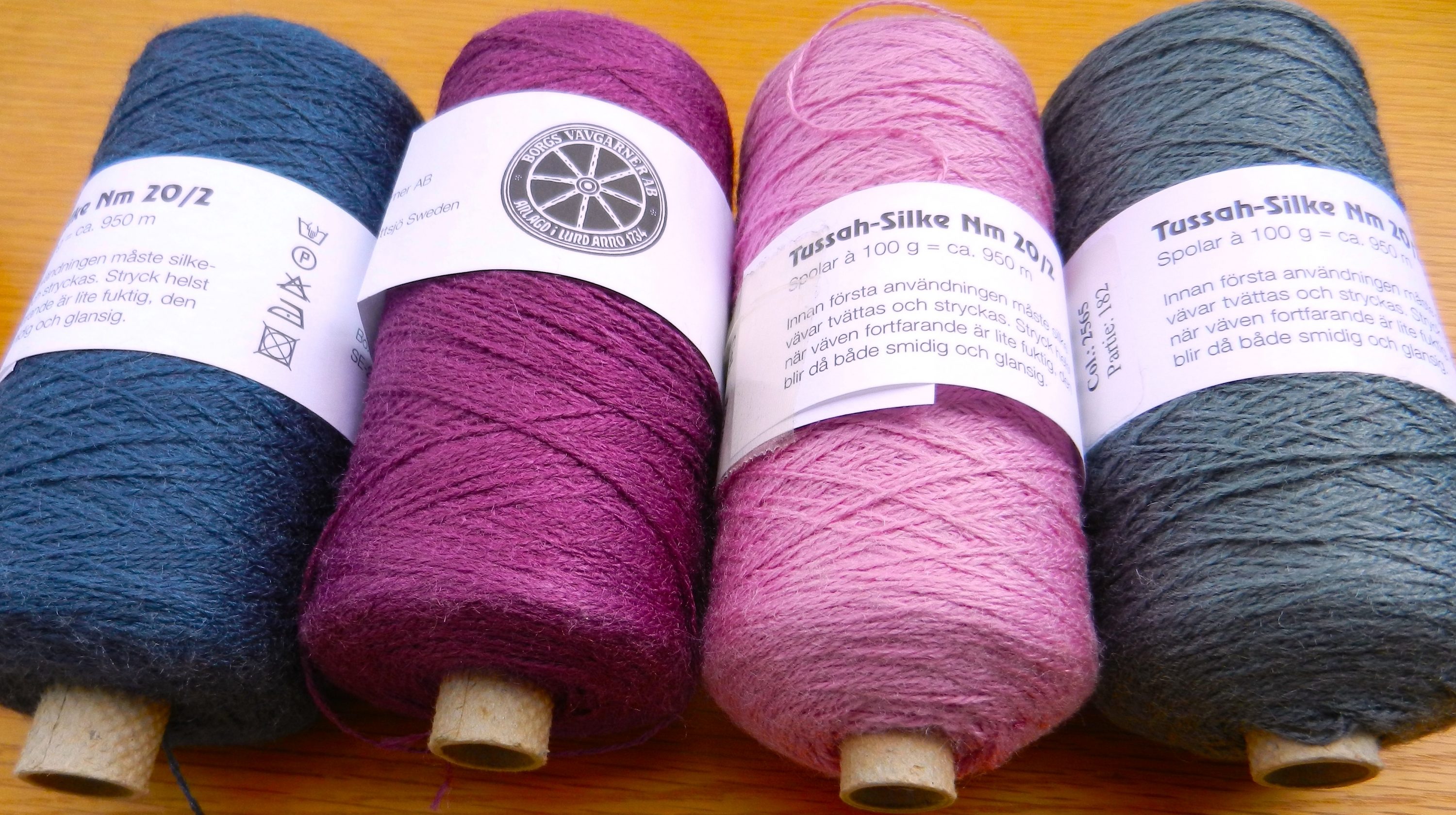
Among all the weaving equipment for sale at Husfliden – a handcraft association shop see photos at report-from-knit-cafe-at-kaffistova – I discovered the spools of Tussah Silk 20/2 from Borgs Vävgarner shining like precious stones just waiting to be touched. Obviously, several spools accompanied me home. What makes it different from any other silk, you ask. On my hands it feels more like a merino and silk mixture instead of a pure, usually, quite slippery silk. Not only easier to knit with but it also wear better due to its firm twist, I believe, since silk often can pill. My addiction to it has become rather severe and I did manage to convince my husband to travel all the way from London to Vittsjö, a village in southern Sweden, via Copenhagen. Here is the link: borgsvavgarner.

We found very few hotels nearby but soon discovered it was a short train journey away across the bridge that joins Copenhagen in Denmark and Malmö in Sweden. The trip across the bridge itself was way too quick but worth the journey all on its own. Do not attempt to buy tickets online from the Swedish Railway because it costs less than half when you buy tickets in Copenhagen. From Hässleholm we took a bus (read: very local since the bus driver knew everyone except us) past numerous farms and furniture makers before we reached Vittsjö. I was the only customer inside the shop consisting of 3 large rooms with a table & comfortable chairs with newspapers, coffee and cakes from the local bakery available for free especially for accompanying husbands. My husband was chuffed, needless to say…

I could not find their Tussah Silk, and could feel the panic coming on, but met one of the owners Jonas who took me into their warehouse. Bliss. Since I do not know how to drive nor operate a fork lift I could not study the shelves at the top but found the silk in question easily. A few hours later my husband came checking up on me wondering both where I was and whether I was still alive. Indeed, I was in yarn heaven and had started to fill my second basket at that point in time. Not only the Tussah silk tempted me but I chose a selection of other tempting yarns too together will all their shade cards. Another customer did enter a bit later and I was not surprised to find that it was another Norwegian woman who had discovered this yarn treasure trove in southern Sweden. Even my husband keeps asking when we are going back to Borgs…

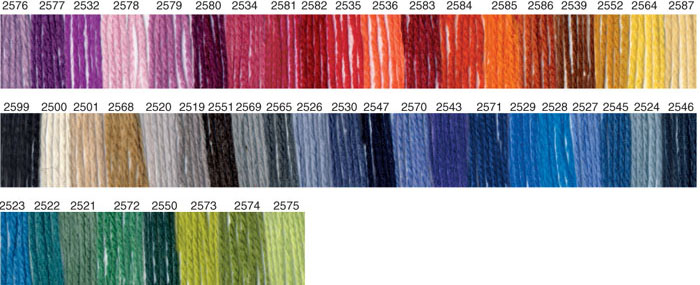
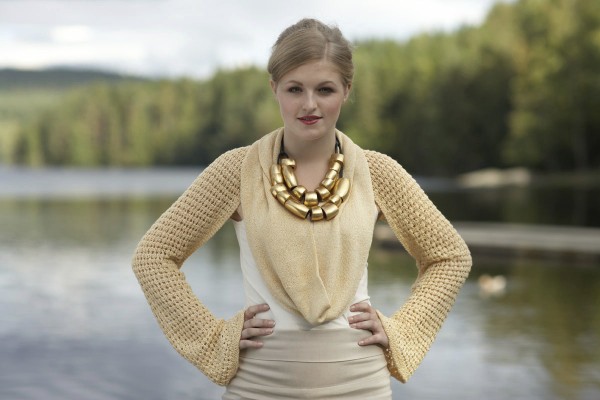
I chose this pale yellow, shade 2587, for the shawl in my book, here stunningly worn by Anna Pfeiffer at Nøklevann in Oslo. The silk is lace weight and I have chosen to knit the shawl with 2 strands held together on a 4mm/US 6 and the cowl with a single strand on a 3 mm/US 2.5. It is important to realise that silk has a drop so too avoid making a garment that stretches a lot after wearing – a lesson learnt the hard way – I suggest you steam generously and stretch firmly during the knitting! I am so pleased that I have more of this luscious silk in my stash!

Share

Craft Wave

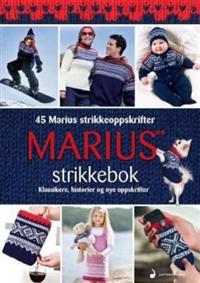
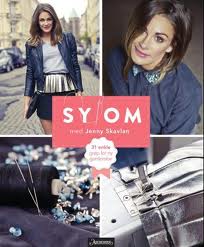
A craft wave has hit Norway. On top of the bestseller list in the category of general literature – read non-fiction – is on no 1: Marius Strikkebok/ Marius Knitting Book and no 3: Sy Om/Re-make by television presenter Jenny Skavlan. Another well-know television presenter Dorthe Skappel designed an over-sized sweater in alpaca, not unlike the mohair sweaters popularised in the 1980’s, and started a “Dorthe genser/Dorthe sweater” craze that has lead to empty shelves in the yarn shops. Can it be described as designing when it is such a simple pattern? Knitters have discussed on blogs and on Facebook but the fact remains that it has attracted and introduced numerous young people to knitting! See photos on nrk.

With celebrities involved the media started paying close attention and we have been able to study Dorthe Skappel’s sweater in detail on the breakfast show on television as well as Jenny Skavlan’s re-made dress on a Saturday night talkshow with a part of the audience also wearing self made clothes. Not that we were able to study those in detail, only one person was interview sitting down and not made to stand up and do a twirl – which I was waiting for! Nor were we informed in more detail about the style, the sewing process nor the fibres in the fabric. But I should not complain, it was a start and perfect Saturday entertainment, at least for me.

Craft books are still very much what Nina Granlund Sæther calls “step children” of factual literature, rarely reviewed and introduced despite solid sale figures unless the author is a celebrity or has previously sold 40 000 copies. Do read her blog post on the topic – use google translator if you do not read Norwegian: faglitteraturens-stebarn

Oh, I forgot, in case you were wondering what was no 2. on the bestseller list a cookery book as you probably would have figured out by now.

Hence I will continue to promote and presenting my book:

Thursday 27. September to Gamle Oslo Husflidslag at 17 at Norbygate 39 in Oslo, see gamle_oslo_husflidslag

Tuesday 2. October to Larvik Husflidslag, see larvikhusflidslag

Wednesday 17. October at Flamingo Garn & Hobby’s knitcafé in Fredrikstad, see their page on Facebook.

Welcome!

Share

Check Cable Cardigan

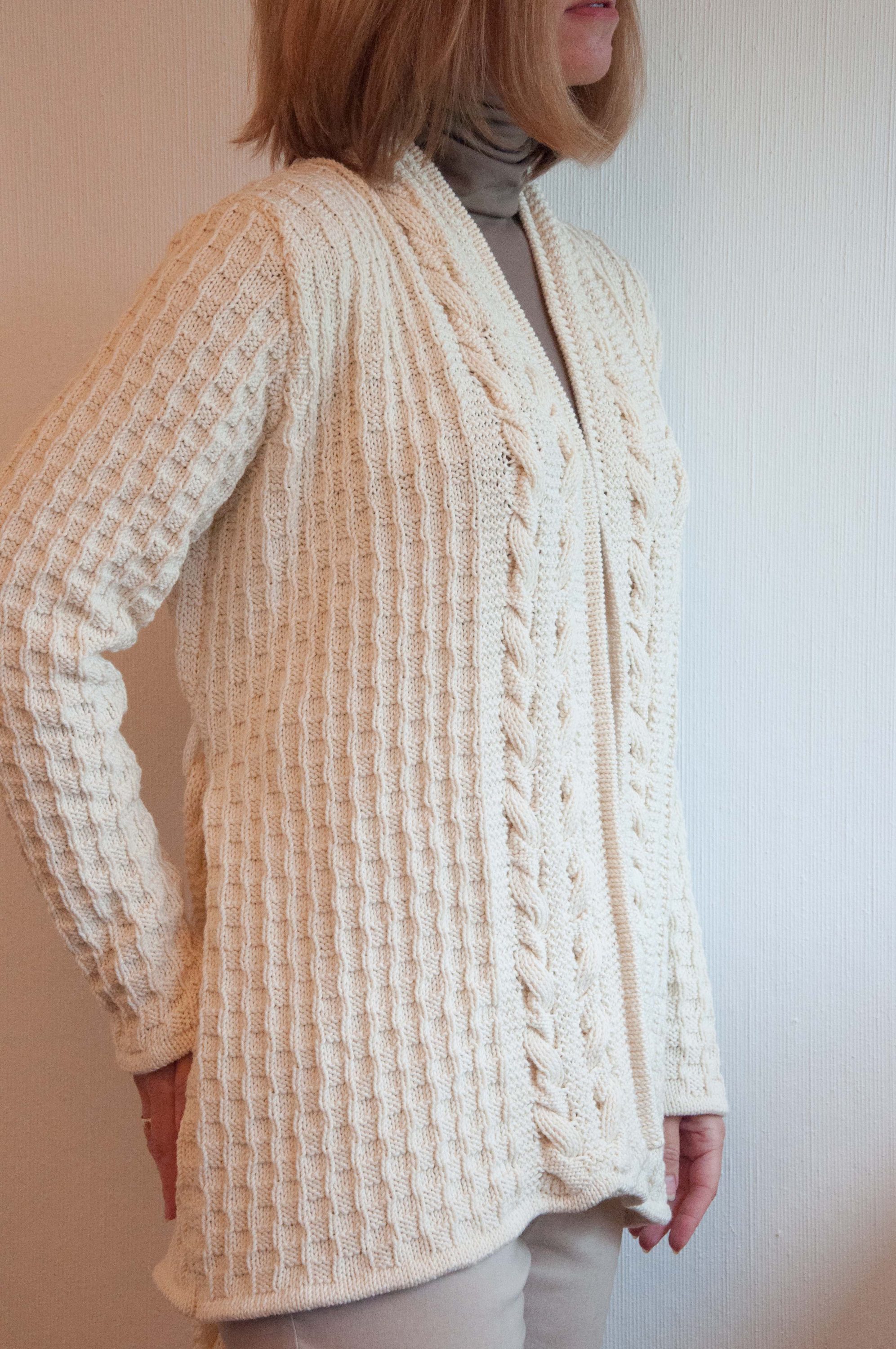
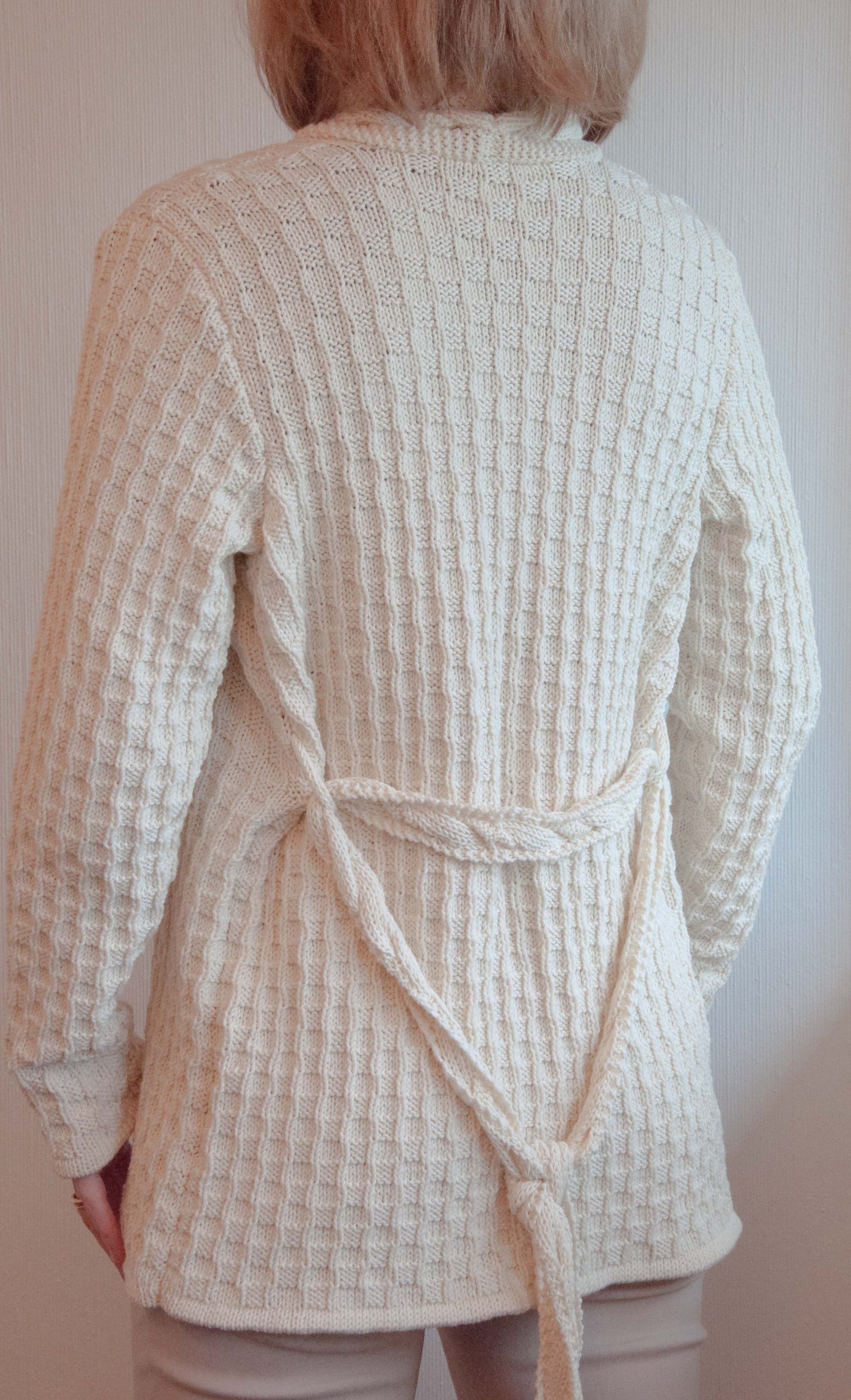
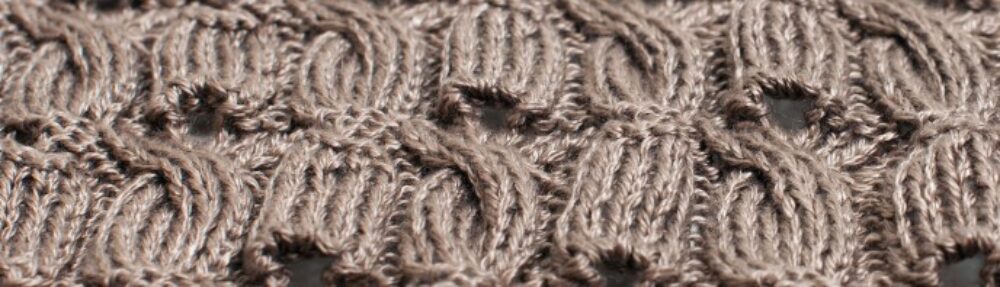
I have finally completed my design and have sold it to the Norwegian magazine Familien/The Family, where it will be published in issue no 26, on sale from 17.th of December. My husband has photographed me wearing it, here, so as you can imagine I cannot wait to see it worn by a professional model and photographed by a professional photographer. The pattern will be released after a year and I will then make it available for sale as a downloadable pdf in Norwegian and English on my pattern page and on Ravelry. Here are photographs of the swatch, see my post: new-design-soon-finished

The Check Cable Cardigan is knitted in a simple yet decorative stitch pattern which is reversible combined with a wide collar in a ribbed cable pattern. It has a generous fit and designed to make you feel comfortable yet smart. The cardigan is knitted in Dale Yarns’ Lerke a mixture of wool and cotton with an optimal stitch definition on needle no 4 mm/US 6.

I have knitted two different belts to go with it. The first version, seemed like a brilliant idea at the time using the reversible cable pattern but it does not look as sophisticated as I wanted it to look so the second version is in stockinette stitch knitted sideways and together like a hem. I also tested out a few more versions in between: a 1 by 1 rib which looked way too uneven and I-cord which looked floppy. Hence I preferred to use my favourite hem edging as belt and added a folding row where I knit on the wrong side. The magazine has kept both to test out on the photo shoot, while the first version is in these photograph. I will publish the professional photos when they are available.

Share

Professional Finishing Course Online

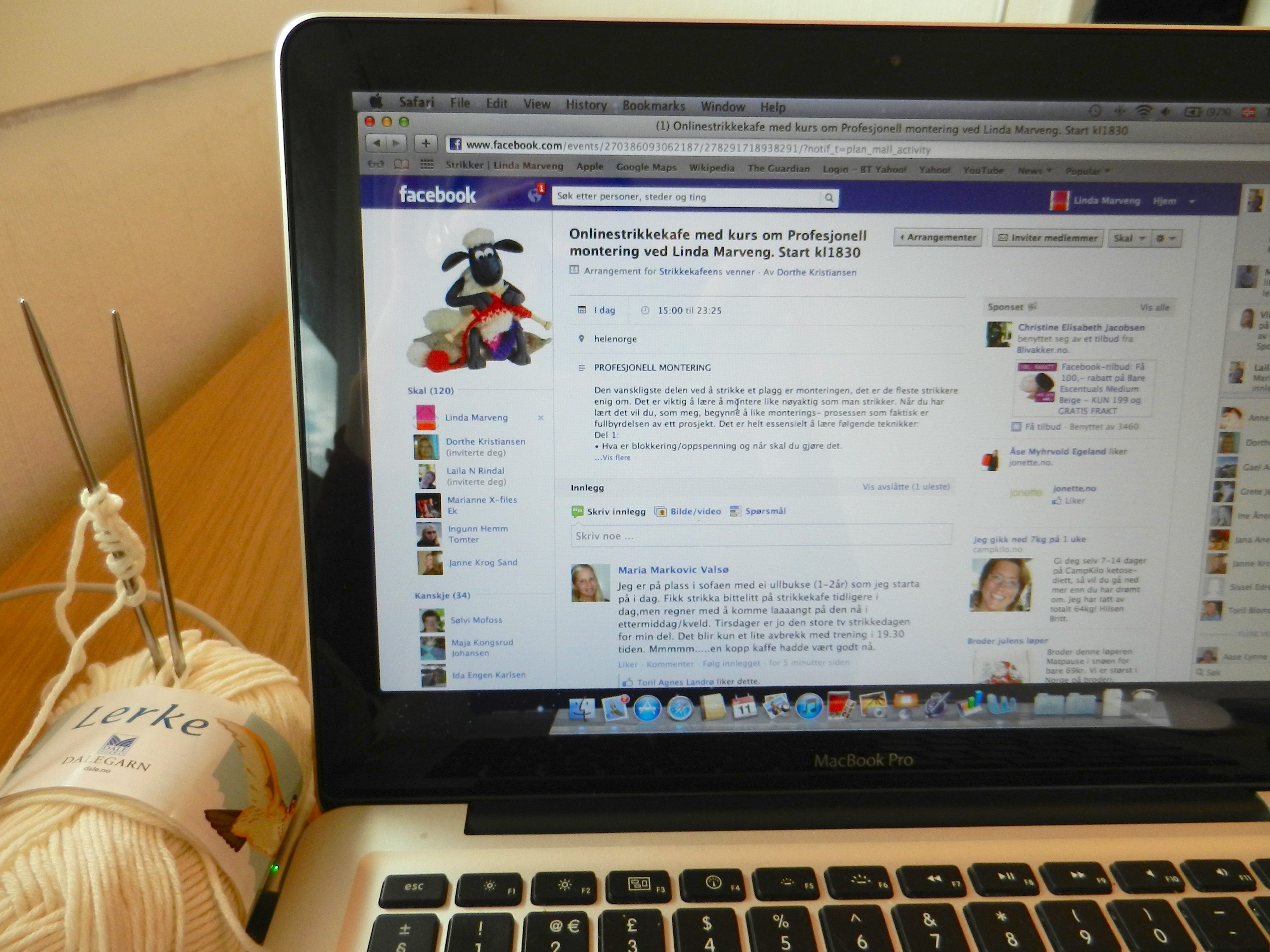
I am a member of the Norwegian Onlinestrikkekafé/online knit-café group, superbly organised by Dorthe Kristiansen, on Facebook and volunteered to hold the first part of a course in Finishing there. First let me tell you how it works: it is a closed group, with more than 500 members, so we all accepted invitations to join the group and then the invitations for the online knit-café with the occasional event, KAL – knit-along – and UFO – unfinished objects – evenings go out, three times a week. Some, I will not mention any names, are ready well in advance of the starting time usually at 14.oo while others join after work or dinner or those of us who work from home find ourselves spending too much time there reading people’s postings about their knitting, spinning, crocheting, sewing, or life in general. So not too unlike a real knit-café in many ways, I don’t always get a lot of knitting done…

Second, how do I hold an online workshop and how many will join in? Obviously I needed to make several videos, and my husband, a gadget fan, was well prepared. I realised I need to translate my workshop from English to Norwegian first, since I have only ever held it in English for 6 years. Then I grouped together some of the topics and planned what samples I could show and what to say. My husband, the director, demanded a re-take when the sun interfered, changing the lighting completely, and when I automatically started speaking English. In the end we had made 5 videos in Norwegian, with a few non-edited English words, to cover the first part of my online course. I planned to post them on the event page in quick succession and be ready to answer questions on each topic following in the previous tutor Nina Hove Myhre’s footsteps, see her videos on Domino knit on her blog, also in Norwegian: fiberandart. To my astonishment, more than 120 people signed on and I did wonder whether I would be able to type my answers quick enough or whether it would be a complete deluge of questions. Thankfully, not everyone started watching the videos at the exact kick off time at 18.30 so I could manage to answer the questions without too much difficulty. It was a magnificent challenge!

Now, if you still want to watch the videos, be prepared to listen in Norwegian, I will list them here in the post as well as making a separate page so they are easy to find later. I hope you find them useful.

1. Blokking/ Blocking For more detailed advice read the useful article by Jessica Fenlon Thomas in knitty. Blocking wires are available in Norway from projo-produkter.

2. Montering/ Finishing If you want to test while watching, have 4 swatches or neglected UFO pieces, yarn, a blunt sewing needle and a crochet hook ready to try out the 3 different main ways of sewing up.

3. Sette inn ermet/ Setting in a sleeve.

 4. Plukke opp masker/ Picking up stitches Again, if you want to test while watching, have 1 swatch or neglected UFO piece, a crochet hook without handle, yarn and a circular needle ready.

5. Brettekant/ Hem My favourite edge of the moment. Make it by using 2 circular knitting needles held parallel when casting on, then continue to knit with 1 for a number of rows, then fold the other needle behind and knit together. To test have 2 circular needles of same size but of different material and yarn ready.

Share

Oslo Bookfestival

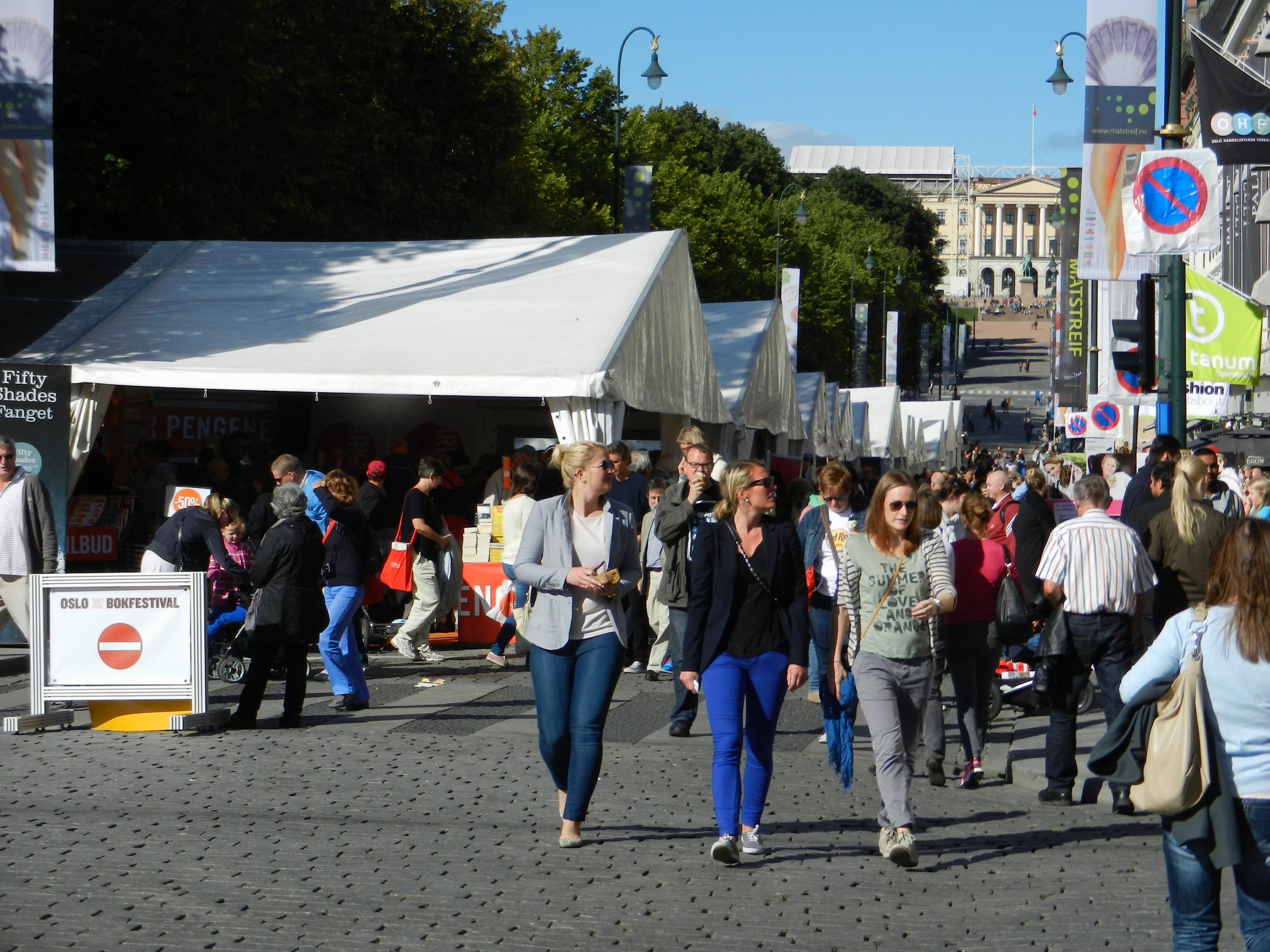
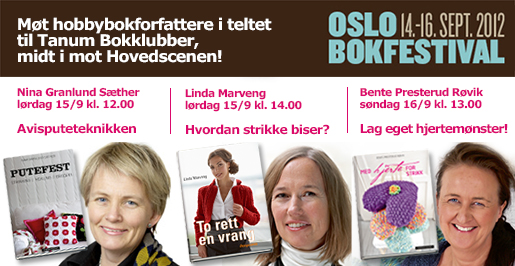
I am taking part in this year’s Bookfestival, where more than 200 Norwegian and foreign authors, take part in more than 200 different arrangements. Our main shopping street Karl Johan has been turned into a book shop where you can read and flick, receive good advice and good discounts, see above. No events are charged for nor closed for invitees only which makes it quite unique. The chair leader of the festival writes in her introduction: “It is not obvious that a small country such as Norway can publish more than 7000 new titles every year with high quality, in a multitude of genre and form, and in Norwegian.” We are among the most well read people in the world, she claims, maybe because we find adventures through entertainment and out of a curiosity of knowledge. See the complete program at oslobokfestival.

Hobbyklubben – my publishers’ book club – is organising my demo of how to knit pleats as well as Nina’s demo of the newspaper technique and Bente’s demo of heart patterns, in a large tent outside Oslo’ s largest bookshop Tanum. Do join Bente today if you are able to!

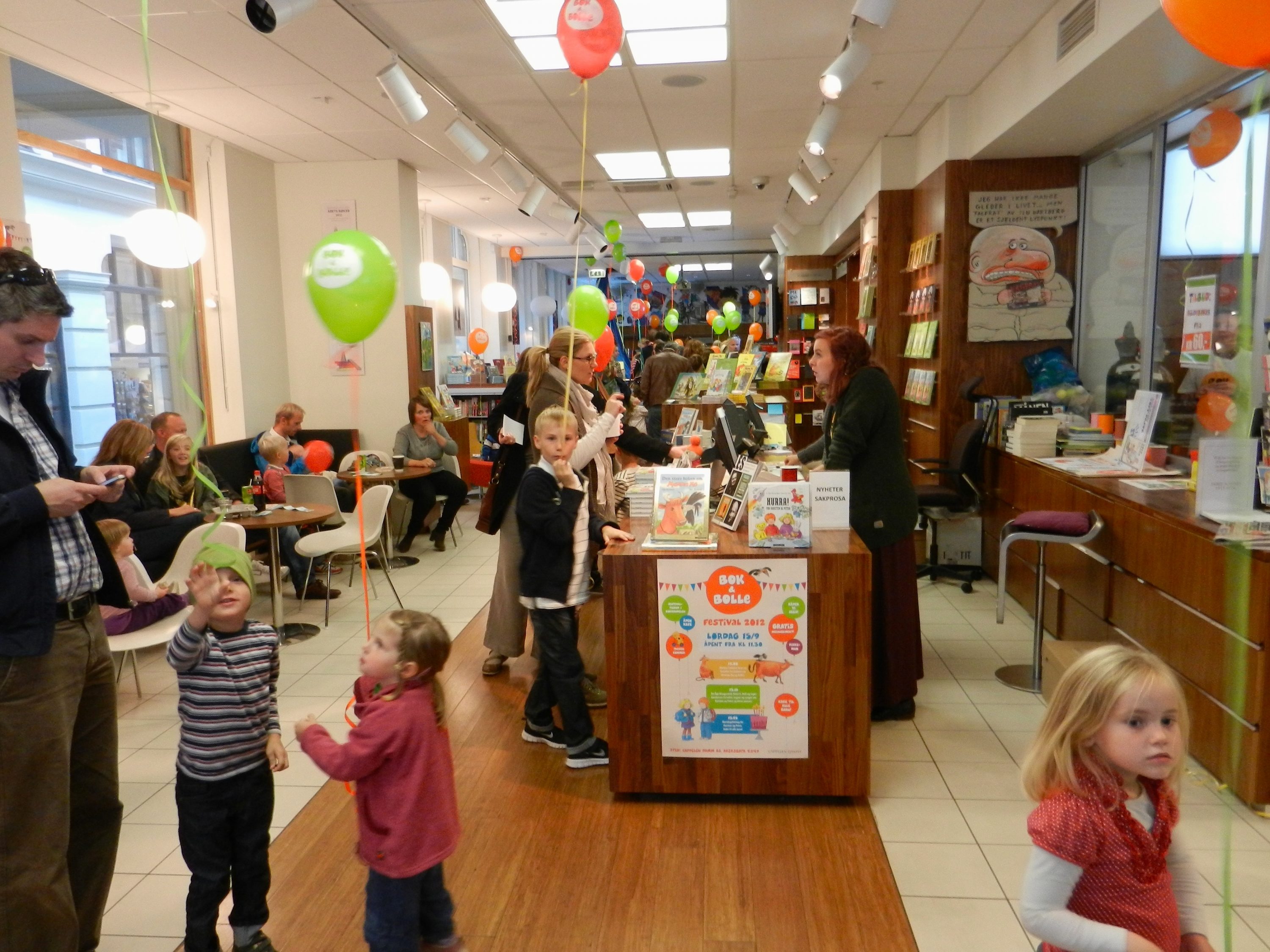
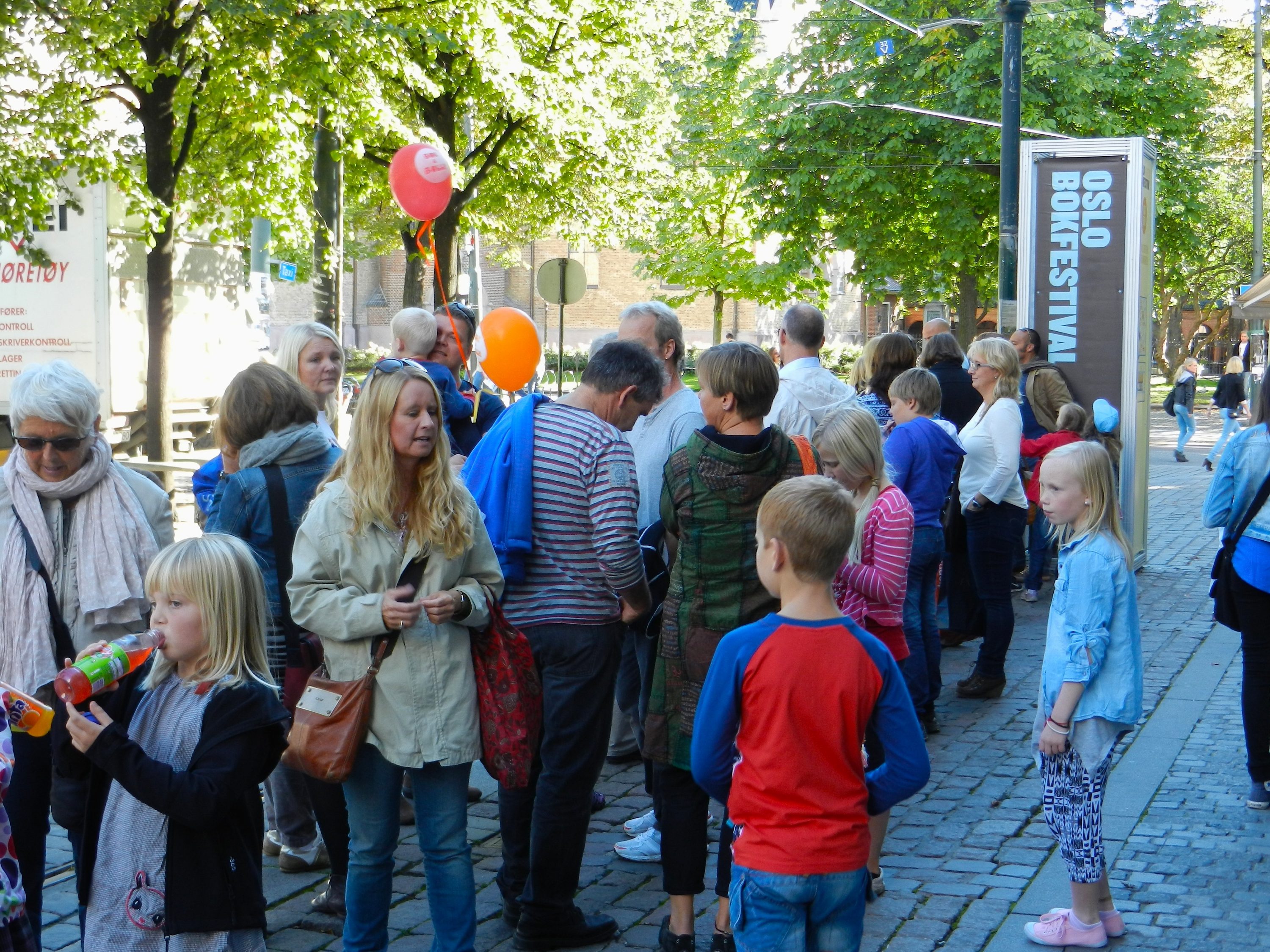
Other equally interesting events are Literary Speeddating, Crime-o-rama, Dancing on top of the Bookshelves (at the music department at the main library), Book and Bun see above (reading for children) and my all time favourite; the Audio-Book Tram, one for adults and one for children, see the queue below. Two veteran trams travel a city centre route and selected authors read out loud on the Lydboktrikk. Now, that is a popular event that I believe could be done a lot more frequently! I can dream on and in the mean time I will continue to bring my knitting and my own selection of audio books to listen to when I am traveling on the tram!

Share