My Book Out in Finland

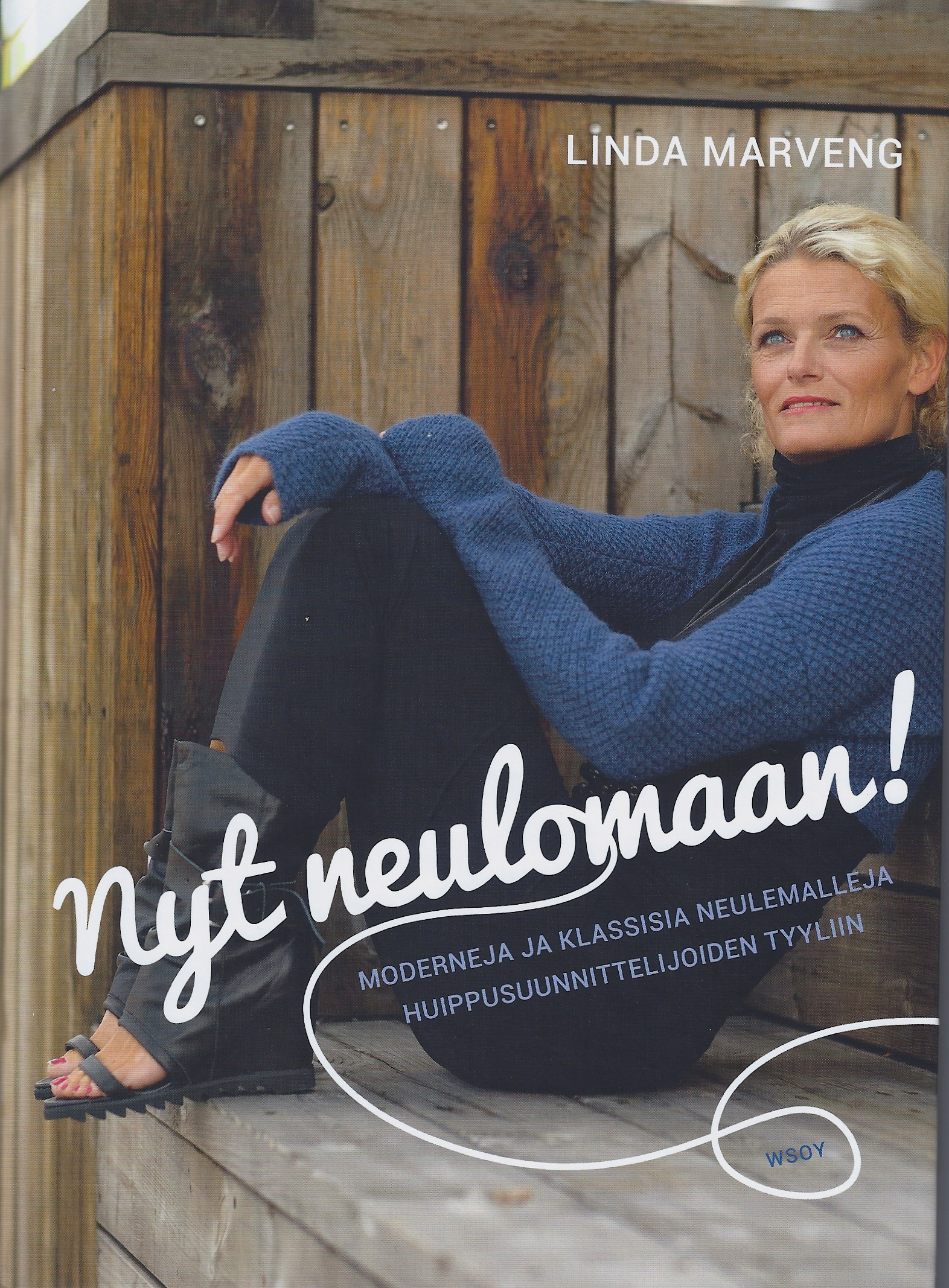
My book title “To rette en vrang. Designstrikk” literally translates to “Two knit one purl. Design knit” but the Finnish title – which I cannot pronounce – translates to “Time to Knit! Modern and classic knitting models in the style of couturiers/top designers”. I am very pleased with the title, and like the stylish front cover publishers WSOY have made. If you read Finnish, here is the description of it: wsoy.fi. On the cover is a stunning photo, taken by photographer Kim Müller of model Kari-Anne Næssø, wearing the Daisy Shrug & Cowl knitted in a beautiful shade of light jeans blue Thin Alpaca by the Norwegian company Du Store Alpakka using a 3 mm/US 2.5. I do think they loved the Finnish flag color combination of white text and a blue garment!

The Finnish language is very unlike the other Scandinavian languages, and belongs to a different language group all together: Uralic which also include Estonian and other minority languages spoken around the Baltic Sea. So I must admit there are very few Finnish words I know, but I will speedily learn more now from simply reading my own book! It will be exciting to follow how many Finnish knitters, I can attract. I would not mind a trip to design conscious Helsinki!

Share

New Yarn Related Discoveries

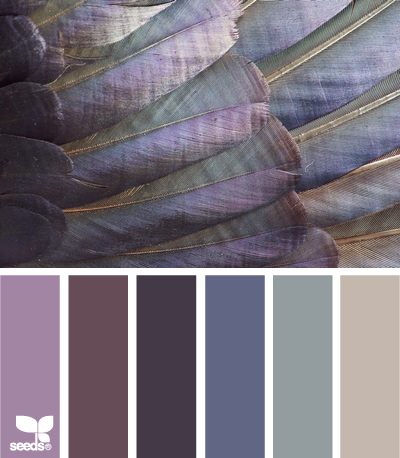
One of my recent discoveries is Design Seeds, found with a bit of aid from one of my Facebook friends. Every day I receive an e-mail with not only one stunning photo and a color swatch to match, but two. It does feel like receiving a dose of color each day, often in combinations I have previously not considered. My own color wheels are spinning, and I feel like an addict to these color matches. It is free, and all you have to do is add your e-mail address. Where – you ask – here is the website: design-seeds.com. Below is one of the palettes I have not previously considered and found very delicate. One of the series is called Mental Vacation and offers just that…

I have also found a new online knitting shop – not very difficult, I admit – after realizing that I need more Madeline Tosh DK, I checked WEBS – America’s yarn store – see yarn, which I know to be efficient and speedy with their orders, just to realise they did not stock the shade I had chosen. Designer Vera Sanon asked where do you buy your yarn in her group on Ravelry, and received lots of answers in addition to the local yarn shop, one suggested Eat. Sleep. Knit – brilliant name, I thought –  and to my surprise recommended by a fellow Norwegian! In addition to a marvelous selection of yarn including Handmaiden and Shibui Knits, they have a speedy delivery, and a very reasonable shipping charge; which is discounted when you order for more than $ 75 (read: not hard to reach that amount): 12 oz/340 g deducted from your shipping weight on international orders. My order is on its way to me! Now, here it is: eatsleepknit

I would also recommend you read Kuduja’s excellent blog post “On various kinds of ribbing”, see kuduja. You will find my opinion there among others and do look at some of Anna’s excellent designs!

Share

Professionally photographed: Open Triangles Cowl and Slouchy Hat

Copyright: Geir Arnesen

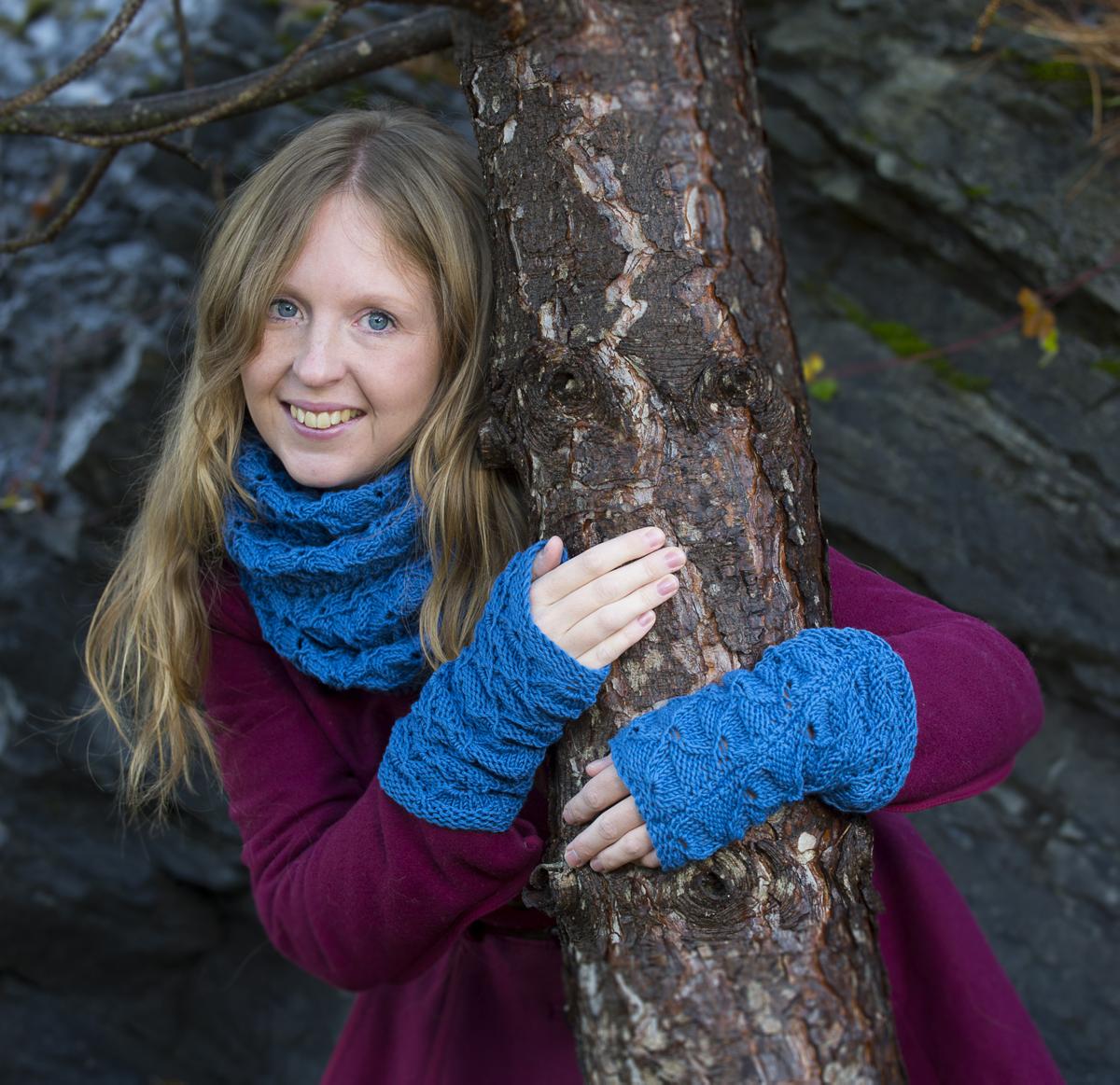
I am very pleased to show you some more professional photographs of my designs, published this week in issue number 2 of the Norwegian magazine Familien/The Family which includes 28 pages of knitted accessories. Two of the designs are mine: The Open Triangles Cowl & Wrist Warmers and a Trendy Slouchy Hat. The first design, previously photographed on me, see new-design-open-triangles-wrist-warmers-and-cowl is knitted in the soft and warm Lerke yarn, a mixture of cotton and wool, in a zingy blue from Dale yarns using a 4 mm/US 6, see dalegarn. Both are knitted flat and sewn together afterwards with or without a hole for the thumb. The pattern repeat is not difficult, but you need to knit a couple of repeats to learn the pattern by heart, as some knitters have already confirmed here on my blog and on Facebook. Several days before I had my hands on a copy of the magazine, I received the first message that one knitter – a subscriber, obviously – had already started to my excitement!

Copyright: Bjørn Inge Karlsen

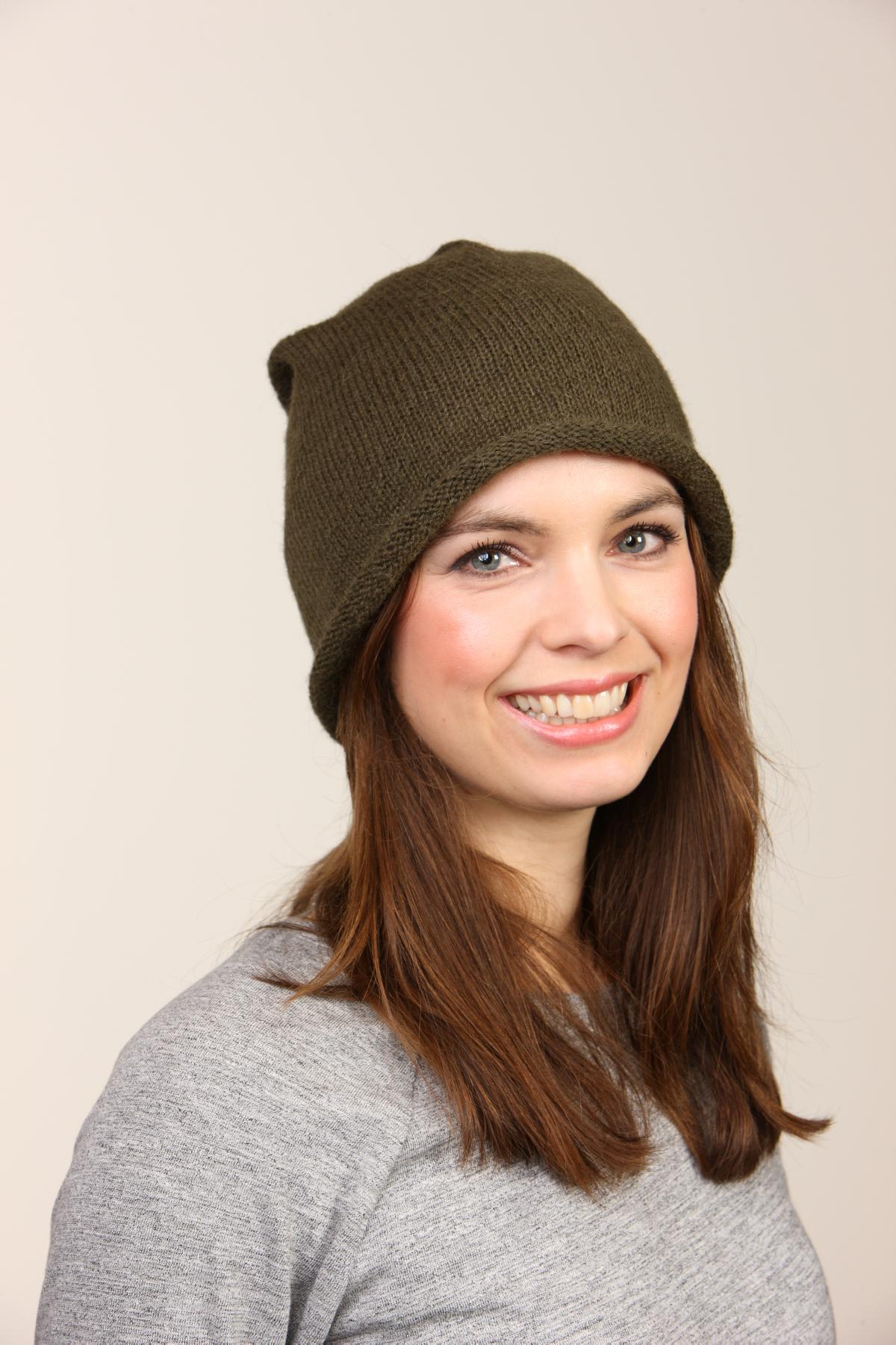
A trendy slouchy hat was a design commission I received at the beginning of December, preferably in a luxurious fiber. It is still hard to find pure cashmere available in yarn shops in Oslo, so I ended up choosing an extremely soft baby alpaca called Thin Alpaca, 100% pure alpaca in a 50 g/1.7 oz ball, by Du Store Alpakka in an elegant moss green shade, see dustorealpakka. It is supposed to be worn loosely and looks even cooler when worn with sunglasses. It is easy to knit in stocking stitch in the round, using a 3 mm/US 2.5 short circular needles and a great gift idea requiring less than 2 balls.

My Cablewing Sweater and Cowls – if you need to check photo, here it is: new-design-cablewing-sweater-and-cowls have been sold to Familien.

They are currently awaiting professional photography. I am eagerly awaiting those, and will let you know when they will be published in Norwegian. It will be a year before the rights are released and the patterns will be available in English on my website and Ravelry, but I am sure you have other projects in your knitting queue to work on, until then.

Share

Eligia Top & Cowl in Clotheshorse Magazine

Copyright: Clotheshorse 2012

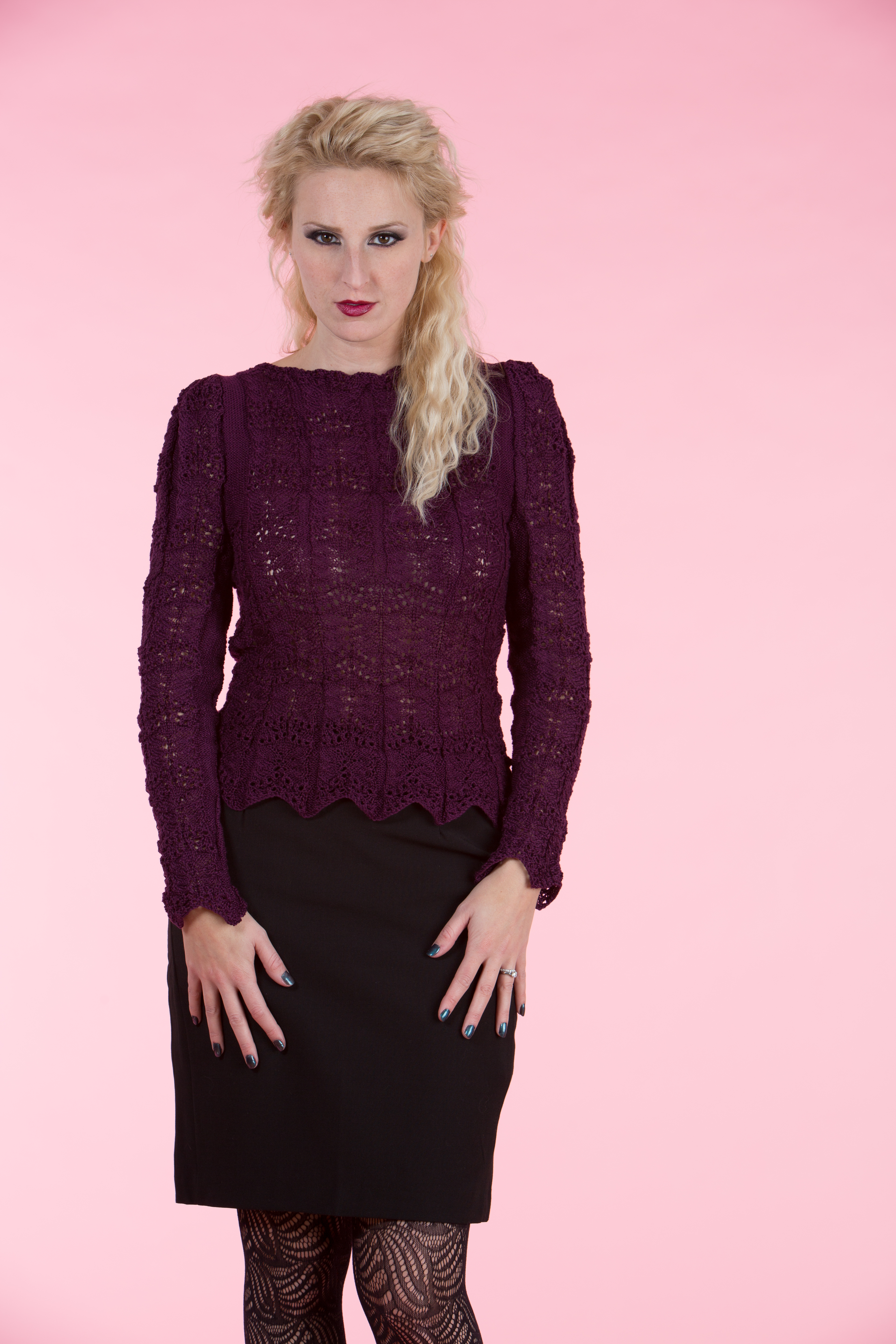
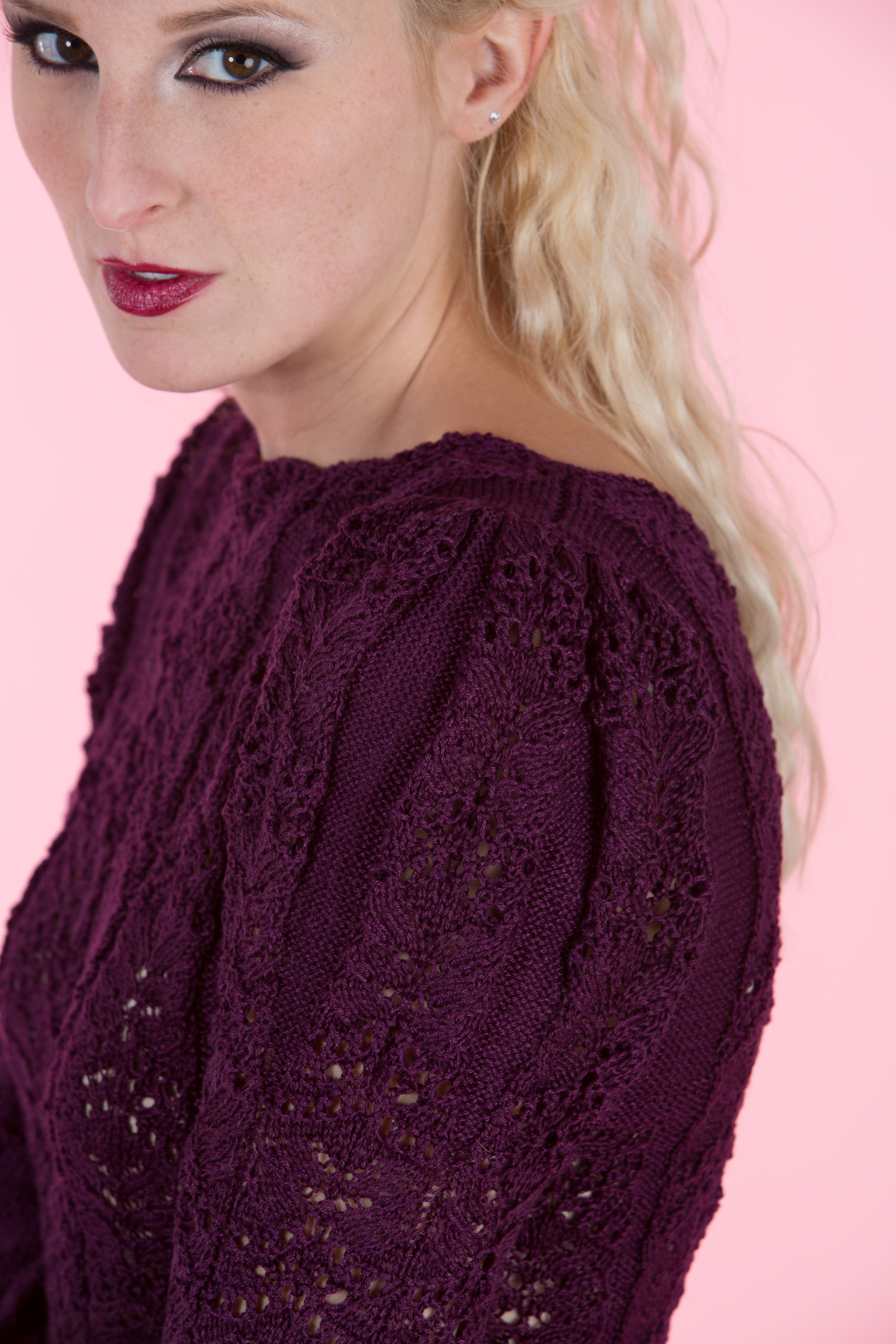
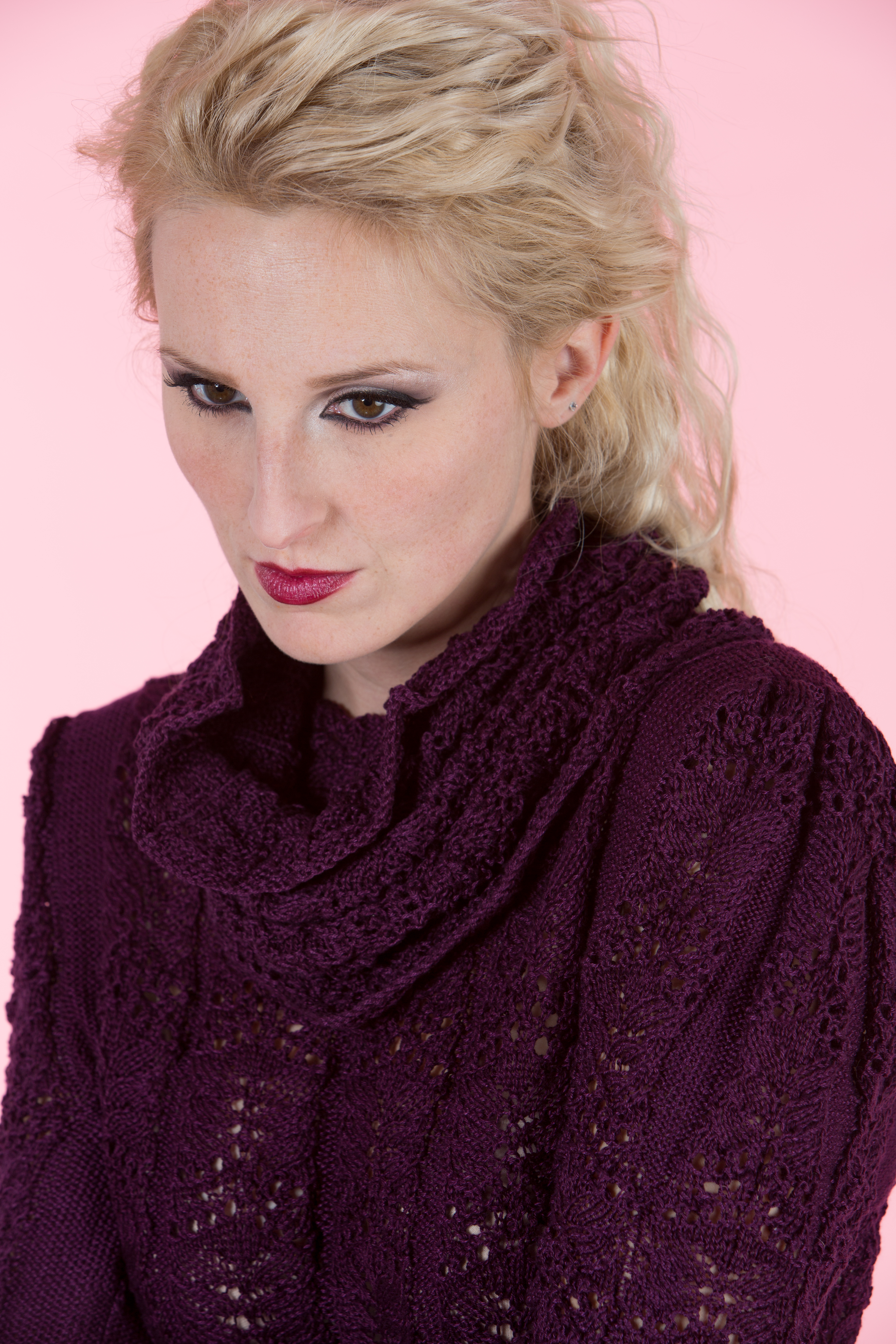
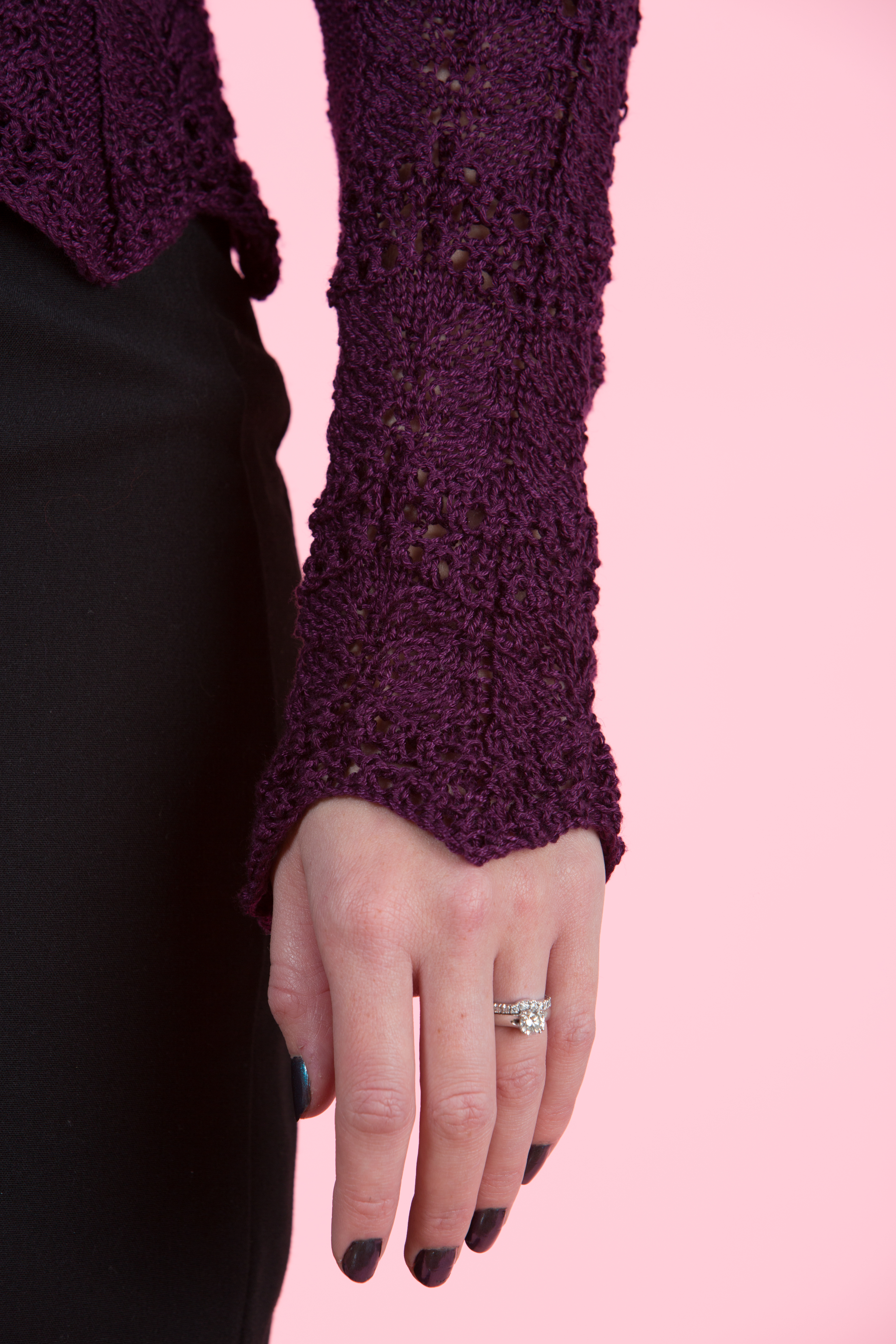
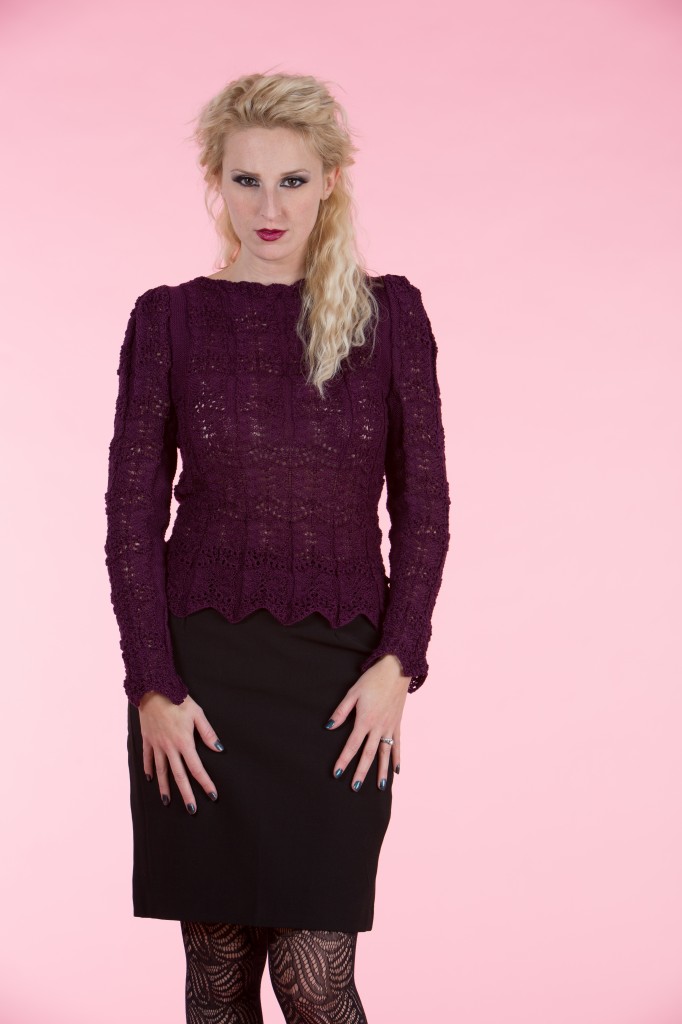
It has been a long wait for the Winter issue 12/13, but it was worth it to see my design so beautifully styled and photographed! My Gothic lace pullover has been named Eligia Top and the cowl, fittingly Eligia Cowl. The design was submitted at the end of March last year based on Clotheshorse’s Gothic mood board, see my post on clotheshorse-magazine. I wanted to design a fitted allover lace pullover with a puffed sleeve and a straight boatneck. An elegant evening look, with Gothic aspirations. I wanted a yarn with sheen and smooth to the touch, in deep purple. Tencel is a fiber made of cellulose, I love knitting with, since it only needs to be stretched into shape, and is not as slippery on the hands as silk. I also enjoy wearing it. I wanted the same shape but with larger puffed sleeve as my Lace Sweater see ‘Blondegenser’ designed for my book, see ravelry. I chose Tencel 8/2 in Eggplant held double throughout from Valley Yarns, WEBS own brand, see webs-weaving-yarns-valley-yarns-82-tencel, also available at Handweavers Studio in London, see handweavers.
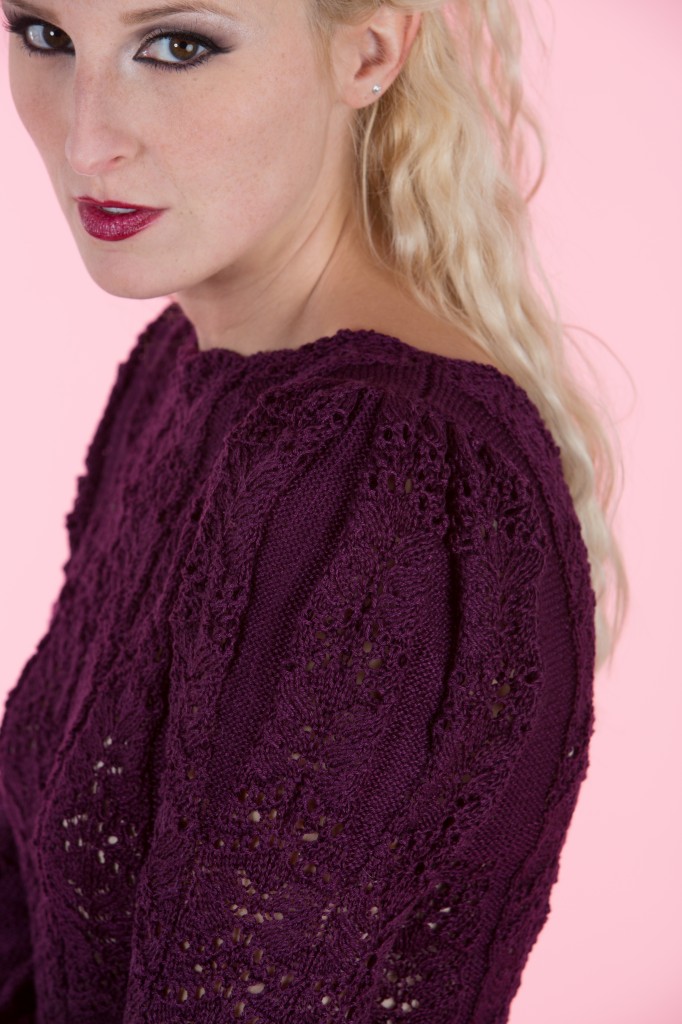
Copyright: Clotheshorse 2012

Construction: Sleeves are knitted flat, to learn the lace pattern and simultaneously, so they become identical. Increases are made between the pattern repeats  after armhole cast off to create puff. Body knitted in the round with decreases to the waist and increases to the bust in between the pattern repeats for a better fit. Both sweater and cowl are knitted on a 3 mm/US 2.5,  sweater is available in sizes 36.5 (38.8, 40, 41.5, 43)”/92.5 (98, 101.5, 105.5, 109) cm and cowl: one size: 23.5″/54.5 cm circumference, 13.5″/34.5 cm heigh.
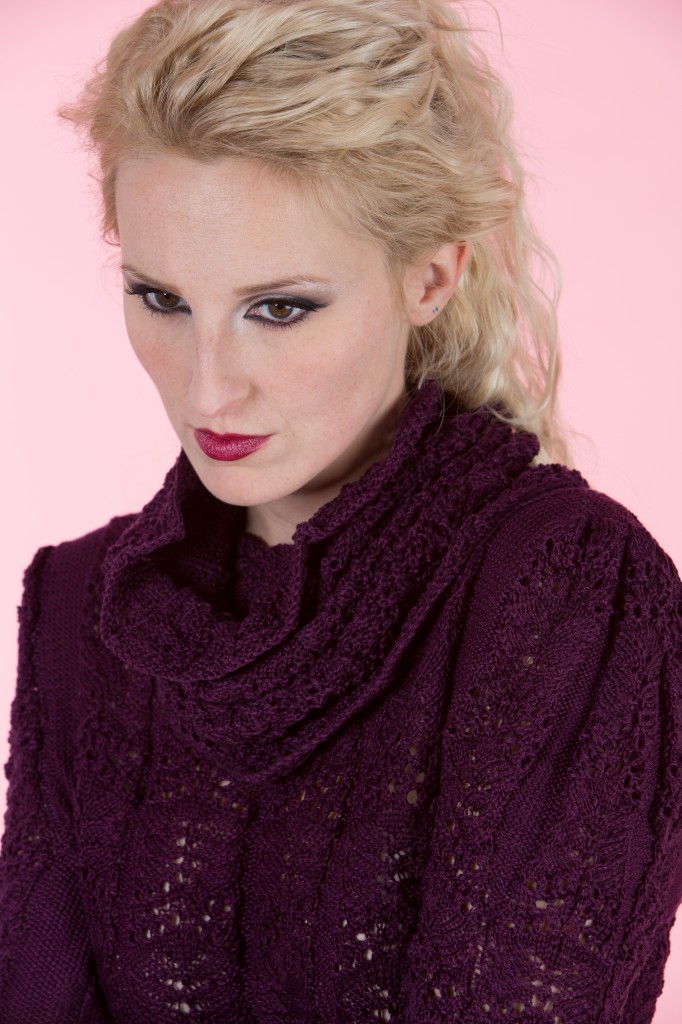
Copyright: Clotheshorse 2012

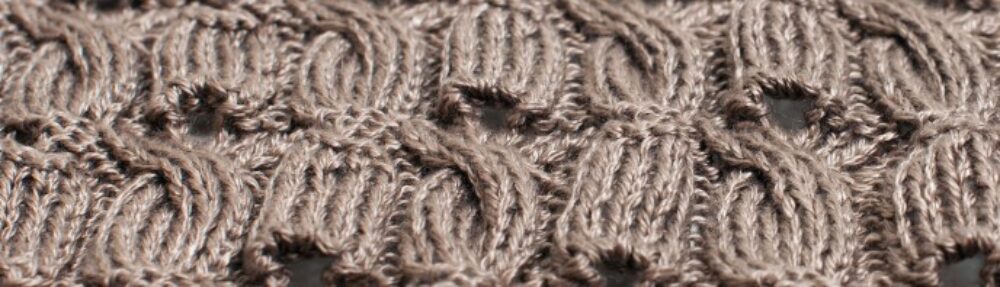
I discovered the stunning stitch pattern in one of my Japanese stitch dictionaries: it has symmetry and hence seem more logical to knit without requiring too much concentration, the pattern repeat ended on a purl stitch and had a middle purl stitch = two spines to easily keep track of pattern worked in reverse stocking stitch throughout to end. Either side of a spine is also an ideal place to increase and decrease, but I wanted to avoid interrupting the lace pattern, hence I added several purl stitches in between each pattern repeat. I have learned the hard way to calculate stitch numbers and pattern repeats from waist to hip, and not the other way around to master the maximum number of pattern repeats possible at the narrowest point. There also needs to be an equal number of pattern repeats on back and front of a pullover. The math can be a bit overwhelming at times and by plotting them onto a schematic I can keep a record – read: an awful lot better than notes that need deciphering afterwards!
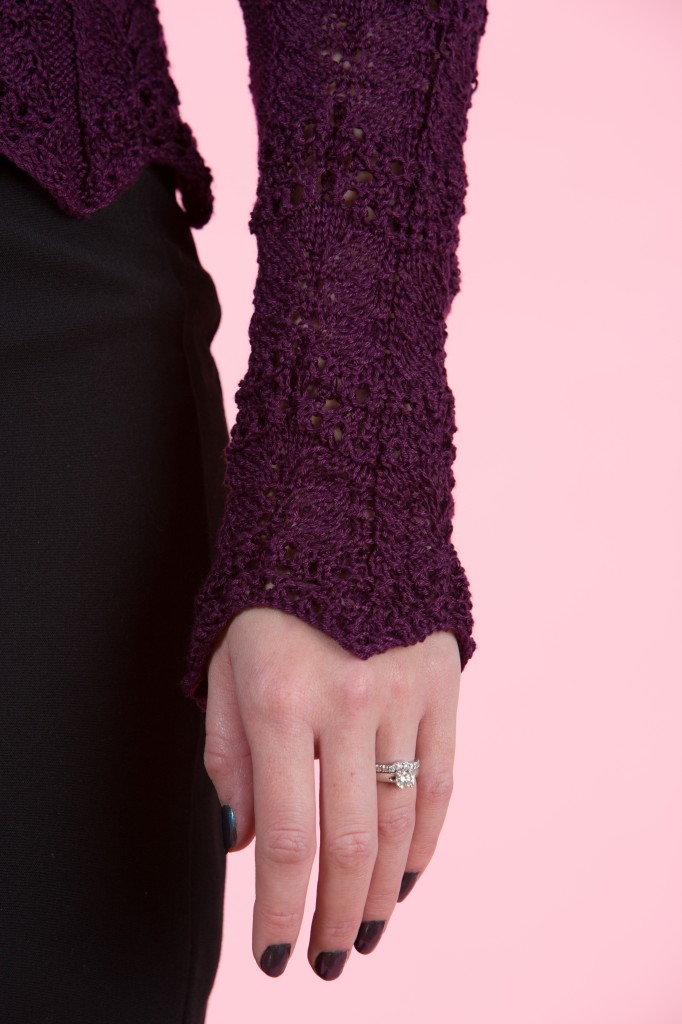
Copyright: Clotheshorse 2012

The patterns are available to buy and directly download from Clotheshorse magazine, see winter_2012-13 page 63 & 65 and on Ravelry eligia-top and eligia-cowl. I will try not to spend hours watching the activity on those 2 patterns and admiring the photos on Ravelry, but do not dare to promise! I am so grateful to Clotheshorse and its lovely & talented editors Mindy Brown & Heather Dixon!
Share

New Design: Cablewing Sweater and Cowls

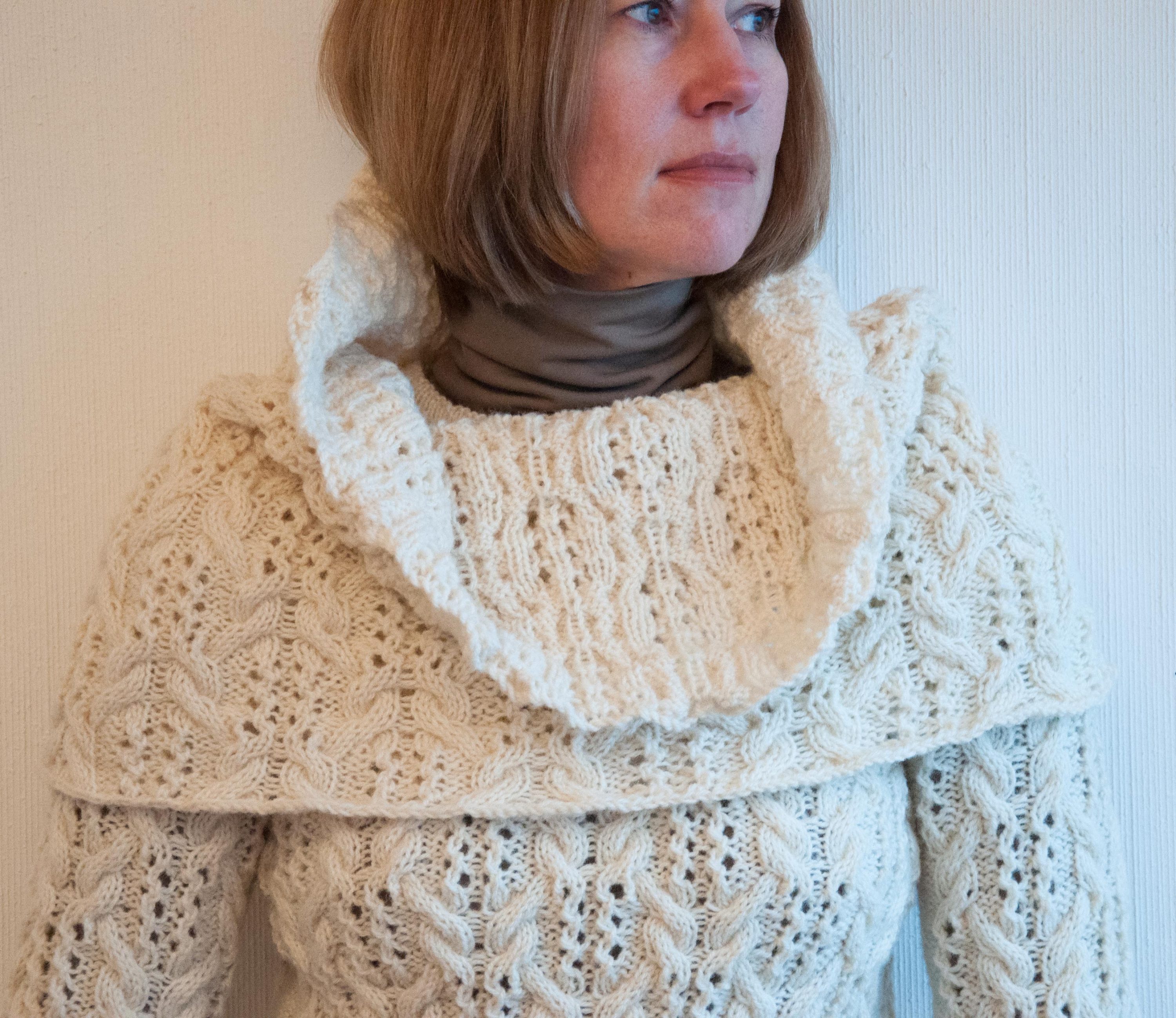
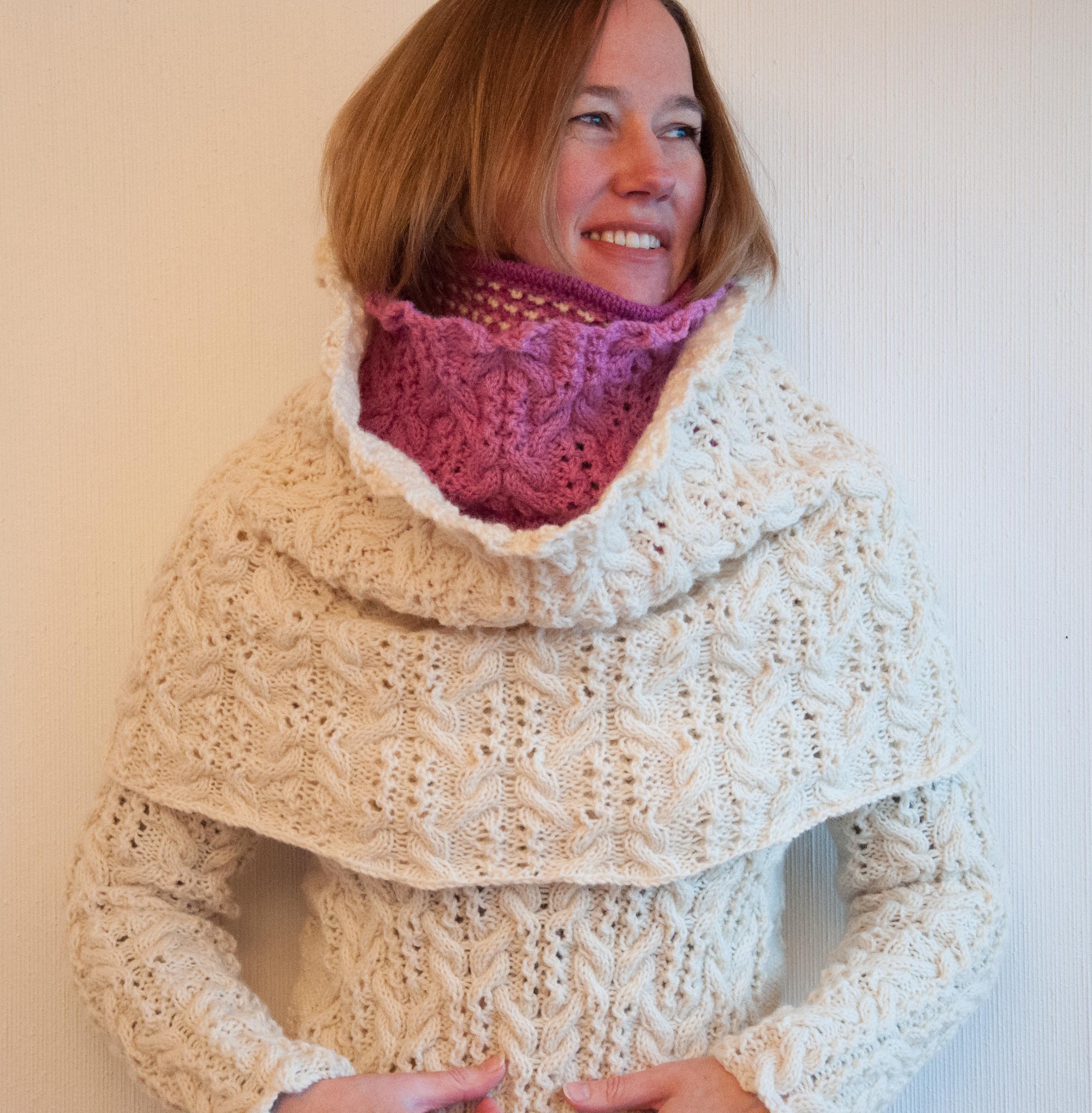
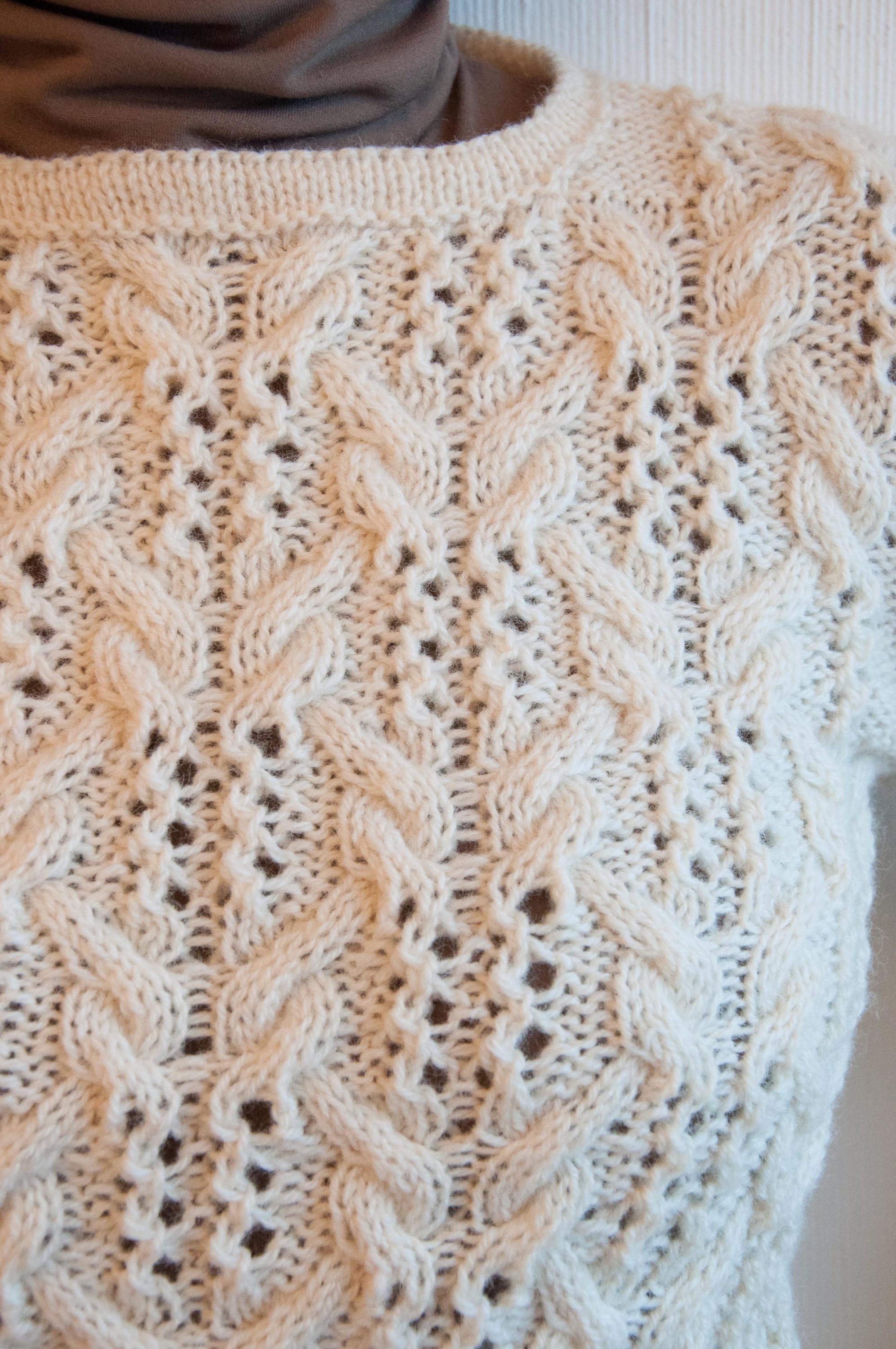
Cablewings surrounded by lace gives this sweater a flowery expression. In a flattering A-line with lace in each side, and a double round neckband, the pullover is knitted in the round to the armhole in a classic cream colored pure wool with give; Embla from Hifa. A large matching shrug gives the sweater a regal look. Warm, practical, but also decorative is the added shrug. Why not wear it together with a cowl, knitted in a beautiful purple pink shade together with a pair of wrist warmers. To bind the cream and the pink together I chose a tweed pattern, an added red purple and created a high neck in the shape of a small cowl.

I found the stitch pattern, whose delicacy I admire, in one of my Japanese stitch pattern books. Originally photographed in a classic cream it looked stunning, but studying the shade cards from Hifa, I also fell for purple pink and thought it would work equally well in the stitch pattern. Embla comes in 100 g/3.5 oz hanks, is 100 % wool, has 210 m/230 yds, and in a stunning range of shades, see: embla-hifa-3. The sweater and accessories are knitted using a 4 mm/US 6 and only the neckband is knitted on a smaller 3 mm/US 2.5. It took me awhile to decide on a round neck, I was tempted by a delicate high neck but realized that a removable cowl would be both easier to wear and then optional, since it is knitted in a pure wool. With a shawl pin, you can easily make the shrug into a hood or simply wear it hanging around your neck.

The sweater sizes, I graded from S, pictured on me, to XXL with bust measurements from 90 to 122 cm/35.5 to 48″ and a length starting at 75 cm/29.5″. I hope that the Norwegian magazine Familien/The Family will buy my pattern, and photograph it professionally on a better looking model! I will keep you posted, and in the mean time: continue to design & knit!

Share

Knitwear design Workshop by Shirley Paden

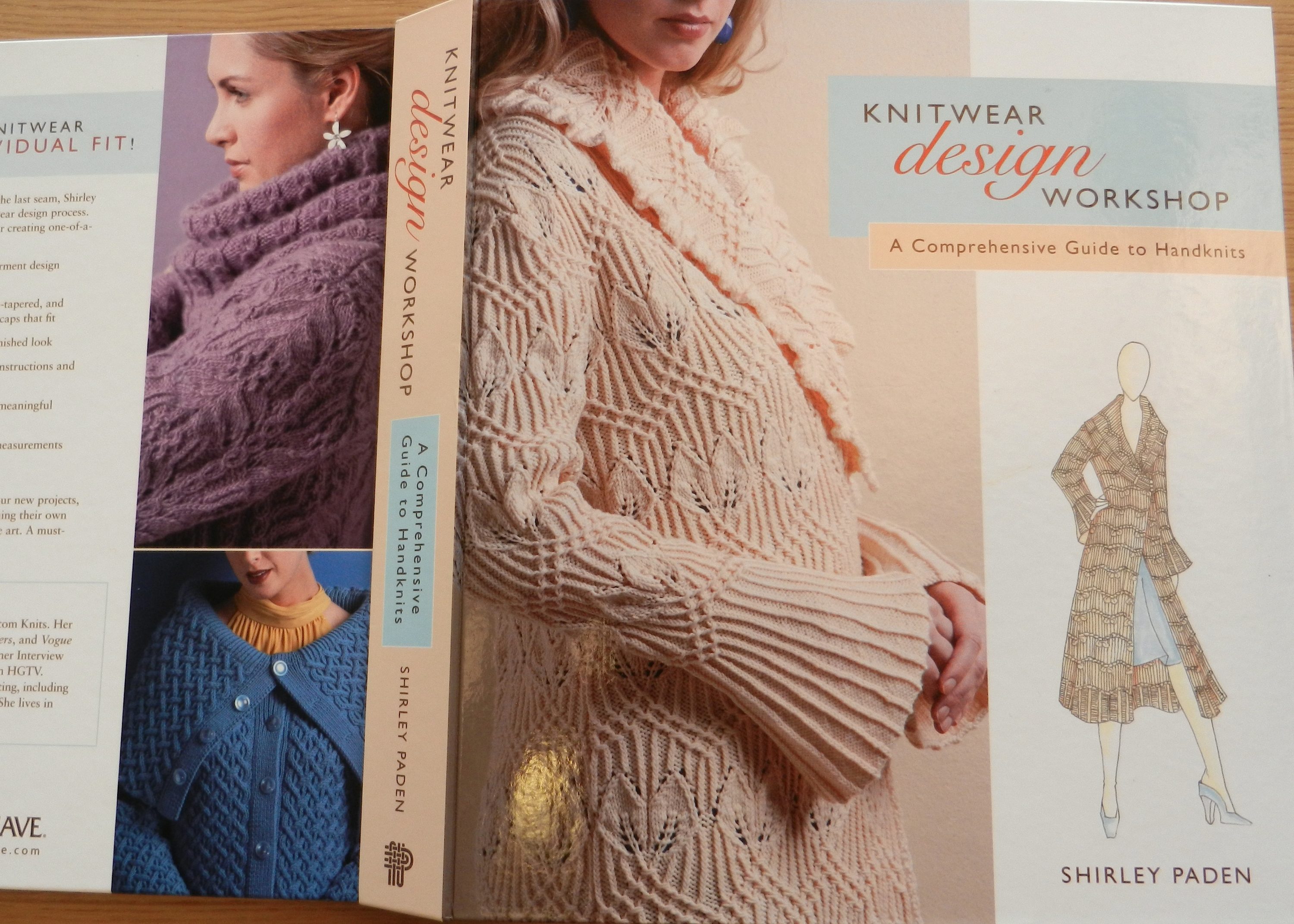
A Comprehensive Guide to Handknits published by Interweave, is the book I use as my design guide & bible, and it is in constant use. Shirley Paden in an extremely talented Master Designer, whose designs have featured in Interweave Knits, Knitters and Vogue Knitting, just to mention a few publications, take a look at shirleypaden and watch the interview at knittingdaily. In the Foreword she claims: ” Every designer has a different approach, mine is architectural. Precise measurements are the foundation. I begin with a picture or a sketch that conveys the “feeling” of the garment – elegant, casual, etc, then match it with a pattern stitch. I then transfer those ideas to a formal schematic. I use the schematic measurements to create the building blocks for the design construction.” My approach is not unlike Paden’s but it tends to vary, it can be a pattern stitch that fuels my imagination and design – I leave sketching to my architect husband – But I have recently realized how incredible useful a schematic drawing is to designing, and not only to the knitter, since it easily maps all essential measurements, and is an outline of the design.

In Norway most yarn companies, magazines and publishers do not use schematics and only list the most essential measurements at the beginning of a written pattern. With a schematic all measurements are plotted in, and can then be calculated into stitches and rows. Included in the book is Standard Measurements and sizing, also to be found on the Craft Yarn Council of America, see womansize. The Workshop gives you outlines to fill in with information you knew you needed, but also all the other issues you had not considered in detail, like e.g: How much ease do I allow for? It is also essential to me due to its shaping formulas on how to calculate decreases and increases, sleeve cap shaping and neck lines. Merely studying all the schematics and reading her patterns is a lesson on its own, and Paden makes it enjoyable.

There are chapters on how to plan your design; selecting the fabric; classic silhouette pullover; alternate silhouettes; cardigans; skirts and dresses; alternate armhole shaping; sleeves and cuffs; necklines; neckbands, collars, and lapels; finishing techniques; projects – contains 4 amazing patterns, see the 3 photos on front and back cover above – and an appendix. It is a thoroughly well organized and written book, ideal if you want to learn more about designing.

The book is now available in paperback, in addition to the hardcover with spiral binding I own, from the bookshop Tanum in Norway, see tanum and also at Amazon, see amazon. You will find more info on Paden on Ravelry and why not join the We Love Shirley Paden group: designers/shirley-paden?

Share

Twist Collective Submission

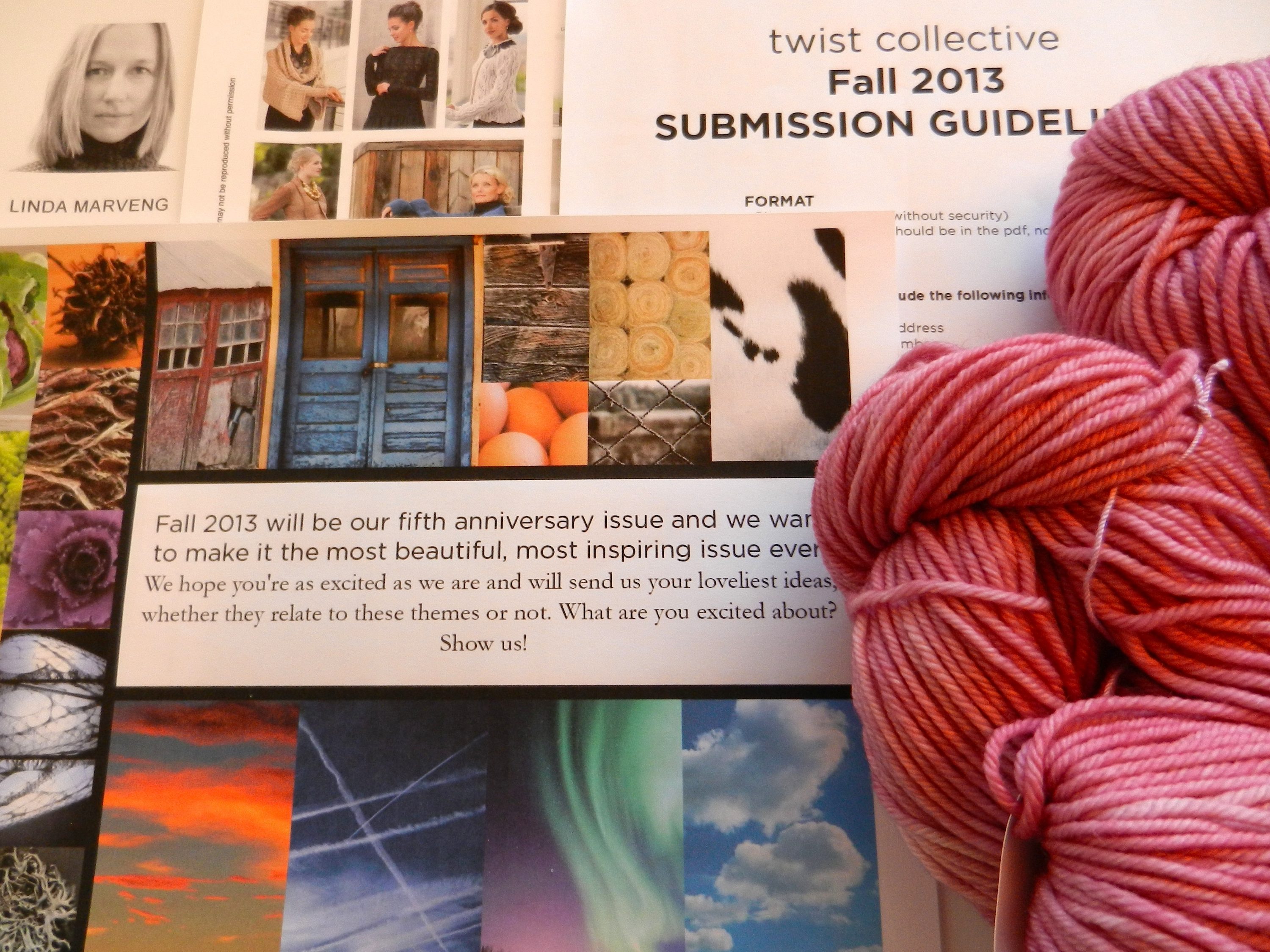
I am currently preparing a submission to the American digital knitting magazine Twist Collective for their Fall 2013, fifth anniversary issue. I chose Tosh DK in Posy for my swatch, inspired by their beautiful mood board as you can see below. I am afraid I cannot divulge any more detail of my design as set out in their guidelines. My husband has assisted with graphic work and I am soon ready to submit my project by e-mail. Do take a look at their Winter 2012 issue now available at: twistcollective. The editor Kate Gilbert writes: “The idea of Twist Collective came from a desire to bring talented designers and writers together, to give them a beautiful showcase for their work, and pay them fairly.”

My knitting goals in 2013 are to submit more designs to American magazines and to destash. A lot of left overs from my design work end up as useful yarn for workshop, so there are no huge quantities to destash for me but always useful to do, anyway. I am incredibly impressed with those knitters who have kept their yarn bands, and counted the amount of kilos knitted last year. The productivity is gobsmacking, I have used nowhere near 22 kilos – a Norwegian knitter taking stock on Facebook – in the last year. Have you? Another year with new yarn discoveries, new designs, new exhibitions and lot of inspiration. Bring it on!

Share

Norway Designs Christmas

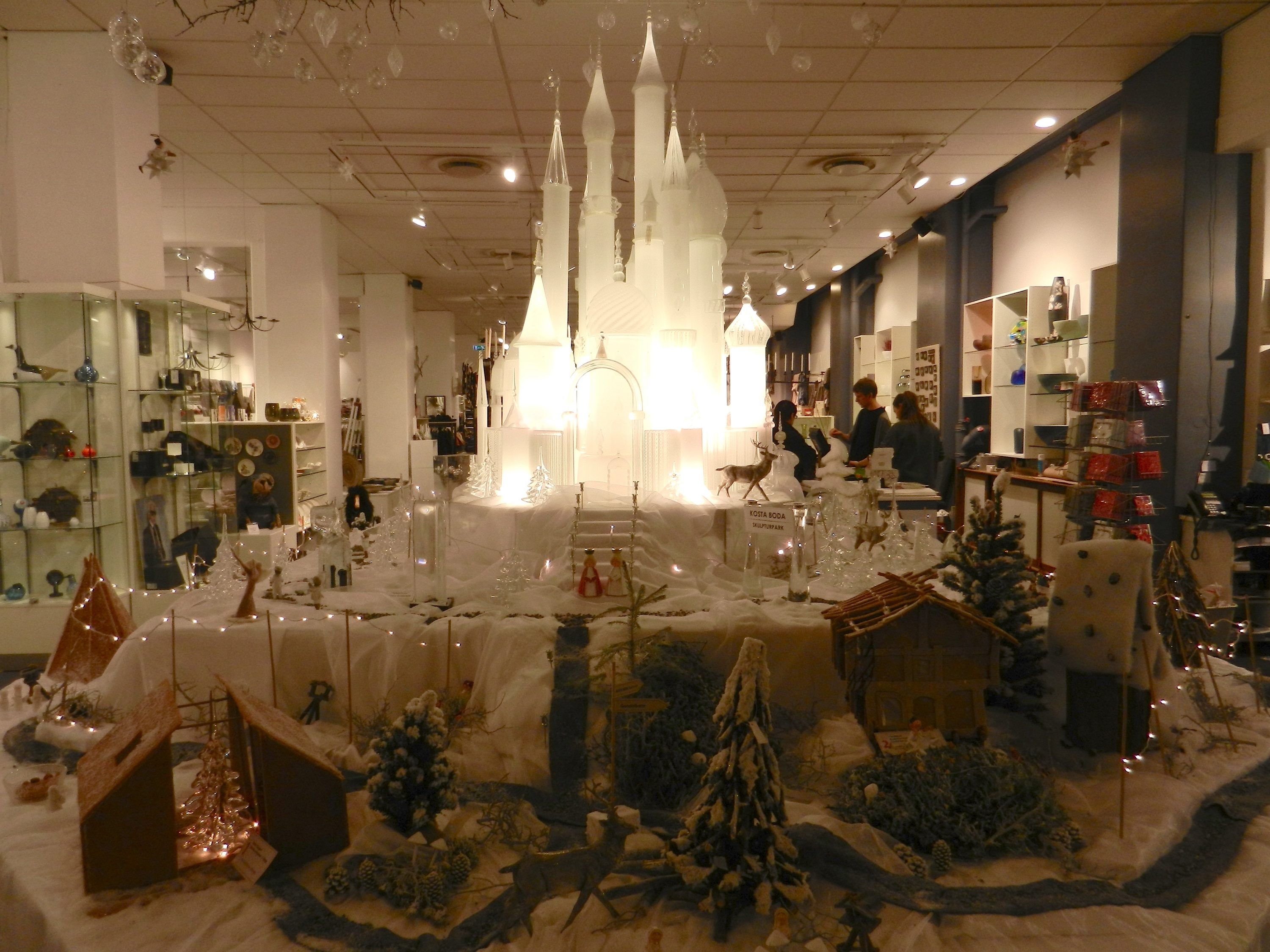
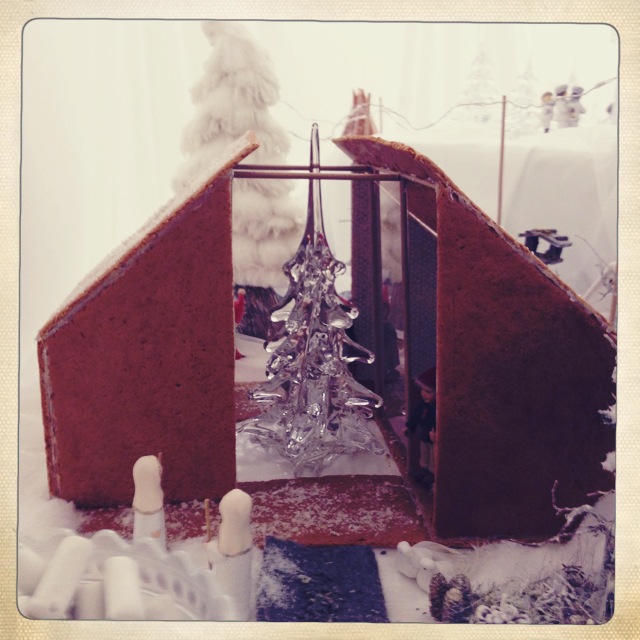
Every Christmas I admire the Snow Palace at display at the Norway Designs store, close to the National Theatre in Oslo. It is always an amazing exhibition of decorative items for sale as well as numerous dishes of sweets to energise customers. This year the palace is hosting a gingerbread house competition and you can see entry number one – a modern and exciting twist – in the left hand side corner and below by architecture student Victoria Amundsen. I just adore the crystal pine tree placed inside it and would like a small series in different sizes to decorate my Christmas table.

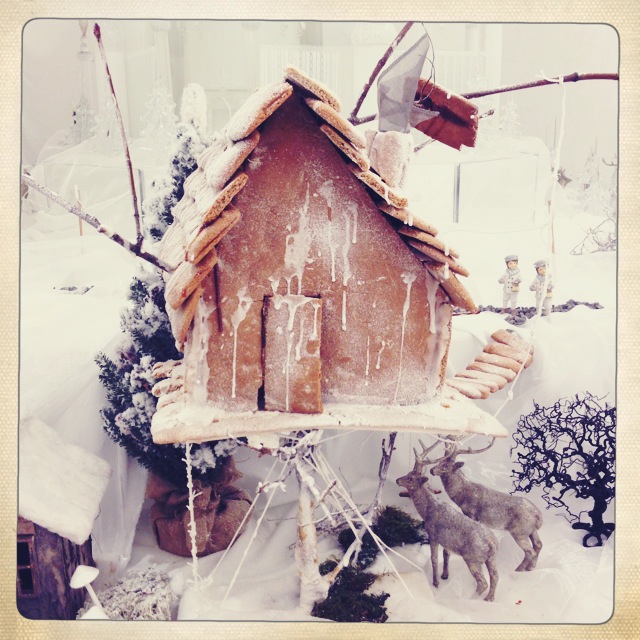
Below is the winner of the competition held together with the Architectural School in Oslo AHO, where Marios Petrongonas, from Greece, is studying this term. Read more about him at Norway Designs’ website: “I was sure that Oslo would meet my expectations for living  in a beautiful city, where I can enjoy my studies in architecture, while also extend my horizons in the way of architectural design.” He adds: “I said yes to the project at once, because I always like to support and participate in creative and fun projects that get me out of my routine. It was a great chance for me to be a part of the Christmas spirit.” Read more on norwaydesigns

The store has an impressive paper department – the best in Oslo, in my opinion – a jewellery department, a kitchen department, a small but exquisite clothes department, a gifts department including baby & children’s clothing. Not all the designs are Norwegian but a majority are, but you will also find numerous other well known brands there. It is a constant source of inspiration, both inside and their window displays are perfect for window shopping. I recommend you visit when in Oslo, or let their website inspire you: norwaydesigns.

Share

Christmas Celebrations

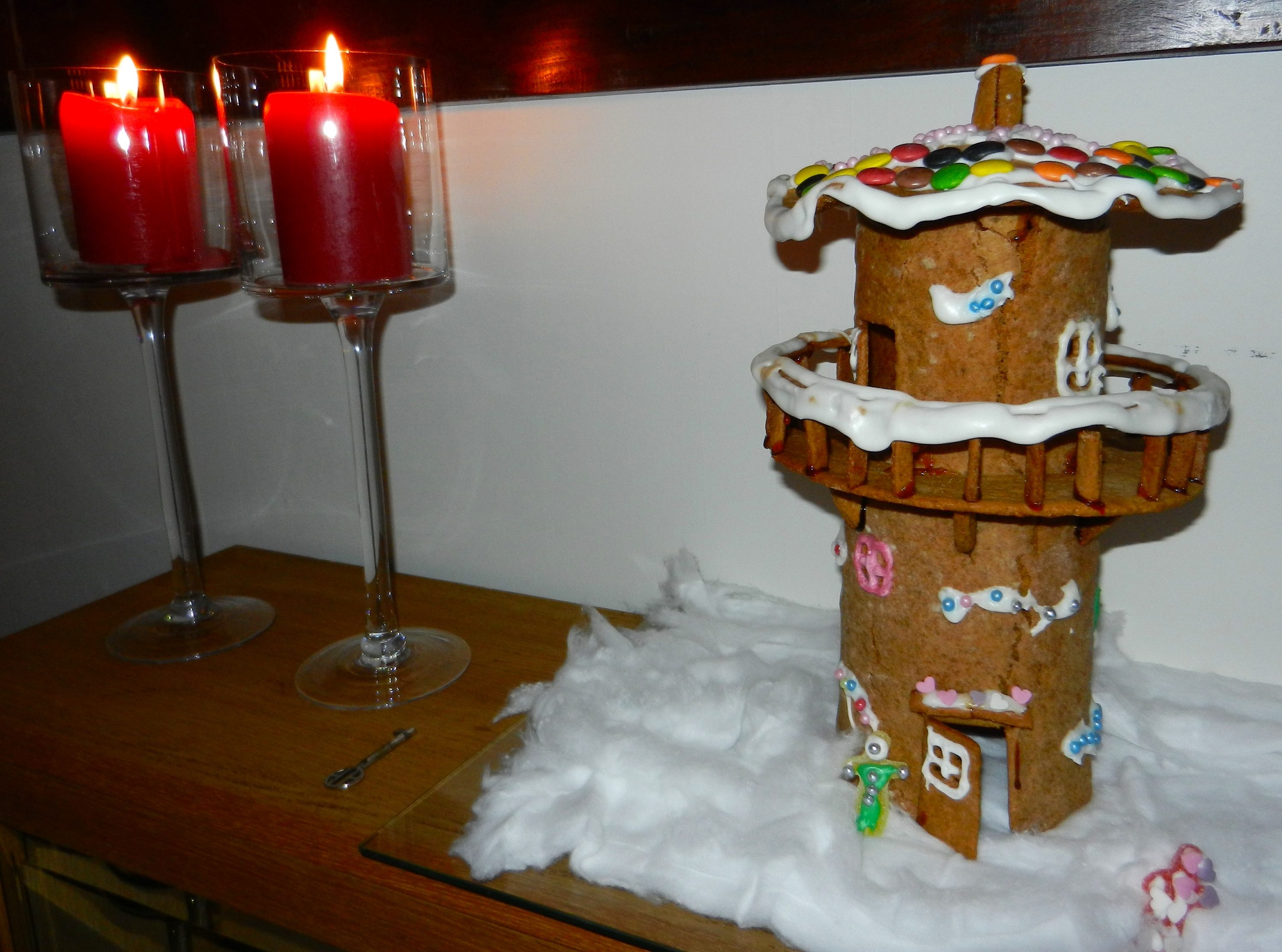
I have celebrated a wonderful Christmas Eve at my brother’s house and had to admire his gingerbread house or Tobias’ Tower to put it precisely from the Norwegian beloved children’s author, illustrator and composer Thorbjørn Egner’s book Folk og Røvere i Kardemomme By/People and Robbers in Cardamom City published in 1955. Not exactly inspired by Norwegian architecture, but by his travel to Morocco. Egner is celebrated this year, the centenary of his birth. Here you can see the tower in Egner’s own drawing and hear one of the accompanying songs: youtube.

My brother and I are late comers to walking around the Christmas tree singing Christmas Carols, and remember only the chorus while my sister-in-law knew the lyrics of each verse by heart. Anyway, my 5-year old niece was delighted by the mere action, and all our giggles. After a rather sceptical meeting of Father Christmas – my brother in a good disguise – and delightful unwrapping of what seemed like a ton of presents, she could not stay awake a minute longer. We did manage for a few more hours before turning in, with big smiles on our faces. Christmas Day was spent relaxing and knitting: nearly completing one design, in Hifa Embla, and working out a new one, this time in Tosh DK. More will be revealed soon, in the mean time: enjoy your Christmas, relax and knit – just, as I intend to  do!

Share

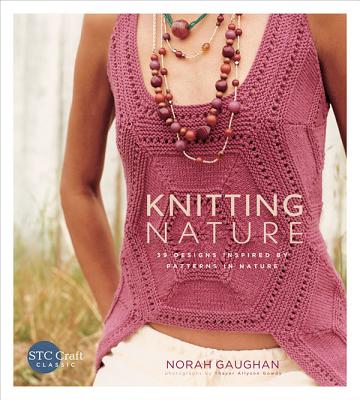
Knitting Nature by Norah Gaughan

It is what we call Little Christmas Eve today – anything to prolong the festivities, really – and very soon many of you will finally have time to cast on for a new, carefully selected Christmas knitting project. So I thought what better time to introduce another favourite knitting designer and book with the extremely fitting title: Knitting Nature by Norah Gaughan. A familiar name to many of you, I am sure, that are used to reading Vogue Knitting and love Berroco Yarns and their pattern booklets many by their very own  Design Director.

What makes her designs so special? Norah explores the use of naturally occurring geometrical motifs in knitting and incorporate hexagonal and pentagonal symmetries in her designs. Often with a mind boggling result, that looks extremely complicated to the naked eye but in reality feels extremely natural when you start knitting. The book contains 39 marvellous patterns – mainly for women – and is divided into Hexagons, Pentagons, Spirals, Phyllotaxis, Fractals and Waves. Her innovative designs are a pleasure to the eye and a challenge to the mind!

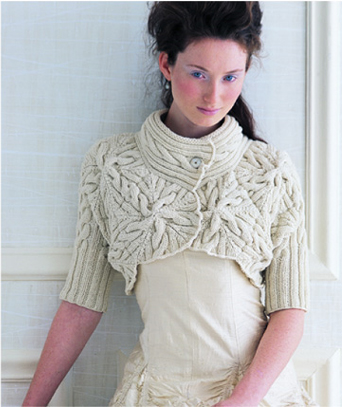
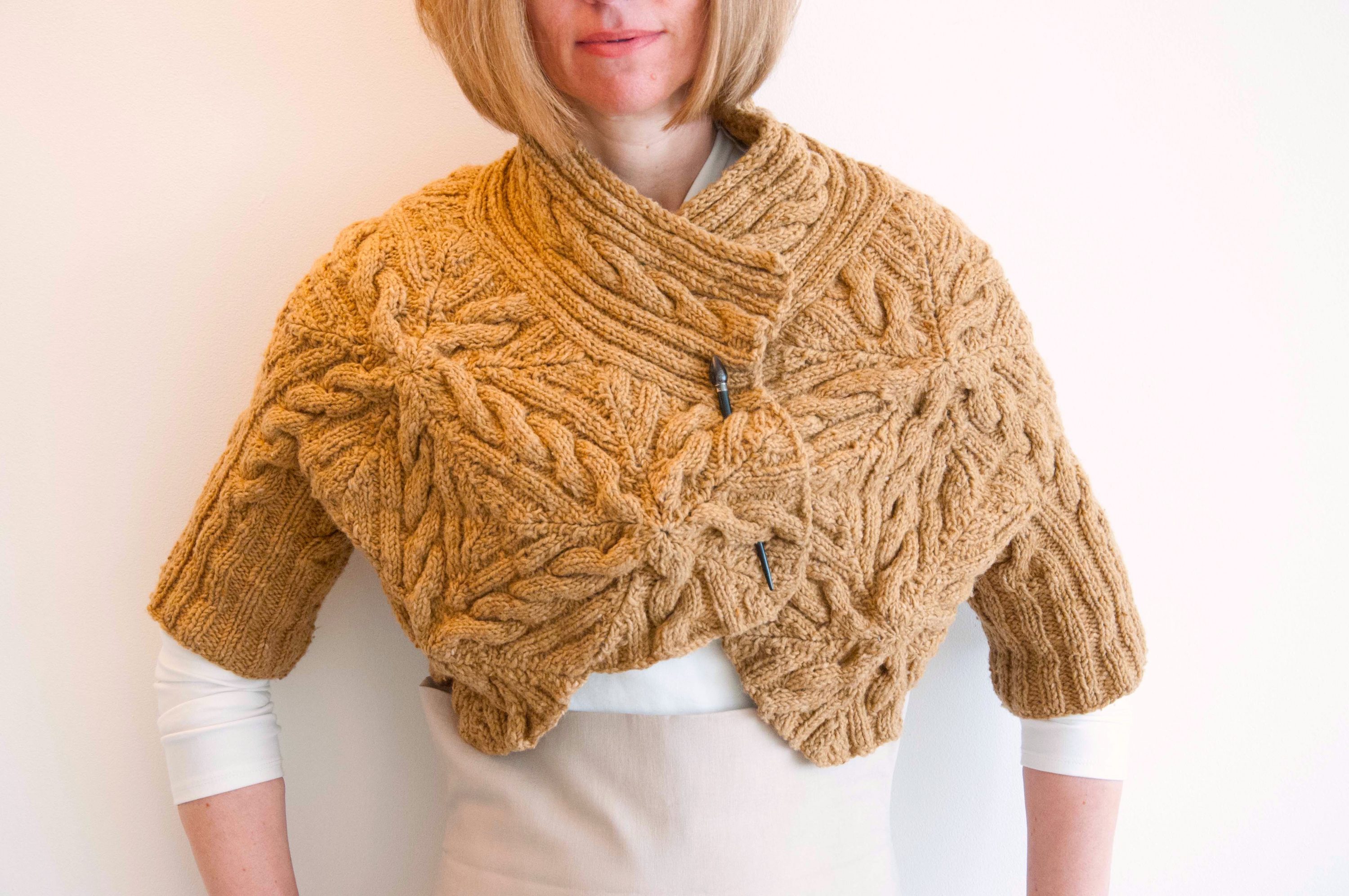
One of her most well known designs is the Capecho which was on Vogue Knitting’s cover in the Winter 2006/2007 issue, now available as a downloadable pdf here: cabled-bolero. I was so intrigued by the cables that I had to make it. Here is the workshop, which explains how it is made: vogueknitting Just as it states: “Modular knitting is surprisingly easy and quite addictive once you get the hang of it.” I know, I enjoyed it so much I decided to make another. Both times I decided to leave out the button since the pentagons overlap more on me than in the picture from Vogue Knitting.

Below is a photo of my first version of the cabled bolero, knitted in the discontinued Rowan Yorkshire Tweed Aran. If I had more yarn – a very familiar issue, indeed – I would have extended the sleeves and made a ribbed waist extension. Do take a look at the interview with her by Interweave Knits editor Eunny Jang on Knitting Daily TV: youtube. Here is an overview of her stunning designs: ravelry. You will find several postings by Norah on the Berroco Design Studio Blog, well worth reading here: blog.berroco. I hope you enjoy your Christmas knitting and wish you a wonderful Christmas!

Share